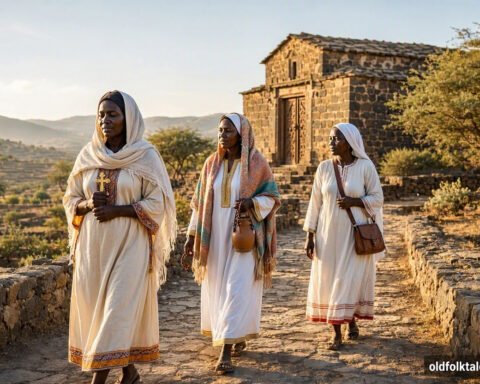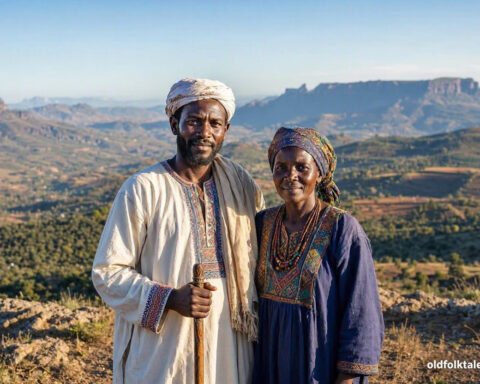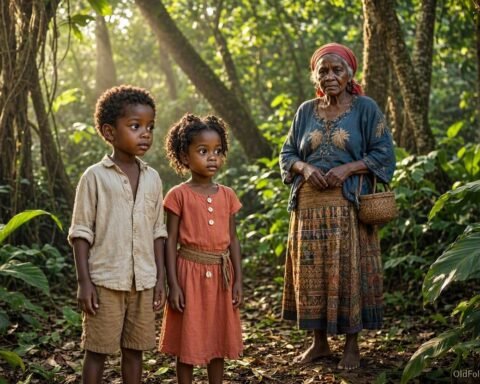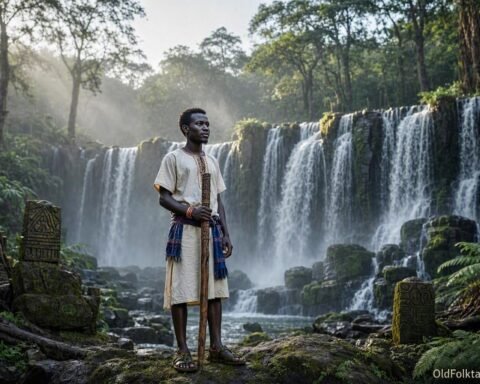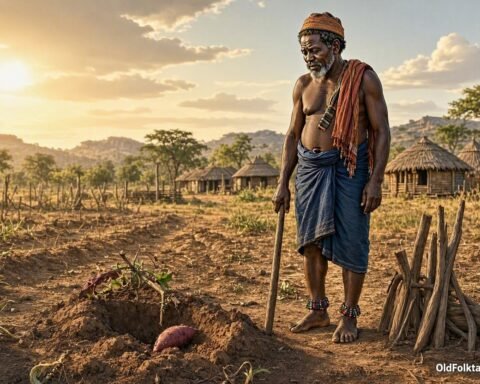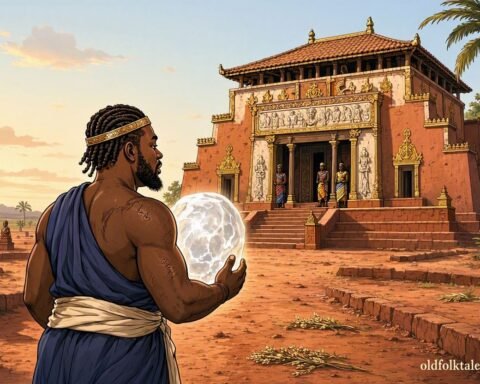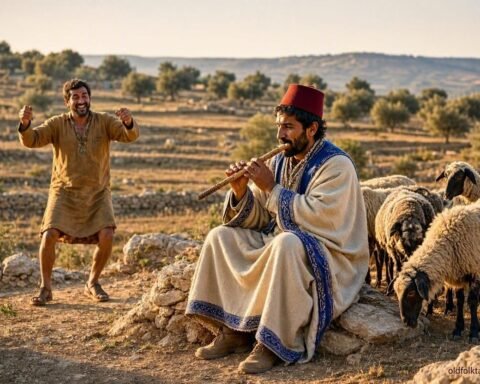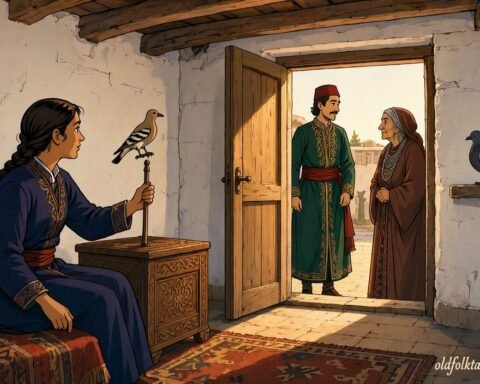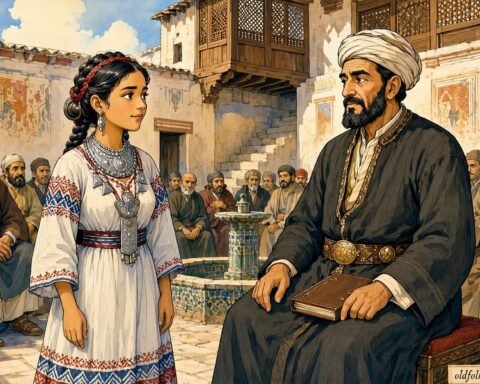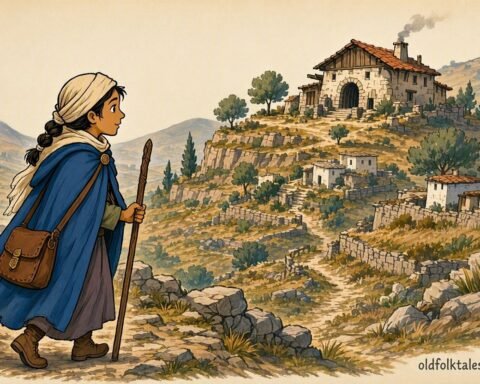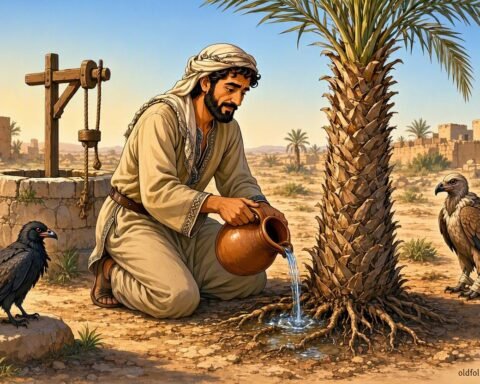
An illustration of tortoise flying with birds to sky feast, African Cameroon folktale scene.

The Tortoise and the Feast in the Sky

In a time long ago, when animals still spoke and gathered as people do, the land stretched wide beneath a great and endless sky. Forests whispered with life, rivers sang softly over stones, and the creatures of the earth lived by wit, strength, and the bonds they shared with one another. Among them lived Tortoise, a creature small in size, slow in movement, but sharp in mind. His shell was smooth then, unbroken and whole, and his reputation was well known. Tortoise was clever, yes, but also cunning in ways that made others wary. He listened more than he spoke,

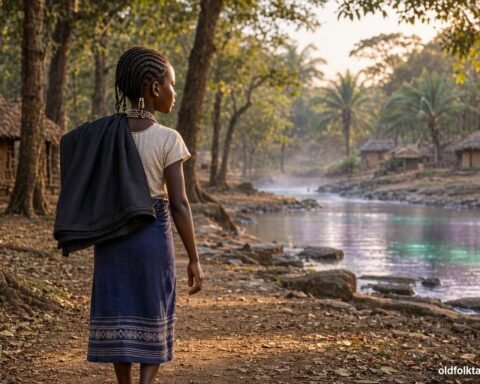
West African Folktales

Kabye and Tem harvesters singing traditional work songs while carrying grain sheaves in northern Togo.

Songs of the Sheaf Bearers

Every year, when the rainy season gave way to warm sunshine across the northern regions of Togo, the fields surrounding Kabye and
Ewe artisans producing traditional indigo dyed cloth in Kpalimé, Togo.

Indigo Hands of Kpalimé

The fertile hills surrounding Kpalimé in southwestern Togo have long been known for their rich farmland, flowing streams, and thriving artistic traditions.
Agni elders displaying a treasured pearl necklace during a family gathering focused on reconciliation and heritage.

The Pearl Necklace of Abengourou

In the lush eastern region of Côte d’Ivoire, where the Agni people established prosperous kingdoms and thriving communities, the town of Abengourou

East African Folktales

Walukaga forging glowing iron in a traditional Buganda workshop while teaching apprentices the art of blacksmithing.

Walukaga the Master Blacksmith

Across the fertile lands of Buganda, long before modern factories and machines transformed daily life, blacksmiths occupied a special place in society.
Kabaka Kimera presiding over a royal court in Buganda as elders and community members witness an important judgment.

The Judgment of Kabaka Kimera

In the early traditions of the Buganda Kingdom, few rulers are remembered with as much respect as Kabaka Kimera. Oral histories describe

Southern African Folktales

An Ovimbundu elder presenting a carved ceremonial staff to a newly chosen soba during a traditional leadership ceremony in central Angola.

The First Soba’s Staff

In the fertile highlands of central Angola, the Ovimbundu people built thriving communities where farming, trade, and cooperation sustained everyday life. Villages
A Chokwe elder creating an intricate sona geometric sand drawing while adult apprentices observe during a traditional teaching session in eastern Angola.

Sona: The Sand Drawings of Wisdom

Across the woodlands and open plains of eastern Angola, the Chokwe people preserved knowledge in many remarkable ways. Elders shared history through
An Ovimbundu caravan leader guiding traders through the highlands of Bié during a long-distance trading expedition across Central Africa.

The Caravan Leaders of Bié

Long before modern roads crossed the highlands of central Angola, the Ovimbundu people built their reputation through determination, careful planning, and the
Ovimbundu elders presenting the ceremonial staff and royal stool to a newly crowned Olosoma during a traditional coronation ceremony in Angola.

The Coronation of an Olosoma

The fertile highlands of central Angola had long been home to the Ovimbundu people, whose prosperous kingdoms flourished through farming, trade, craftsmanship,

Central African Folktales

Historic gatekeepers welcoming merchants and travelers at Bab Bhar in the Medina of Tunis.

The Guardians of the Medina Gates

Long before modern streets surrounded the capital of Tunisia, the ancient Medina of Tunis stood behind sturdy walls pierced by magnificent gates.
Adult Amazigh villagers storing grain inside a historic fortified ksar in southern Tunisia.

The Builders of the Ksour

Long before modern warehouses and secure storage buildings appeared across North Africa, the Amazigh communities of southern Tunisia developed an ingenious solution
Adults collecting fresh water from the historic Spring of Zaghouan in northern Tunisia.

The Spring of Zaghouan

Before rivers were redirected through modern canals and water flowed from household taps, the people of Zaghouan looked toward the foot of
Ancient underground cistern with stone columns at the archaeological site of Uthina in northern Tunisia.

Uthina’s Hidden Cisterns

Long before modern pipelines carried water into homes, the ancient city of Uthina, located in northern Tunisia, depended upon remarkable underground engineering

North African Folktales

Pilgrims gathered outside the historic Ghriba Synagogue during the annual pilgrimage on Djerba Island, Tunisia.

Ghriba Pilgrimage of Djerba

For more than a thousand years, the island of Djerba has welcomed travelers arriving by land and sea. Situated off Tunisia’s southeastern
Adult villagers overlooking migratory birds at the wetlands of Lake Ichkeul in northern Tunisia.

Guardians of Ichkeul

Long before Lake Ichkeul became recognized as one of the world’s most important wetlands and earned its place as a UNESCO World
Adult Amazigh villagers storing grain inside the historic Ksar Ouled Soltane fortified granaries in southern Tunisia.

Ksar Ouled Soltane Granaries

In the arid landscapes of southern Tunisia, where rocky hills meet the vast Sahara, Amazigh communities learned long ago that survival depended
Tunisian farmers singing together while harvesting olives in the ancient olive groves of the Sahel.

Harvest Songs of the Sahel

Across the fertile plains of the Tunisian Sahel, where ancient olive trees stretch across the landscape from village to village, farming has

Inspired Tales

Effiong the Hunter

In the bustling region of Calabar, where dense forests met thriving communities, lived a hunter named Effiong. His skill with bow and

Editor's Pick

A Bakossi elder guiding a young villager through a sacred rainforest in southwest Cameroon.

The Sacred Forests of the Bakossi

In the rolling hills and dense rainforests of southwest Cameroon, the Bakossi people have long lived in close harmony with the natural world. Towering trees, flowing streams, and rich forests provided food, medicine, building materials, and shelter for countless generations. Yet some parts of the forest were treated differently. They were regarded as sacred places where the community honored ancestral memory, observed important customs, and learned lessons about living responsibly with nature. The elders taught that these forests belonged to
Go toTop