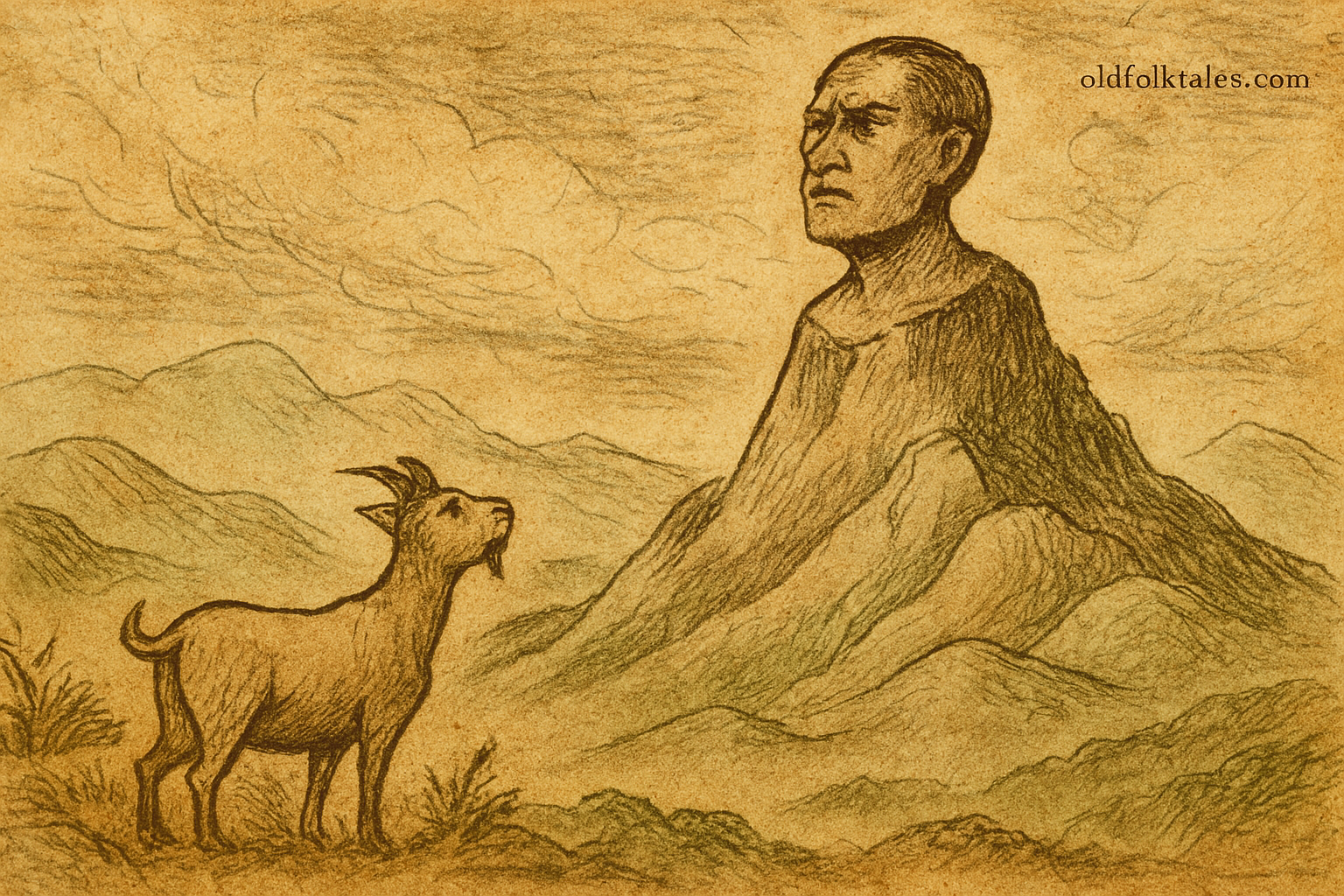
On the tropical island of Mauritius, where azure waters kiss golden beaches and lush green mountains rise like emerald crowns toward the endless sky, there stands a magnificent peak that dominates the southwestern coastline. This towering sentinel, known today as Pieter Both Mountain, bears upon its summit a peculiar rock formation that resembles a human head gazing eternally across the Indian Ocean. Local people who pass beneath its shadow often pause to look up at this strange stone visage, for they know the dark tale of how it came to be.
Long ago, when the island was young and its forests thick with untouched beauty, there lived a man whose name would become forever etched in stone and memory. Pieter Both was his name, and he was a figure both feared and despised throughout the land. Unlike the generous spirit that typically flourished among the island’s inhabitants, Pieter Both possessed a heart as cold and hard as granite, consumed entirely by an insatiable hunger for wealth and power.
Also read: Lougarou, The Shape-Shifter
In those days, Mauritius was blessed with abundant natural riches that seemed to flow endlessly from the earth itself. Crystal-clear streams bubbled down from mountain springs, carrying the purest water that sparkled like liquid diamonds in the tropical sunlight. Ancient forests stretched across the island’s interior, their towering trees heavy with exotic fruits that hung like nature’s own jewelry from every branch. The fertile soil yielded crops of incredible abundance, while the surrounding seas teemed with fish of every variety, their silver scales flashing beneath the waves like scattered coins.
These gifts of nature rightfully belonged to all who called the island home, fishermen who cast their nets at dawn, farmers who tended their fields with loving care, families who gathered fruits from the communal groves, and children who played beside the babbling streams. For generations, the people had shared these bounties freely, understanding that the island’s prosperity was meant to nourish everyone equally under the warm tropical sun.
But Pieter Both saw these natural treasures through entirely different eyes. Where others saw community gifts to be shared, he saw opportunities for personal gain. Where others found joy in abundance for all, he found only the burning desire to possess everything for himself alone. His greedy heart could not bear the thought that others might enjoy even the smallest portion of what he considered rightfully his.
With ruthless determination and cunning manipulation, Pieter Both began systematically claiming ownership of every valuable resource on the island. He built walls around the freshwater springs, forcing people to pay dearly for every drop they needed to survive. He hired armed guards to patrol the fruit groves, driving away hungry families and keeping all the sweet mangoes, papayas, and coconuts locked away in his private storehouses. The fertile farmlands fell under his control through threats and intimidation, leaving former farmers to work as his servants for meager wages.
Even the fishing grounds did not escape his grasping hands. Through bribes and bullying, he gained control of the best harbors and fishing spots, forcing the island’s fishermen to give him the largest portion of their daily catch in exchange for permission to work the waters their ancestors had fished freely for countless generations.
As Pieter Both’s wealth grew beyond measure, the suffering of the island’s people increased proportionally. Children cried from hunger while storehouses full of food stood locked and guarded nearby. Elderly people collapsed from thirst while precious water trickled uselessly into Pieter Both’s private reservoirs. The once-joyful community became a place of desperation and despair, where neighbors competed desperately for the few scraps that their tormentor allowed them to access.
Yet Pieter Both felt no compassion for the misery he had created. Instead, he reveled in his power and control, taking perverse pleasure in watching others struggle while he lived in unprecedented luxury. His mansion grew larger and more opulent with each passing season, filled with treasures hoarded from the island’s wealth, while all around him people suffered in poverty and want.
The island itself seemed to feel the pain of its people and the corruption of its natural balance. The once-cheerful streams began to flow more slowly, as if reluctant to provide water for such cruelty. The fruit trees produced smaller harvests, and even the fish appeared less frequently in waters that had once teemed with life. It was as though the very spirit of Mauritius was grieving for what had been lost to one man’s endless greed.
One sweltering afternoon, when the tropical sun beat down mercilessly and the air shimmered with heat, Pieter Both decided to travel to the far side of the island to inspect some newly acquired properties. Rather than taking the longer but safer coastal road that wound gently around the mountainous interior, his impatience and arrogance led him to choose a treacherous shortcut through the heart of the mountains.
“Why should I waste time on the common road?” he sneered to his servants. “I own this entire island, and I shall travel wherever I please, whenever I please. The mountains themselves must bend to my will!”
As his carriage began the steep ascent into the mountain passes, the air grew thick and oppressive, charged with an energy that made the horses nervous and the driver uneasy. Dark clouds gathered around the highest peaks despite the clear sky elsewhere, and strange rumbling sounds echoed from deep within the earth, as if the island’s very foundations were stirring with displeasure.
But Pieter Both noticed none of these warning signs, so consumed was he with counting the coins in his strongbox and planning new schemes to extract even more wealth from his suffering subjects. He barely looked up from his calculations when his driver mentioned the increasingly ominous sounds coming from the surrounding cliffs.
Suddenly, the mountain itself seemed to come alive with fury. The earth began to shake violently, and massive rocks tumbled down from impossible heights. The very peak that Pieter Both’s carriage was approaching began to split and crack with thunderous roars that drowned out all other sounds. It was as though the accumulated anger of the oppressed island had finally reached its breaking point, channeling itself through the ancient stone of the mountains.
“How dare you desecrate this sacred land with your presence?” a voice seemed to boom from the heart of the mountain itself, though whether it came from the wind, the rocks, or some deeper spiritual source, none could say. “You have stolen the gifts meant for all, turned abundance into scarcity, and replaced joy with suffering. Now face the judgment you have earned through your cruelty and greed!”
The mountain peak split open like a massive mouth, revealing a chasm so deep and dark that it seemed to lead to the very center of the earth. Before Pieter Both could comprehend what was happening, an irresistible force seized his carriage and drew it inexorably toward the gaping void. His screams of terror echoed off the surrounding cliffs as he realized that all his wealth and power were useless against the wrath of nature itself.
In that final moment, as the mountain prepared to claim its victim, Pieter Both’s entire body began to undergo a miraculous and terrible transformation. His flesh hardened into cold stone, his features became rigid and lifeless, and his expression froze forever in a mask of shock and horror. The mountain swallowed his carriage and possessions completely, but his petrified head remained visible, jutting from the peak like a permanent monument to the consequences of greed and cruelty.
When the earth finally stopped shaking and the dust settled, the people of Mauritius discovered that their oppressor had vanished completely, all except for that stone head that now crowned the mountain summit. More miraculous still, they found that all the hoarded wealth had been released back to them. The springs flowed freely once more, the storehouses stood open and unguarded, and the fertile lands were available again to those who would work them with honest hearts.
From that day forward, the mountain bore the name of the man it had claimed, serving as an eternal reminder that nature’s justice, though sometimes slow, is always certain. Travelers who pass beneath Pieter Both Mountain still look up at that stone head and remember the price of putting personal greed above the common good.
The Moral Lesson
This powerful Mauritian folktale teaches us that excessive greed and the hoarding of resources meant for community benefit will ultimately lead to divine retribution. Pieter Both’s transformation into stone represents the spiritual death that occurs when compassion is replaced by cruelty, and when sharing is abandoned for selfish accumulation. The story reminds us that we are all stewards of nature’s gifts, not their owners, and that true prosperity comes from ensuring everyone has access to life’s basic necessities. The permanent stone monument serves as a warning that those who abuse their power and exploit others will face lasting consequences that echo through generations.
Knowledge Check
Q1: What natural resources did Pieter Both steal from the people of Mauritius? A1: Pieter Both claimed ownership of the island’s freshwater springs, fruit groves, fertile farmlands, and fishing grounds, forcing people to pay for access to resources that had traditionally been shared freely among the community.
Q2: How did the mountain exact its revenge on Pieter Both for his greed? A2: The mountain peak split open and swallowed Pieter Both’s carriage whole, but not before transforming his body into stone, leaving only his petrified head visible on the summit as a permanent reminder of his crimes.
Q3: What happened to Pieter Both’s hoarded wealth after the mountain claimed him? A3: All the wealth and resources that Pieter Both had stolen were miraculously released back to the people, springs flowed freely, storehouses opened, and farmlands became available again to honest workers.
Q4: Why did Pieter Both choose to travel through the dangerous mountain pass? A4: Pieter Both’s arrogance and impatience led him to take a treacherous shortcut through the mountains rather than the safer coastal road, believing that as the island’s owner, he could travel wherever he pleased.
Q5: What does the stone head on Pieter Both Mountain symbolize in Mauritian folklore? A5: The stone head represents divine justice and serves as an eternal warning about the consequences of greed, cruelty, and the selfish hoarding of resources that should benefit entire communities.
Q6: How did Pieter Both’s actions affect the natural environment of Mauritius? A6: Under Pieter Both’s cruel control, the island’s natural abundance began to decline, streams flowed slower, fruit trees produced less, and fish became scarce, as if nature itself was grieving the corruption of its gifts.
Source: Traditional Mauritian folktale