Long ago, in a prosperous village nestled between rolling hills and vast savannas, there lived a young woman named Amara whose reputation for wisdom and skill spread far beyond her homeland. Her fingers moved like magic across the loom, creating carpets so beautiful that traders would journey for months just to glimpse her work. The intricate patterns she wove told stories of her ancestors, each thread carefully chosen to honor the traditions passed down through generations of women in her family.
Amara’s carpets were more than mere decoration, they were treasured heirlooms that families would display with pride, knowing they possessed something created by hands blessed with extraordinary talent. The vibrant colors seemed to dance in the sunlight, and the complex geometric designs spoke of deep cultural knowledge and artistic mastery that few could match.
In a neighboring kingdom lived Vachagan, a young chief known for his just leadership and kind heart. Unlike many men of his status who sought wives based solely on beauty or family connections, Vachagan had always been drawn to intelligence and character. When word reached him of Amara’s remarkable skills and sharp mind, his curiosity was immediately piqued.
Also read: The Wise Anait and Prince Vachagan
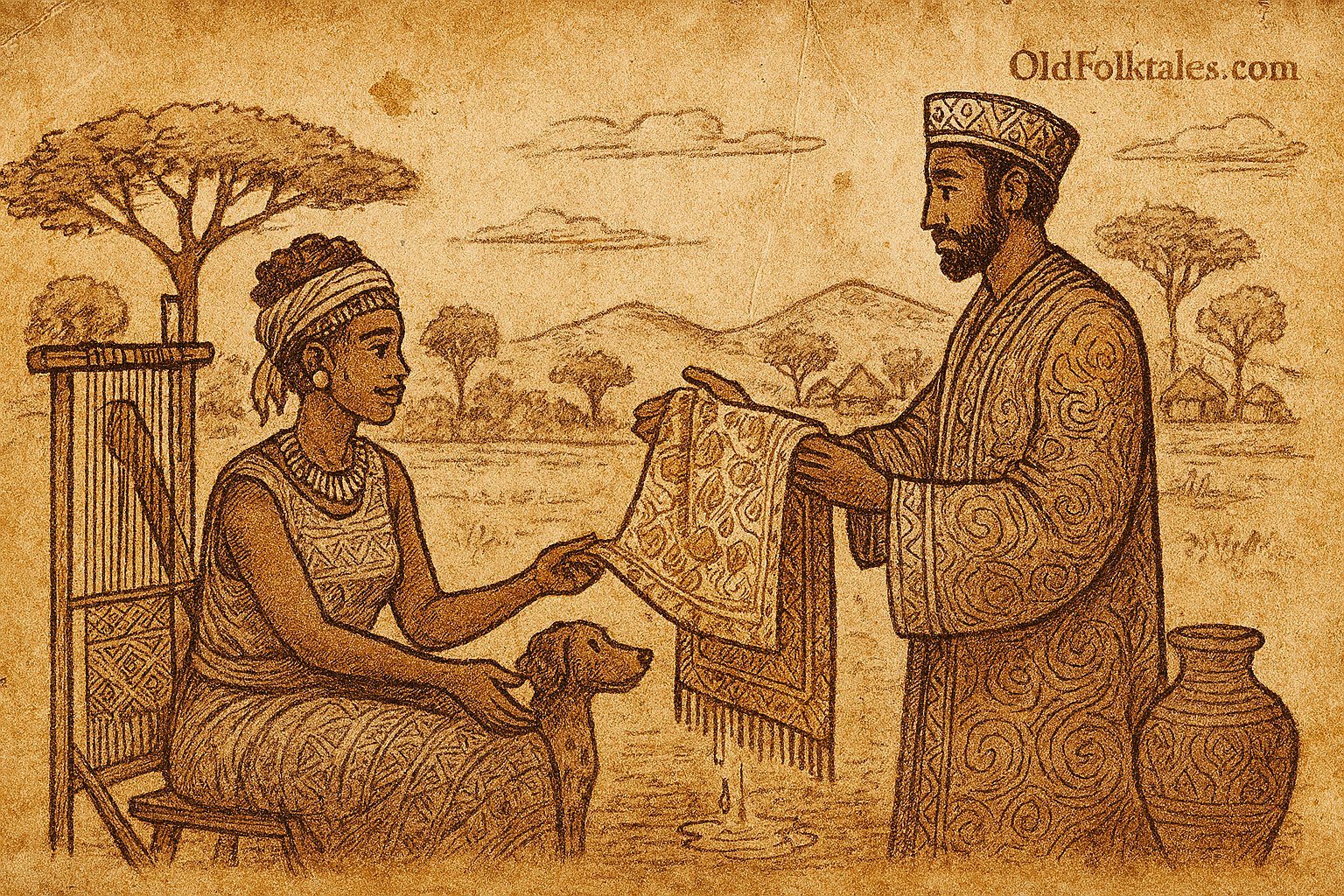
One morning, Amara received an unexpected gift, a length of golden brocade so exquisite it seemed to capture sunlight within its threads. The fabric was woven with such precision and artistry that even her experienced eye marveled at its beauty. Attached was a message from Vachagan, expressing his admiration for her work and his desire to know her better.
Rather than being swept away by the costly gift, Amara studied it carefully. She recognized the craftsmanship as exceptional and understood that this was no ordinary courtship gesture. After much consideration, she selected one of her finest carpets, a masterpiece that had taken her months to complete and sent it to Vachagan in return.
This exchange revealed something profound about both of them. They were not operating from a position where one gave and the other received, but rather as equal partners making independent, thoughtful decisions about whether they wished to know each other better. The golden brocade and the carpet represented more than gifts; they were expressions of mutual respect and artistic appreciation.
When Vachagan finally traveled to meet Amara in person, he was even more impressed by her intelligence and wisdom than he had anticipated. He proposed marriage, expecting his status and the beauty of his gifts to win her acceptance. However, Amara surprised him with her response.
“You are indeed a good man,” she said, her voice gentle but firm, “but I cannot marry someone who does not truly understand the depth of my work or the traditions that guide my life. If you wish to be my partner, you must first learn to see the world through my eyes.”
Another man might have been offended or angry at such a response, but Vachagan recognized the wisdom in her words. Rather than dismissing her concerns or seeking shortcuts to win her favor, he made a commitment that would change his life. For an entire year, he set aside his chiefly duties periodically to learn from the master weavers in his own kingdom.
He studied the significance of different patterns, learned about the cultural meanings behind color choices, and discovered the patience required to create something truly beautiful. His hands, once skilled only in warfare and governance, slowly learned the delicate art of working with thread and loom. More importantly, he began to understand the deep cultural knowledge that informed every aspect of Amara’s craft.
When Vachagan returned to Amara after his year of learning, he was a changed man. She could see in his eyes that he now appreciated not just the beauty of her work, but the generations of wisdom it represented. When he spoke about weaving, his words carried genuine understanding rather than mere admiration.
This time, when he asked for her hand in marriage, Amara accepted.
Their marriage became legendary in both their communities, not for its grandeur, but for the deep partnership it represented. Vachagan always sought Amara’s counsel in important matters, not because custom demanded it, but because he had learned to value her wisdom. When difficult decisions faced his kingdom, he would present the situation to Amara and listen carefully to her insights.
In times of crisis, Amara became his closest confidante. When Vachagan faced a particularly challenging political situation and needed to send a secret message for help, Amara was the first person he thought of. She alone could understand the coded meaning hidden within his words, because their relationship was built on such deep communication and trust.
Their love story was not one of instant passion that burned brightly and faded, but rather of two people who chose to build something lasting together. Vachagan had taken the time to truly understand what Amara valued and why it mattered, going far beyond surface-level appreciation to genuine comprehension and respect.
The villagers would often speak of how Vachagan never acted simply to placate Amara or to avoid conflict. Instead, he made the effort to understand the reasoning behind her suggestions, appreciating the wisdom that informed her words. This created a relationship where both partners felt heard, valued, and respected.
Moral Lesson
True love and lasting partnership are built not on immediate attraction or grand gestures, but on mutual respect, genuine understanding, and the willingness to invest time and effort in truly knowing one’s partner. When both people in a relationship are committed to understanding each other’s perspectives and values, they create a foundation strong enough to weather any storm.
Knowledge Check
Q1: What made Amara special in her village? A1: Amara was renowned for her exceptional weaving skills and wisdom. She created carpets so beautiful that traders would travel for months to see them, and her work preserved ancestral stories and cultural traditions through intricate patterns and designs.
Q2: How did Vachagan’s approach to courtship differ from typical suitors? A2: Unlike men who focused on beauty or family connections, Vachagan was drawn to intelligence and character. He appreciated Amara’s artistic mastery and wisdom, and when she challenged him to truly understand her world, he accepted rather than taking offense.
Q3: What was the significance of the golden brocade and carpet exchange? A3: The exchange symbolized equality and mutual respect. Both Amara and Vachagan gave gifts of equal artistic value, showing they viewed each other as equal partners making independent decisions about their relationship, rather than following traditional gender roles.
Q4: Why did Amara initially reject Vachagan’s marriage proposal? A4: Amara rejected him because she felt he didn’t truly understand the depth of her work or the cultural traditions that guided her life. She wanted a partner who could appreciate not just the beauty of her craft, but the generations of wisdom it represented.
Q5: What did Vachagan do during his year of learning, and why was it important? A5: Vachagan spent a year learning the art of weaving, studying pattern meanings, color significance, and cultural traditions. This was important because it showed his genuine commitment to understanding Amara’s world rather than seeking shortcuts to win her approval.
Q6: What lesson does this folktale teach about healthy relationships? A6: The story teaches that healthy relationships require mutual respect, genuine understanding, and equal partnership. True love develops when both people invest time and effort in understanding each other’s values, perspectives, and the reasoning behind their beliefs.
Source: African folktale tradition