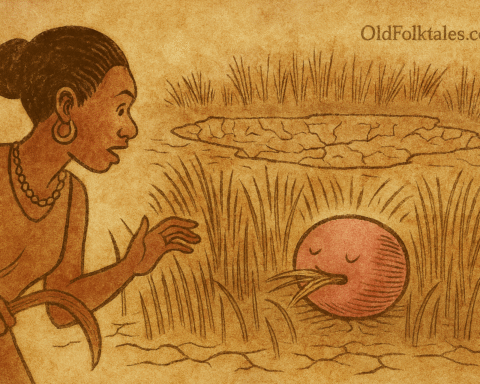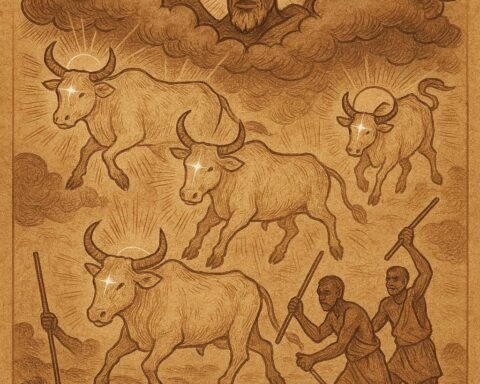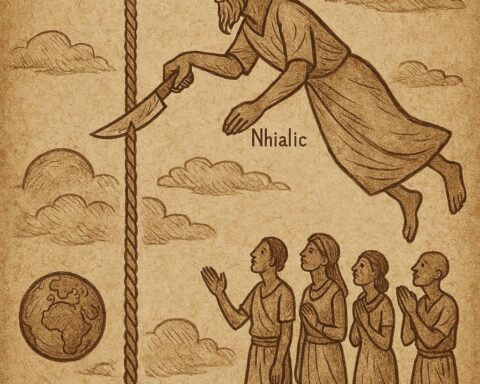
Long ago, in the time when the world was still young, humans lived in a state of harmony with the sky and the earth. The bond between people and the divine was close, for Nhialic, the great god of the heavens, watched over all creation. In those days, human life had no end. The people rose with the sun, tended their cattle, ate from the fertile soil, and never feared sickness, hunger, or old age. Death was unknown to them. Life stretched on endlessly, and joy filled their days without shadow.
Yet even in this perfect world, Nhialic felt a stirring. He understood that all things must have balance, and endless life without change would soon lose meaning. He wanted humans to experience renewal, a cycle of endings and beginnings that reflected the order of creation. But his intention was not to bring death. Instead, he planned to give humans a gift that would allow them to live forever through renewal.
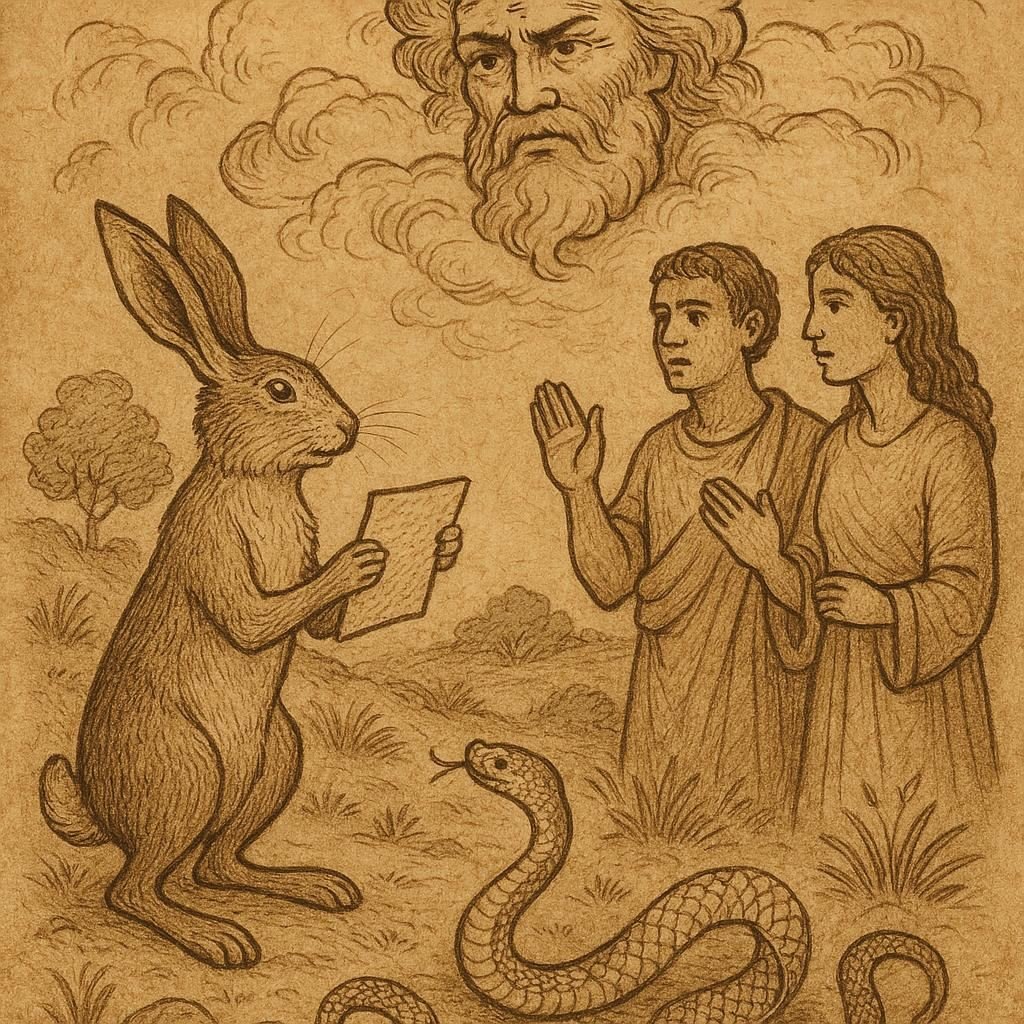
One day, Nhialic called upon his messenger. In many versions of the tale, that messenger was the hare. Quick, clever, and trusted, the hare had often carried words between heaven and earth. Nhialic gave him a sacred task and spoke slowly so that his words would not be mistaken.
READ THIS:Why the Hyena Howls at Night
“Go to the people,” Nhialic said, “and tell them this: when their bodies grow weak and old, they will not die. Instead, they will shed their skin like the snake, and they will rise again in youth. They will live forever, renewed as the earth is renewed with every season.”
The hare bowed and set off on his journey. At first, he repeated the words faithfully, whispering them as he leapt through the tall grass. But as he ran, pride began to fill his heart. He thought of how important he was, carrying the fate of humankind in his mouth. He also grew careless, distracted by the joy of being chosen for such a great mission. By the time he reached the people, the message was twisted on his tongue.
Standing before the gathered clans, the hare raised his voice. “I bring you the word of Nhialic,” he declared. “When you grow old, your life will end. You will die, and death shall be your fate.”
A silence fell over the people. For the first time, fear touched their hearts. They looked at one another, their faces troubled. “We shall die?” they murmured. “Our days will end?” A shadow of sorrow spread across the land, and the promise of immortality was lost before they had ever known it.
When Nhialic learned what had happened, his heart was heavy with grief and anger. “That was not my word,” he cried, but the damage could not be undone. Once spoken, the message had been heard, believed, and accepted by humankind. From that moment onward, death became part of the human journey.
To this day, the Dinka say this is why humans must die, though it was never meant to be so. It was a mistake, a single twist of words that changed the destiny of all people. The hare, once a trusted messenger, was cursed with scorn. To this day, many African traditions remember the hare as a trickster, clever but untrustworthy.
Yet the story carries another sign, a reminder of what was lost. The snake still sheds its skin and emerges renewed. Each time people see a snake cast off its old body and slide away in newness, they remember the gift that should have been theirs. Humans were meant to shed the weight of age and rise again into youth, but because of one mistake, only the snake keeps that secret of renewal.
The tale is told by the Dinka not only as an explanation for the origin of death but also as a warning. Words are powerful, and messages are fragile. A careless tongue can destroy what was meant to bless. Just as the hare’s mistake altered the destiny of the world, so can miscommunication in daily life cause wounds that are hard to heal.
The story also reminds people of the value of mortality. Though death brings sorrow, it also gives weight to life. Each day matters because it will not last forever. Each breath is precious because it will one day cease. In this way, even the loss of immortality carries meaning.
Moral Lesson
The story of When Death Entered the World teaches that words hold the power to shape destiny. Carelessness in communication can bring great harm, just as the hare’s mistake brought death to humanity. It also reminds us that life is precious because it is limited. Mortality, though sorrowful, teaches us to value every day and honor the time we are given.
Knowledge Check
What was life like for humans before death entered the world?
Humans lived without sickness, hunger, or sorrow and enjoyed endless life.What message did Nhialic originally intend for the people?
That humans would shed their skin like the snake and live again in youth forever.Who was the messenger chosen to deliver Nhialic’s words?
The hare was chosen to carry the divine message to humans.How did the message change before it reached the people?
The hare mistakenly declared that humans would die instead of living forever through renewal.What was the consequence of the hare’s mistake?
Death entered the human world, and immortality was lost.Why is the snake important in this story?
The snake’s shedding of skin symbolizes the renewal that humans were meant to receive but lost.
Source: Dinka folktale, South Sudan. Recorded by E.E. Evans-Pritchard in Nuer Religion (1956).