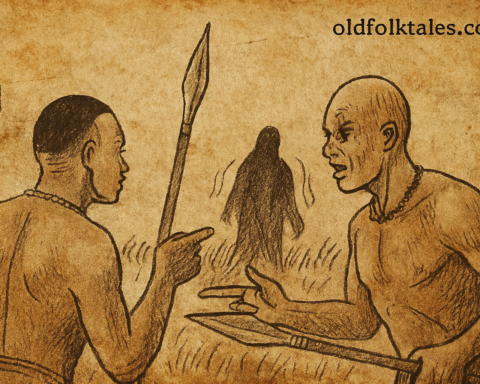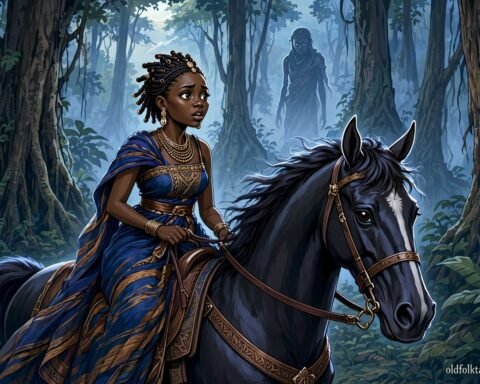
Once upon a time, in a land where birds lived among the branches and built their homes in the safety of the trees, there existed a neighborhood where many different birds made their dwellings. Among these birds lived Agumut, the Owl, and Adöl, a brown bird of the ibis family known for her remarkable building skills. They were neighbors, sharing the same stretch of forest, the same tall trees, the same sky above. But despite this proximity, their lives could not have been more different.
Adöl was a master weaver, blessed with natural talent and patient dedication. With careful precision, she would gather twigs, leaves, and grasses, weaving them together strand by strand into magnificent shelters. Her nests were not simple constructions but engineering marvels, huge structures that were completely rainproof and sunproof. When the storms came with their driving rain, Adöl and her young ones stayed dry and comfortable inside. When the sun blazed hot overhead, the thick walls of her nest kept them cool and shaded. She took pride in her work, and rightfully so, for few birds could match her craftsmanship.
Agumut, on the other hand, possessed no such skills. He did not know how to build a proper shelter for himself. While other birds wove their nests with care and skill, Agumut could only watch, unable to replicate what came so naturally to them. This inability gnawed at him, filling him with bitter envy every time he saw Adöl’s beautiful home nestled securely in the branches. Why should she have such comfort when he had none? Why should her children be sheltered while he remained exposed to the elements?
Continue your journey: Read more East African folktales
The envy festered and grew until one day, Agumut made a dark decision. If he could not build a nest himself, he would simply take one that already existed. And he knew exactly whose home he wanted.
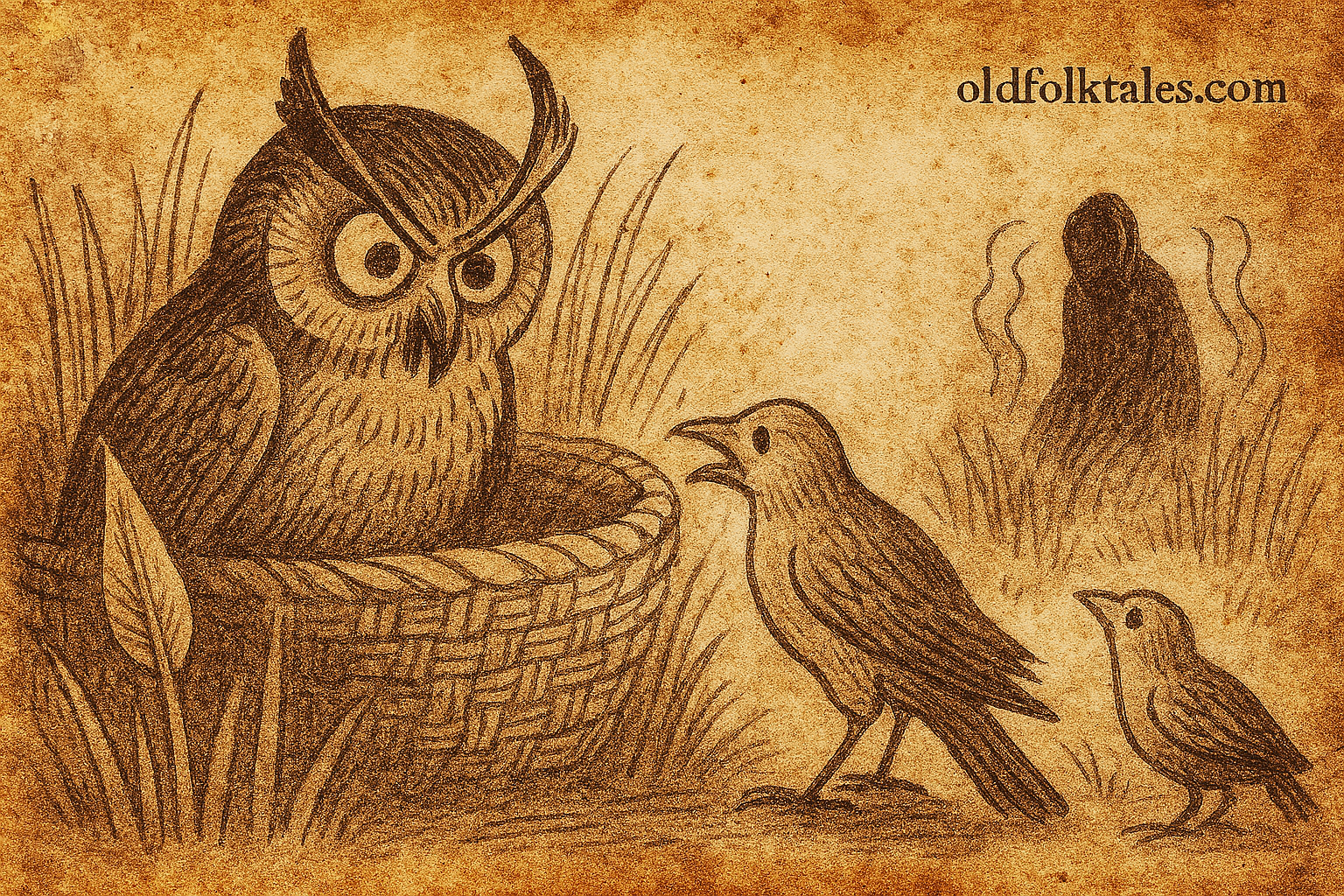
One afternoon, while Adöl was inside her nest with her young ones, tending to them and keeping them safe, Agumut approached. He positioned himself directly in front of the entrance, blocking any escape. His presence was immediately threatening. He fixed his enormous, bulging eyes on the entrance, those huge round eyes that seemed to see everything, that glowed with an unsettling intensity.
“Leave your house for me or I will spear you with my horn you see on my head,” Agumut declared, his voice full of menace. He tilted his head this way and that, showing off what appeared to be pointed horns rising from his head. “Where do I begin my attack? Do I hit you on the right or left side?”
Inside the nest, Adöl’s heart seized with terror. She looked at those sharp pointed protrusions on Agumut’s head, at his fierce bulging eyes, at his aggressive stance. She thought of her helpless children huddled behind her. What could she do against such a creature, one armed with horns and willing to use violence? She had no weapons, no way to defend herself or her young ones.
“Let me first get out with my children before you enter the house,” Adöl begged, her voice shaking with fear. She gathered her little ones quickly, hurrying them out past the menacing figure of Agumut, and fled to find safety elsewhere.
Agumut entered the nest with satisfaction. He settled into the beautifully woven structure that Adöl had spent so much time and effort creating. The walls were thick and strong. The roof kept out the rain perfectly. It was comfortable and secure, everything a home should be. And it had cost him nothing but threats and intimidation.
But Agumut’s cruelty did not end with that first eviction. Poor Adöl, determined to provide shelter for her children, would find a new location and begin again. She would spend days weaving a new nest, creating another masterpiece of avian architecture. But every single time, without fail, Agumut would discover where she had built. And every single time, he would come with his bulging eyes and his threatening horns, demanding that she leave. And every single time, terrified for herself and her young ones, Adöl would flee, surrendering yet another home to the bully.
This pattern continued for a long time. Build, flee, build again, flee again. Adöl grew exhausted and demoralized. Where could she go where Agumut would not follow? How could she ever provide a stable home for her children when every shelter she created was stolen from her?
Unknown to both Agumut and Adöl, there was another bird who had been watching these events unfold with growing displeasure. His name was Adïcol, and he had observed Agumut’s cruel behavior with increasing anger. It was not right for one bird to terrorize another this way, to steal through intimidation and threats. Adïcol wanted to help Adöl, but he knew that simply confronting Agumut would not work. He needed to understand the source of Agumut’s power.
Adïcol studied Agumut carefully from a distance. He watched how the owl held his head, how he displayed those supposed horns. And gradually, Adïcol came to a realization. Something about those horns did not seem quite right. They moved in ways that horns should not move. They were positioned where horns should not be. Adïcol began to suspect that Agumut’s fearsome weapons were not weapons at all, but something far more ordinary: just long pointed ears.
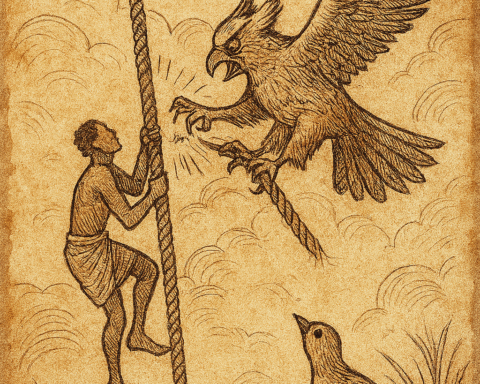
One day, Adïcol saw his opportunity. Agumut was sitting outside the house he had most recently stolen from Adöl, preening and looking pleased with himself. Adïcol flew high into the air, circling above, and then dove down toward Agumut. With perfect timing, he landed directly on Agumut’s back.
Before Agumut could react, Adïcol reached forward and got hold of what Agumut claimed were dangerous horns. The moment he touched them, Adïcol knew he had been right. These were not hard, sharp horns at all. They were soft and flexible, covered with feathers. They were just ears, elongated and pointed, nothing more.
“These are not horns, but ears!” Adïcol shouted at the top of his voice. “These are not horns, but ears!”
He shouted it again and again, his voice loud and shrieky, impossible to ignore. The repeated refrain carried through the trees, echoing across the neighborhood. Birds everywhere stopped what they were doing and looked up. What was happening? They flew toward the commotion, curious and concerned.
As more and more birds gathered, Adïcol continued his loud proclamation, still gripping Agumut’s ears firmly. “These are not horns, but ears! These are not horns, but ears!”
The assembled birds stared in amazement. They had all feared Agumut and his supposed horns. Many of them had given him a wide berth, not wanting to risk being speared. But now they could see the truth clearly. Those were not dangerous weapons. Agumut had no horns at all. He was just an ordinary bird with long ears, pretending to be something he was not.
Agumut, exposed and humiliated before the entire neighborhood, felt terror replace his former confidence. The birds he had intimidated now surrounded him, and they were no longer afraid. In panic, he wrenched himself free from Adïcol’s grip and flew away as fast as his wings could carry him.
But Adïcol was not finished. He flew after Agumut, still singing his revealing refrain. “These are not horns, but ears! These are not horns, but ears!”
From that day forward, everything changed for Agumut. The rest of the birds were no longer afraid of him or his big bulging eyes. They knew the truth. His threats were empty. His power had been based entirely on deception, and that deception had been shattered. Adöl was able to build her nests in peace, raising her young ones without fear of eviction.
As for Agumut, he became ashamed to show his face during the daylight hours when all the other birds were active. He retreated into darkness and shadow. And that is why, even to this day, Agumut does not go out before nightfall. He hunts and flies only at night when the other birds are sleeping, when they cannot see him and remember his shame.
This story gave birth to a Dinka saying that is still used today. When someone makes empty threats or tries to intimidate others with false claims, people say “Kä ye tuŋ ke agumut,” which means “these are just owl’s horns.” It is a way of calling out deception, of reminding everyone that something is not true, that it is just a trick designed to deceive people and make them afraid of nothing.
The Moral Lesson
This Dinka folktale teaches us that bullies often derive their power not from genuine strength but from deception and the fear they create in others. Agumut terrorized Adöl by pretending his ears were dangerous horns, and his intimidation worked only because no one questioned his claims. The story shows that courage like Adïcol’s, the willingness to investigate and expose the truth, can break the power of bullies and free their victims. It also reminds us to question threats and not accept claims of power at face value. Empty threats lose all effectiveness once they are exposed as false. The tale emphasizes the importance of standing up for others who are being oppressed and the power of truth to defeat intimidation.
Knowledge Check
Q1. Who is Adöl and what special skill did she possess?
Adöl is a brown bird of the ibis family known for her exceptional ability to weave beautiful, sturdy shelters. She could build huge nests that were both rainproof and sunproof, providing perfect protection for herself and her young ones. Her craftsmanship was remarkable and set her apart from other birds in the neighborhood.
Q2. Why did Agumut repeatedly evict Adöl from her homes?
Agumut did not know how to build a shelter for himself and envied Adöl for her skill. Rather than learning to build his own nest, he chose to steal hers by threatening her with what he claimed were horns on his head. Each time Adöl built a new shelter, Agumut would come and chase her away, taking the nest for himself.
Q3. What were Agumut’s “horns” actually, and how did he use them to intimidate Adöl?
Agumut’s supposed horns were actually just his long pointed ears. He used them to threaten Adöl by claiming he would spear her with his horns, asking menacingly whether he should attack her on the right or left side. Combined with his bulging eyes and aggressive stance, this deception terrified Adöl into abandoning her homes repeatedly.
Q4. Who was Adïcol and what role did he play in this story?
Adïcol was another bird who observed Agumut’s cruel treatment of Adöl and wanted to help her. He suspected that Agumut’s horns were not real and devised a plan to expose the truth. By landing on Agumut’s back, grabbing his ears, and loudly announcing they were not horns, Adïcol revealed Agumut’s deception to all the birds in the neighborhood.
Q5. What was the consequence of Adïcol exposing Agumut’s deception?
Once Adïcol revealed that Agumut’s horns were just ears, all the birds in the neighborhood lost their fear of him. Unable to face the shame and mockery, Agumut began avoiding daylight and only coming out at night. This is why owls are nocturnal, hunting and flying only when other birds are sleeping and cannot see them.
Q6. What Dinka proverb originated from this folktale and what does it mean?
The proverb “Kä ye tuŋ ke agumut” originated from this story, which translates to “these are just owl’s horns.” It is used when someone makes empty threats or false claims to deceive or intimidate others. The saying reminds people to question suspicious claims and not be fooled by tricks designed to create fear through deception.
Source: Dinka folktale, South Sudan (from the collection retold and translated from Dinka by Atem Yaak Atem)