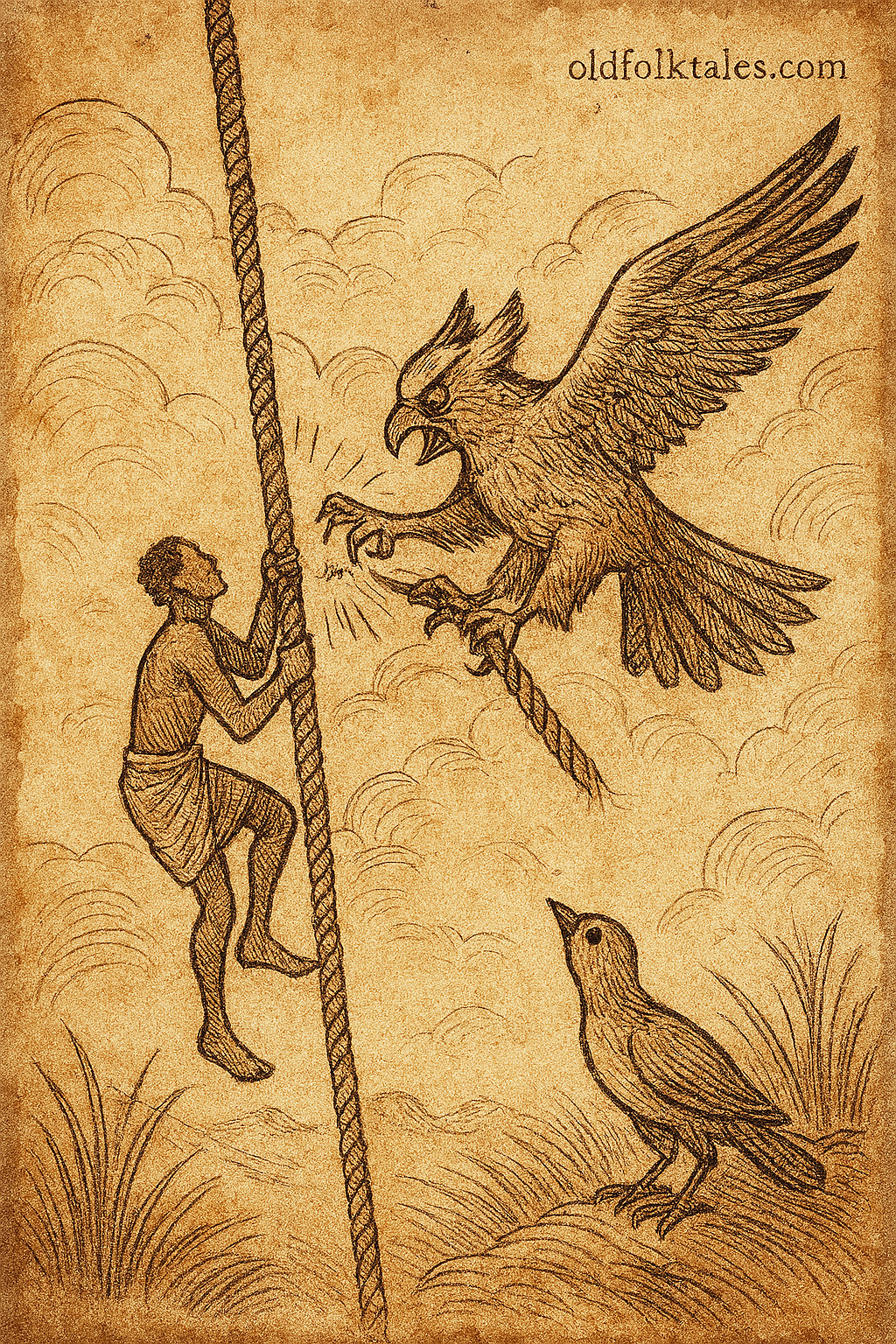
In the time before death walked among humanity, the world existed in a state of wonder that modern hearts can scarcely imagine. When illness crept into a person’s body, bringing fever or weakness, there was no cause for despair. No families gathered in grief, no final farewells were spoken. Instead, the sick simply looked upward to where a magnificent rope stretched from the earth into the boundless sky, connecting the mortal realm to the heavens above.
This rope was no ordinary cord. Thick and sturdy, woven from fibers blessed by the divine, it hung suspended in the air like a bridge between worlds. Whenever sickness took hold, the afflicted would grasp this sacred rope and climb, hand over hand, ascending higher and higher until they passed through the clouds and entered the realm of healing. There, in that celestial place, remedies beyond earthly understanding awaited them. They would be restored, made whole again, and descend back to their loved ones renewed and vibrant. Death was unknown. Suffering was temporary. The rope was humanity’s greatest gift, a lifeline that promised no farewell would ever be permanent.
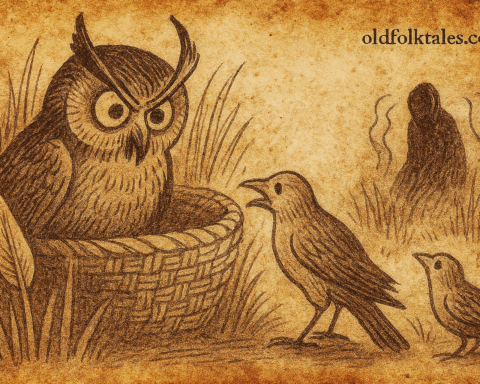
In those ancient days, there lived a creature named Atoc. Some say Atoc was a great bird who nested in the highest trees where earth nearly touched sky. Others whisper that Atoc was a spirit guardian, ancient and wise, who watched over the delicate balance between the mortal world and the divine realm. Regardless of Atoc’s exact nature, one truth remained constant: Atoc was a devoted parent, fiercely protective of her offspring.
Continue your journey: Read more East African folktales
Atoc had recently been blessed with a hatchling, a tiny creature of extraordinary beauty and promise. This baby was Atoc’s pride and joy, the living embodiment of hope and continuity. Atoc tended to her young one with unwavering dedication, keeping the hatchling safe and nourished, singing ancient songs that echoed across the valley.
But fate, as it often does, had darker plans in store.
One fateful day, a woman from a nearby village was going about her daily tasks. Perhaps she was gathering firewood or tending to her garden, the old tales do not specify her exact purpose. What is known is that, whether through carelessness, ignorance, or misfortune, this woman encountered Atoc’s precious hatchling. And in a moment that would change the course of human existence forever, the woman killed the baby creature.
The reasons behind this act have been lost to time. Perhaps the woman mistook the hatchling for a threat. Perhaps she was startled and acted in fear. Perhaps she simply did not understand the sacred nature of what she had done. But intentions matter little when measured against consequence, and the consequence of this act would prove devastating beyond measure.
When Atoc discovered what had happened, grief crashed over her like a thunderous wave. The mother’s anguished cries rang out across the land, a sound so mournful that even the stones seemed to weep in sympathy. Atoc held the lifeless body of her baby, feeling the terrible emptiness that only a bereaved parent can know. In that moment of profound loss, something broke inside Atoc, something that could never be repaired.
From the depths of sorrow emerged a burning, all-consuming rage. Grief transformed into a desire for vengeance that eclipsed all reason and mercy. Atoc’s heart, once gentle and nurturing, hardened into something cold and unyielding. If humanity could so carelessly take away what was most precious to her, then she would take from them what was most precious in return.
Atoc knew exactly what needed to be done.
With determination born of anguish, Atoc flew to where the great rope hung suspended between earth and sky. This rope, humanity’s lifeline, their guarantee against death, their connection to eternal renewal, swayed gently in the breeze, unaware of the terrible fate about to befall it. Atoc looked upon it with eyes that held no mercy, only the single-minded focus of a parent demanding justice for their lost child.
Then, with deliberate purpose, Atoc began to tear at the sacred rope. Strand by strand, fiber by fiber, the ancient cord began to fray. The destruction was methodical and complete. Atoc would not stop until humanity’s bridge to immortality was severed forever.
When the final strand snapped, the rope fell from the heavens like a fallen star, tumbling down to earth where it lay useless and broken. The connection was destroyed. The pathway was closed. Never again would the sick be able to climb to the healing realm above.
From that moment forward, death entered the world. When illness came, it could no longer be cured by ascending to the sky. Bodies grew weak and failed. Families learned the bitter taste of permanent loss. Grief became humanity’s constant companion, and mortality its unchangeable destiny.
And so death was born, not from divine decree or natural law, but from one mother’s vengeance against a careless act that stole her child away forever.
The Moral Lesson
This profound tale teaches us that actions have consequences far beyond what we can immediately see, and that harm inflicted carelessly can return to us in ways we never anticipated. It reminds us of the sacred responsibility we bear toward all living creatures, especially the young and vulnerable, and warns that vengeance, though born from legitimate pain often punishes the innocent along with the guilty. The story asks us to consider how one thoughtless moment can unleash irreversible change upon the world, emphasizing the importance of mindfulness, compassion, and respect for all forms of life.
Knowledge Check
Q1: Who is Atoc in this Dinka folktale, and what role does she play?
A1: Atoc is a mother figure, possibly a great bird or spirit guardian, who plays the role of the grief-stricken parent seeking vengeance. She is the catalyst who brings death into the world after a woman kills her hatchling, demonstrating the devastating consequences of parental loss and retribution.
Q2: What was the significance of the rope connecting earth to sky in the story?
A2: The rope was humanity’s lifeline to immortality and healing. Before it was destroyed, sick people could climb this sacred rope to the heavens where they would be cured and restored, meaning death did not exist. The rope symbolized the divine connection between mortals and the healing powers of the celestial realm.
Q3: Why did the woman kill Atoc’s hatchling in the folktale?
A3: The story does not provide specific reasons for the woman’s actions whether it was accidental, done in fear, or through ignorance. This ambiguity emphasizes that regardless of intention, careless or harmful actions toward innocent creatures can have catastrophic consequences that affect entire communities.
Q4: What is the main lesson about revenge in this African origin story?
A4: The story illustrates that revenge, even when born from legitimate grief, often punishes innocent people along with the guilty party. Atoc’s vengeance against one woman resulted in all of humanity losing immortality and gaining death, showing how retribution can spiral beyond its intended target.
Q5: How does this Dinka tale explain the origin of human mortality?
A5: This etiological folktale explains that death entered the world not as a natural phenomenon but as a direct result of Atoc’s vengeance. After a woman killed her baby, Atoc destroyed the rope to the heavens that allowed humans to be healed, thereby making death permanent and irreversible for all humanity.
Q6: What cultural values does this Dinka folktale emphasize?
A6: This tale emphasizes respect for all living creatures (especially the young), the interconnectedness of actions and consequences, the dangers of vengeance, and the responsibility humans bear for their treatment of nature and other beings. It reflects the Dinka worldview that harmony between humans and the natural/spiritual world is essential for wellbeing.
Source: Dinka folktale