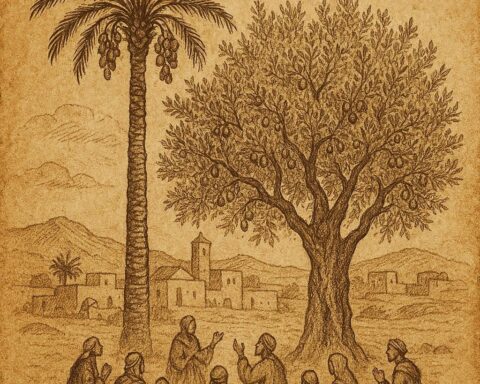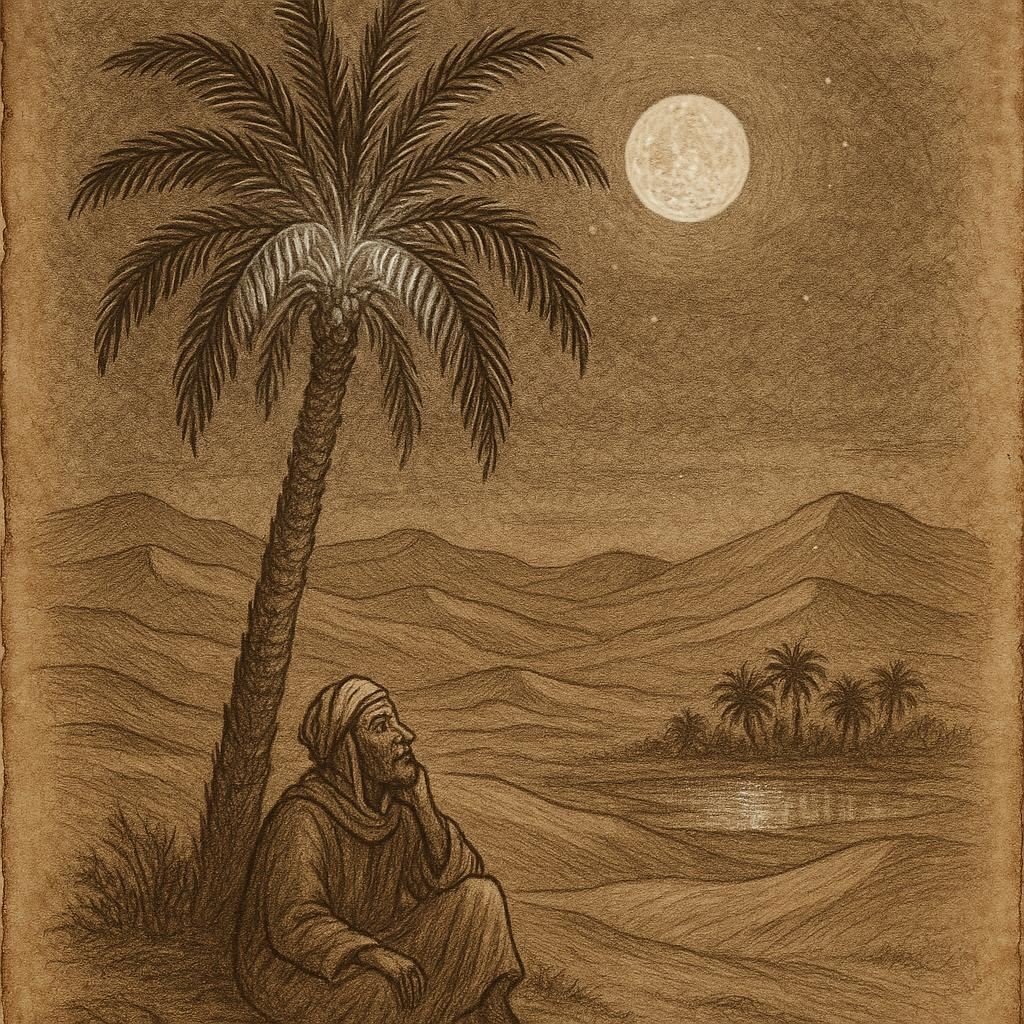
In the heart of the Tozeur Oasis, where the sand glows gold by day and silver by night, lived a poor farmer named Hafid. His life was simple and steady, marked by the songs of the desert wind and the slow rhythm of the date harvest. Among his few possessions, one stood above all others, a tall date palm that reached proudly toward the sky.
This palm had been planted by his father and had grown alongside Hafid since childhood. It shaded his home during the blistering days, gave him fruit when he was hungry, and stood silently through every storm. To Hafid, it was more than a tree. It was his oldest friend.
Each evening, when the air cooled and the stars appeared like scattered pearls, Hafid would sit beneath the palm. He would speak softly to it, telling it about his long days in the fields, his worries about poor harvests, and his hopes for a better life. The palm never answered, but Hafid found comfort in its silent companionship.
Fascinated by this tale? Discover more North African folktales
One bright night, when the moon hung full over the dunes and painted the oasis in silver light, something strange happened. As Hafid sat half asleep beneath his palm, he heard a deep and gentle voice.
“Hafid,” it said.
The farmer opened his eyes, startled. The sound seemed to come from above.
“Hafid,” said the voice again. “Do not be afraid. It is I, your palm.”
Hafid stood, trembling. He looked around the empty desert. There was no one in sight. Only his palm swayed slightly in the still night air.
“Are you speaking to me?” Hafid asked in disbelief.
“Yes,” said the voice, as soft as a breeze through dry leaves. “I speak only when the moon is full, and only to the one who truly cares for me.”
Hafid’s heart filled with wonder. The tree that had stood silently for years could speak. From that night onward, Hafid waited eagerly for every full moon. When the white light bathed the oasis, the palm would speak again. Each time it shared words filled with wisdom.
“Patience,” the palm once told him, “is the root of all abundance. The desert tests those who are quick to take but rewards those who learn to wait.”
Hafid listened and obeyed. He tended the palm more carefully than ever. He watered its roots even when water was scarce, brushed away pests from its trunk, and sat beside it every night. Soon his dates grew larger and sweeter than those of any other farmer in the oasis.
People began to notice. Merchants came from nearby villages to buy his fruit. Hafid became known as the man with the golden dates. His fortune began to change, and with it, his heart.
One evening, as he counted his coins by lamplight, a thought crept into his mind.
“If my palm can speak only when the moon is full,” he said to himself, “perhaps I can make it speak sooner. If I knew the secret of its magic, I could be rich beyond imagination.”
That night, he went to the tree and begged, “My wise palm, tell me how you speak. Tell me the secret of your power.”
The palm’s leaves rustled gently, but it said nothing.
Hafid returned night after night, growing restless. When the moon was not full, he shouted. When it stayed silent, he shook its trunk in anger. His patience, once deep as the desert well, began to dry up.
Finally, when the next full moon rose, the palm spoke again. But its voice was weaker now, as if the wind itself had grown tired.
“Hafid,” it said slowly, “I have spoken to you because your heart was humble. You have learned, and you have prospered. But now your desire has blinded you. Greed chokes the roots of wisdom.”
“Tell me your secret,” Hafid demanded. “You owe me that much.”
The palm sighed, its fronds whispering softly. “When you no longer seek to take, you will understand. But now it is too late.”
The light of the moon dimmed behind a drifting cloud. When it returned, the palm stood silent once more. Hafid waited, but the voice never came again.
Days passed, then months. The palm still bore fruit, but the sweetness faded. The dates grew smaller, the leaves turned dull, and the once proud tree stood weary under the sun. Hafid cared for it, hoping it would speak again, but it never did.
Years later, when he was old and frail, Hafid sat once more beneath his tree. The desert wind carried the scent of sand and memory. He whispered, “Forgive me. I did not understand.”
The palm remained silent, but in its stillness, Hafid felt peace. The desert had taught him what the voice once said. Patience is the root of abundance, and greed is the shadow that steals it away.
That night, as the moon rose over the dunes, Hafid closed his eyes beneath his silent friend, and the oasis glowed quietly in silver light.
Moral Lesson
The story teaches that true wisdom grows from patience and gratitude. When we let greed guide our hearts, even the blessings we already have begin to fade. Hafid’s journey reminds us that nature rewards care and humility, but it turns away from selfish desire.
Knowledge Check
Who is the main character in The Date Palm That Spoke at Midnight?
The main character is Hafid, a poor farmer from the Tozeur Oasis in Tunisia.What made the date palm unique in the story?
The palm could speak to Hafid, but only under the light of a full moon.What wisdom did the palm share with Hafid?
The palm taught Hafid that patience is the root of all abundance and that greed destroys what patience builds.How did Hafid lose the palm’s gift of speech?
His growing greed and impatience made the palm fall silent forever.What does the date palm symbolize in Tunisian culture?
It represents life, sustenance, endurance, and the deep connection between people and the desert.What is the main moral of The Date Palm That Spoke at Midnight?
The moral is that patience and humility bring lasting blessings, while greed leads to loss.
Source: Tunisian desert folktale, Tozeur Oasis oral traditions. Recorded by Lucienne Boulanger in Contes du Sahara Tunisien (1912).