When the world was still young and the reef hummed with first light, the moon and the sea argued in silence. The moon would drift above the ocean and pull at its skirts, lifting waves and kissing the shore. The sea answered in ripples and currents and the creatures that lived in its heart. Yet neither moon nor sea could agree who should decide how the tides should move.
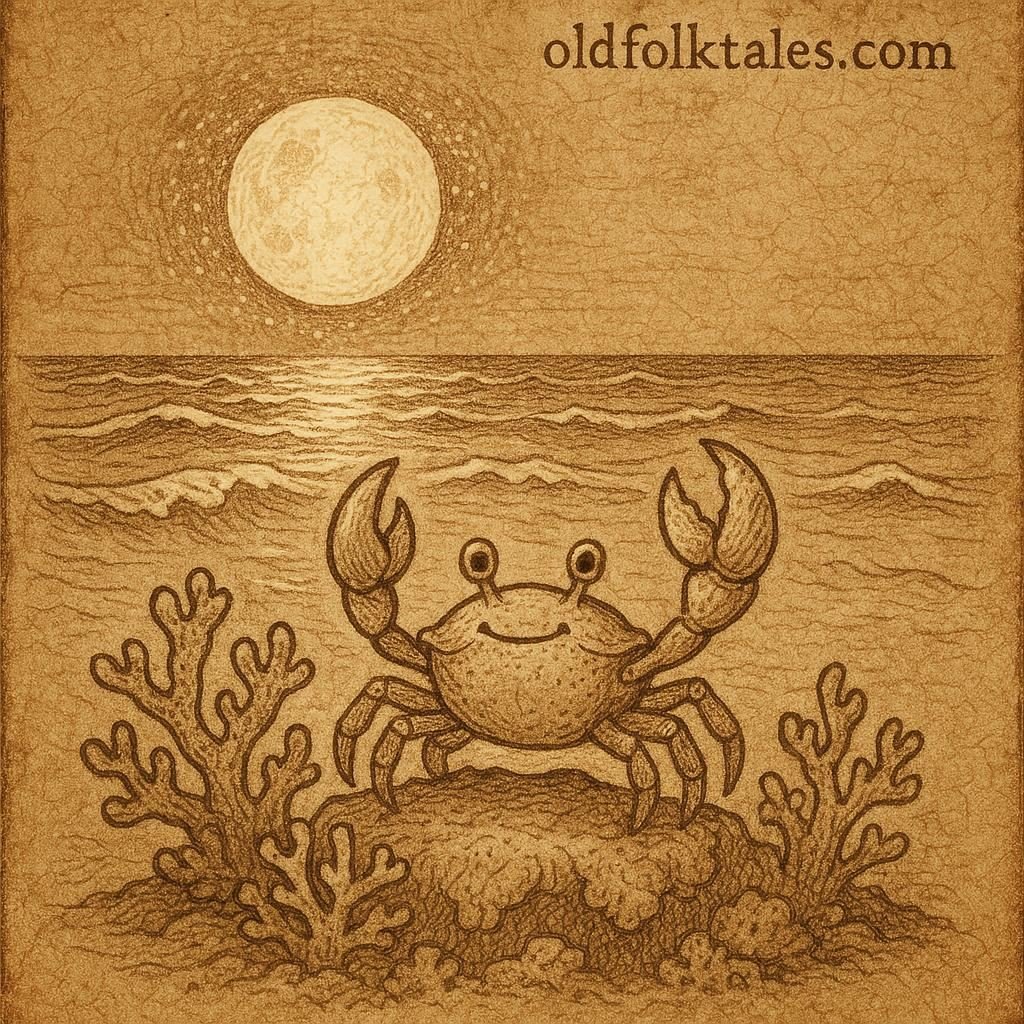
On the reef of Praslin there lived a crab named Koko. He was small and quick and clever in a way that made the older crabs shake their shells and mutter with admiration. Koko watched the moon each night as it rose like a slow lantern. He watched the way it tugged at the water and the way the sand sighed when the sea grew high. He loved the reef and the ordinary rhythms that let fish find shelter and palms drink at low tide. He feared that if the moon took all control, the reef would lose its steady heart.
Continue your journey: Read more East African folktales
One evening when the moon hung fat and round over the water, Koko climbed to the highest rock and called out to the silver light. The creatures of the reef hushed and turned their eyes to see what the brave little crab would do. The moon listened and then, with a voice like cooled silver, it answered. It had ruled the night for ages and it thought it should keep pulling the sea as it pleased.
Koko bowed his claws and said plainly that the reef needed balance. The moon laughed softly and suggested a contest to prove whose command the ocean should follow. A race across the reef at low tide would decide the matter. If the moon won, it would set the tides as it wished forever. If Koko won, the moon would agree to share the task of moving the sea with the reef and the creatures who lived there. The moon agreed and painted the sky with a thin smile.
On the night of the race, the reef shone with bioluminescent light. Tiny fish blinked like stars and the seaweed swayed like slow dancers. Koko wore courage as if it were a crown. He lined up on the shore and watched as the moon sent a thread of light down to the water. The moon would not race in the body of a man or beast. It sent its silver shadow to glide above the reef like a long pale ribbon. The rules were simple. The racer who reached the Old Rock at the reef head while the tide stayed gentle would win.
At the first hush the moon glided forward with a cold smoothness. It skimmed across the water in silence and seemed to know each breath the sea would take. Koko darted along the sandy path, his legs a blur as he hopped over coral and slipped beneath ribbons of kelp. The reef cheered in the hush that only islands can hold when something important moves in the night.
Halfway through the race Koko realised that speed alone would not win. The moon moved with endless patience and with a pull the reef could feel in its bones. The moon would not tire. Koko remembered his grandmother’s stories, how the elders would say the moon loved patterns and neat orders. The crab smiled and changed his course. He did not try to outrun the moon. He began instead to weave between tide pools and to lead the moon’s silver shadow into places where the water held like glass. He hopped across stones that kept the moonlight trapped for a moment and left ripples that made careful patterns on the sand.
The moon followed with its pale grace and soon found itself wrapped in circles of light that Koko had spun with skill and knowledge of the reef. The trick was not to race blindly but to show the moon the ways the reef lived. Koko led it toward the Old Rock and then, with a quick leap, he slipped into a narrow channel where the water moved slow and the moon’s light could not reach. The moon, proud and sudden, reached too far trying to follow. Its silver ribbon stretched and thinned and could not hold to every secret curve of the reef.
At the finish the tide stayed gentle enough for Koko to stand on the Old Rock and clap his claws in triumph. The moon hovered, breathless with thin light, and saw the patterns Koko had left. In that quiet the moon realised it had much to learn. It saw how the reef nested currents into places where life could settle and how a crab’s knowledge could shape the sea as surely as a moon’s pull. The moon bowed its pale face and agreed to share the task of the tides. From that night forward the reef kept its rhythms and the moon learned to listen.
The crabs cheered and the fish danced in little spirals. Koko returned to his hole a hero, not because he had beaten the moon in force, but because he had taught the moon to respect balance and life. The reef gained a harmony that let shells find shelter and seeds find soil. The moon continued to rise and pull the sea, but it no longer ruled with only its own will. The tides became a conversation between moon and reef and creatures that lived within the shallow world.
Villagers who walked the shore still tell this tale to children who wake at night. They point to the rhythm of the ocean and to the way the tide changes. They remind the young ones that small creatures can teach even the greatest forces to be kinder and wiser.
Moral Lesson
The story of The Crab Who Outsmarted the Moon shows that wisdom and care can balance great power. Courage does not always mean fighting with strength. Sometimes it means guiding the proud with skill and patience so that what is strong learns to be gentle.
Knowledge Check
Who challenged the moon in the story?
A clever crab named Koko challenged the moon to a race across the reef.What did the crab hope to protect by racing the moon?
He wanted to preserve the reef and its steady rhythms so the creatures could live in balance.How did Koko win the race without outpacing the moon?
He used knowledge of the reef to weave patterns of light and lead the moon into places where its pull could not control everything.What agreement did the moon make after the race?
The moon agreed to share control of the tides with the reef and to listen to the way the shallow world lived.What lesson do the villagers teach children with this tale?
They teach that small and wise actions can influence greater forces and that balance matters more than dominance.How did the tides change after the crab and the moon reached their understanding?
The tides became a conversation between the moon and the reef so that life in the shallows could thrive.
Source: Children’s reef tale, Praslin Island. Adapted from oral storytelling in Creole Moon Tales by Andrée Madeleine 1948.