Long ago, before ants learned the science of trails, the market at Eke day filled with talk of a chief who loved to promise. He promised roads, he promised shade trees, he promised new drums for festivals, and he promised to fix the well that coughed up mud. The people waited, their backs growing tired with patient hope. In those days, ants were lazy swimmers in crumbs and never carried more than a grain.
One dry season, a famine leaned its elbow on the village. Harvest baskets rattled like empty gourds, and even the stubborn yam looked thin. The chief set a great feast from his storehouse, pounding fufu until the mortar sang. People arrived with bowls and good clothes. Ants arrived too, small teachers with black suits, ready to learn what a promise tastes like.
At the feast, the chief stood and said, My people, your burden will be my burden, your load will be my load. He poured soup for himself first, then for his friends, then for those who could clap loudest. The ants climbed the table leg and circled the ugba, the oil bean that smells like a neighbor’s laughter. They carried one sliver, then two, then three, until the chief’s guards slapped the table and shouted, Away. Ants fell, but they did not forget the words, your load will be my load.
Night arrived with harmattan dust and restless dreams. The ants gathered under a broken pot and debated like elders. If a man can carry the load of a whole village in his mouth, why should we carry only crumbs. The queen flicked her feelers, the sign of decision. They trained at dawn. They lifted pebbles together, they pulled grass stems in groups, they walked in single file until their feet remembered the earth like a song. A child watching said, See how the small learn from the big, and the big forget what they said.
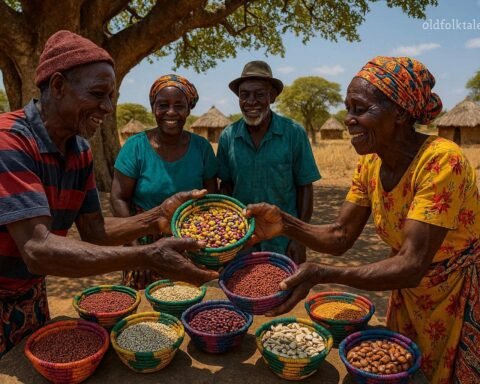
When the sun took its place, the ants returned to the market. This time they did not reach for the chief’s table. They visited the woman who sold palm oil, the hunter with smoked meat, the old man who still carved spoons with patient hands. In every place, they carried small gifts away, not to hide them, but to share with those who could not come. A blind woman found a line of ants at her mat, each with the tiniest sliver of fish. A widow found an ant parade delivering one grain of salt at a time. The village whispered, The small are making a road where the big only talk.
When the chief heard, he laughed, then he frowned. His friends said, Crush them, they steal. But the storyteller said, Watch them, they teach. The ants grew stronger. They carried bits of leaf like green sails, they lifted seeds like oaths kept, and they walked in paths that turned into maps. Children followed and learned to help, carrying calabashes of water to the old. A proverb was born in the dust, Promise feeds the ear, effort feeds the belly.
A season later, the chief tried again to stand like a tree without roots. He promised drums and shade, he promised wells and roads. The ants ignored him and kept their work. The new road arrived, not from the chief’s mouth, but from many small feet. When rain returned, the village ate, not because one man lifted everything, but because everyone learned to carry something.
From that day, ants carried bundles bigger than their backs. When people saw them, they remembered that a village lives by honest shoulders. Children laughed and cheered the ant parades, and elders smiled, the lesson walking by on six legs.
Moral, Many small efforts outweigh one loud promise
Author’s Note, Igbo markets pulse with communal labor, so this retelling links the ant’s strength to collective action and the social critique of empty leadership. The ants learn from a boast and turn it into a practice, a transformation that mirrors the proverb logic at the heart of Igbo storytelling.
Knowledge Check
Proverb, What line contrasts words and work, answer, Promise feeds the ear, effort feeds the belly
Turning Point, What inspires the ants to train, answer, The chief’s boast, your load will be my load
Community, Who first benefits from the ants’ effort, answer, Elders, widows, and those who cannot come to market
Symbol, What do leaf bits become in the story, answer, Green sails and signs of collective strength
Theme, What lesson do children learn by following, answer, Everyone can carry something
Outcome, What finally builds the road, answer, Many small feet, not one man’s promise
Origin, Igbo, Nigeria