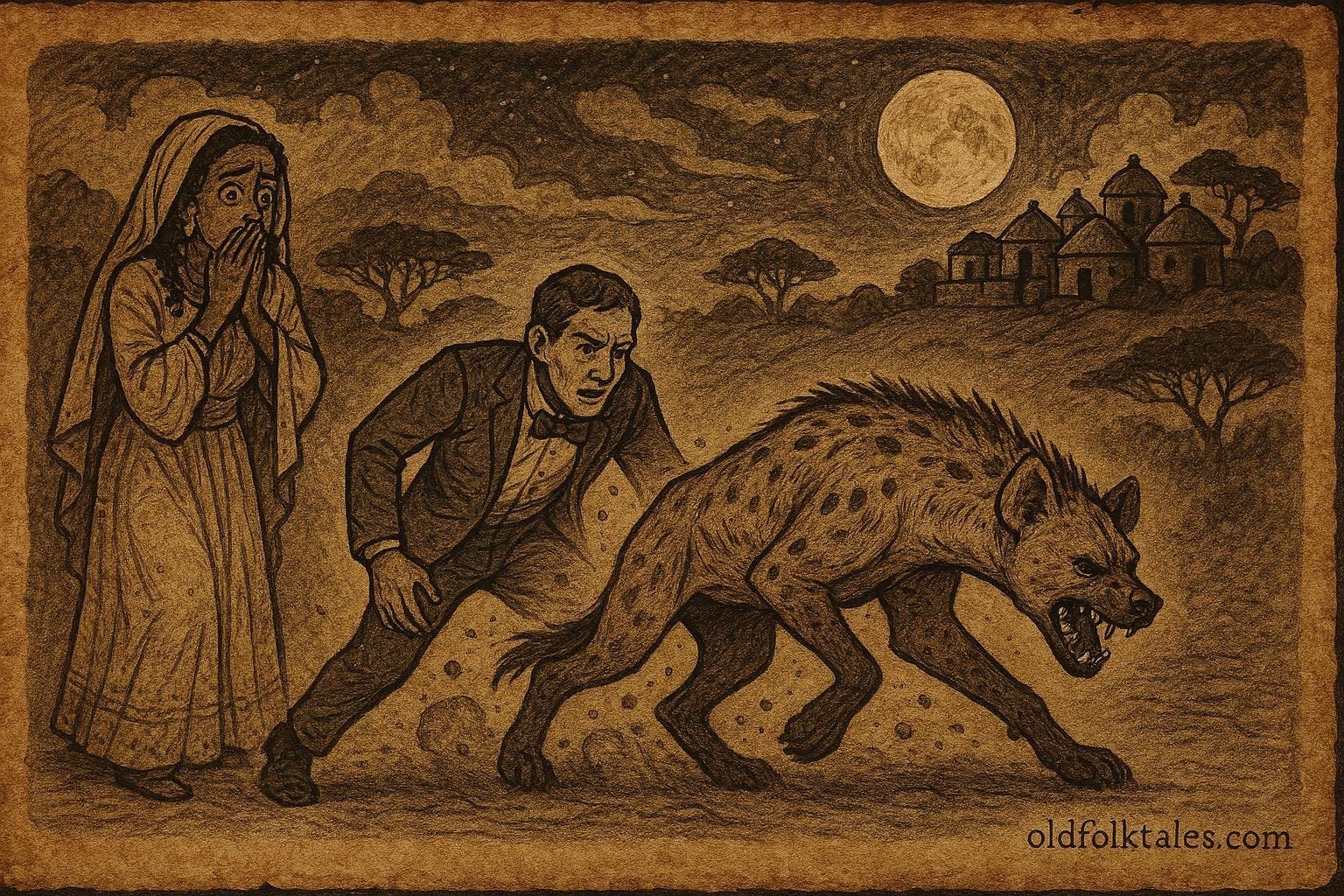
There are moments when appearances are trusted more than wisdom, when the surface of things is accepted without question. In such moments, danger does not appear as danger, but as something familiar, even desirable.
In a time long ago, in a village surrounded by dry fields and quiet paths, there lived a young woman known for her gentleness and obedience. She was admired not only for her beauty, but for the way she carried herself with humility. Many believed she would make a good wife, and as she grew older, attention from suitors began to increase.
Her family, like others in the village, valued marriage as a sacred union. It was not only about companionship, but about trust, responsibility, and the joining of families.
One day, a stranger arrived in the village.
He came with calm speech and respectful manners. He presented himself as a man of good standing, someone seeking a wife and a place to settle. His words were carefully chosen, and his behavior showed no immediate cause for suspicion.
Fascinated by this tale? Discover more North African folktales
He was welcomed cautiously, as was customary for visitors who came with honorable intentions.
When he saw the young woman, he expressed strong interest in her.
He spoke to her family with confidence, promising respect and stability. His voice was gentle, and his appearance gave no indication of danger.
To the family, he seemed suitable. To the woman, he appeared acceptable. And so, arrangements began.
What no one knew was that the stranger was not what he claimed to be.
He was a hyena, taking human form through deception.
But in that moment, no one could see beyond the disguise.
The marriage was arranged, and preparations began.
Food was gathered, guests were invited, and the village became alive with activity. Everything seemed to follow the usual pattern of celebration.
The bride, though quiet, accepted her role. She trusted the judgment of her family and the customs of her people.
On the day of the marriage, the groom arrived dressed as a man.
He spoke little, but smiled often. Those who looked at him saw nothing unusual. The celebration continued, and the union was completed according to tradition.
After the marriage, the bride was taken to live with her new husband.
At first, life appeared normal. The groom behaved like a man, sharing food and speaking in ways that seemed ordinary. But slowly, subtle signs began to appear.
There were moments when his behavior changed.
At night, he would leave quietly, returning before dawn without explanation. His speech sometimes shifted in tone, and his attention seemed drawn to things others did not notice.
The bride began to feel a growing unease.
It was not something she could easily explain, but something within her sensed that all was not as it seemed.
She observed him more carefully.
She noticed the way he moved, the way he reacted to certain sounds, and the way his presence seemed different in darkness than in daylight.
Still, she said nothing.
One night, her suspicion deepened.
The groom left the house quietly, thinking he was unobserved. But the bride, unable to sleep, followed at a distance.
She moved carefully, staying in the shadows, watching as he left the village and moved toward the outskirts where wild places began.
What she saw changed everything.
In the dim light, the groom’s form began to shift.
The human appearance faded, revealing what had been hidden beneath. The figure she had known as her husband was not a man at all, but a hyena.
She stood frozen, unable to move or speak.
Fear and shock overwhelmed her. The truth she had suspected was now undeniable.
The hyena, unaware that he had been seen, continued into the wild.
The bride returned silently to the village, her mind filled with confusion and fear.
When dawn came, she told her family what she had witnessed.
At first, they struggled to believe her. The idea that a hyena had taken human form and entered their household seemed impossible. But the certainty in her voice could not be ignored.
The elders gathered to consider her words.
They spoke carefully, weighing tradition, experience, and the signs that had been overlooked.
Slowly, they began to understand that deception had indeed entered their home.
It was decided that the matter must be confronted.
When the hyena returned, he was watched closely. The signs that had once been subtle were now clear to those who knew what to look for.
There was no longer doubt.
The truth was revealed openly.
The hyena’s disguise could no longer be maintained in the presence of those who had discovered him.
His true nature was exposed, and the marriage that had been formed under false identity was broken.
The bride was returned to her family.
She carried the weight of what she had experienced, but she was no longer bound to deception.
The community learned from the event, understanding that appearances can be misleading, and that not everything that seems human is truly so.
From that time onward, the story was told as a warning.
It reminded people to look beyond words and appearances, and to trust observation as much as speech. It also reminded them that deception, no matter how carefully hidden, will eventually be revealed.
Fascinated by this tale? Discover more North African folktales
Moral Lesson
Deception may hide truth for a time, but it cannot conceal itself forever. Wisdom and careful observation protect against hidden danger.
Knowledge Check
1. Who was the hyena in the story disguised as?
A human groom seeking marriage.
2. What happened after the marriage?
Strange behavior revealed the groom’s hidden identity.
3. How was the hyena’s identity discovered?
The bride followed him and saw him transform at night.
4. What did the elders do after learning the truth?
They confirmed the deception and ended the marriage.
5. What lesson did the community learn?
That appearances can be deceptive and must be carefully observed.
6. What is the main theme of the story?
Deception and hidden danger.
Source
Eritrean folktale, Tigrinya tradition. Collected by Enno Littmann in Publications of the Princeton Expedition to Abyssinia (1910).