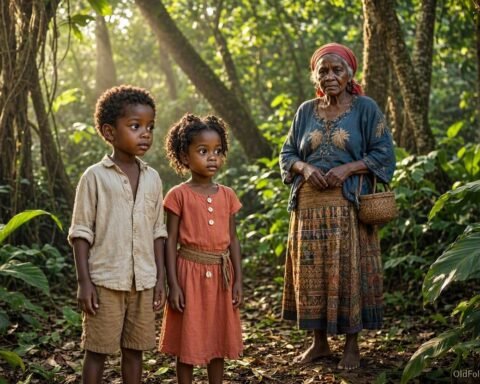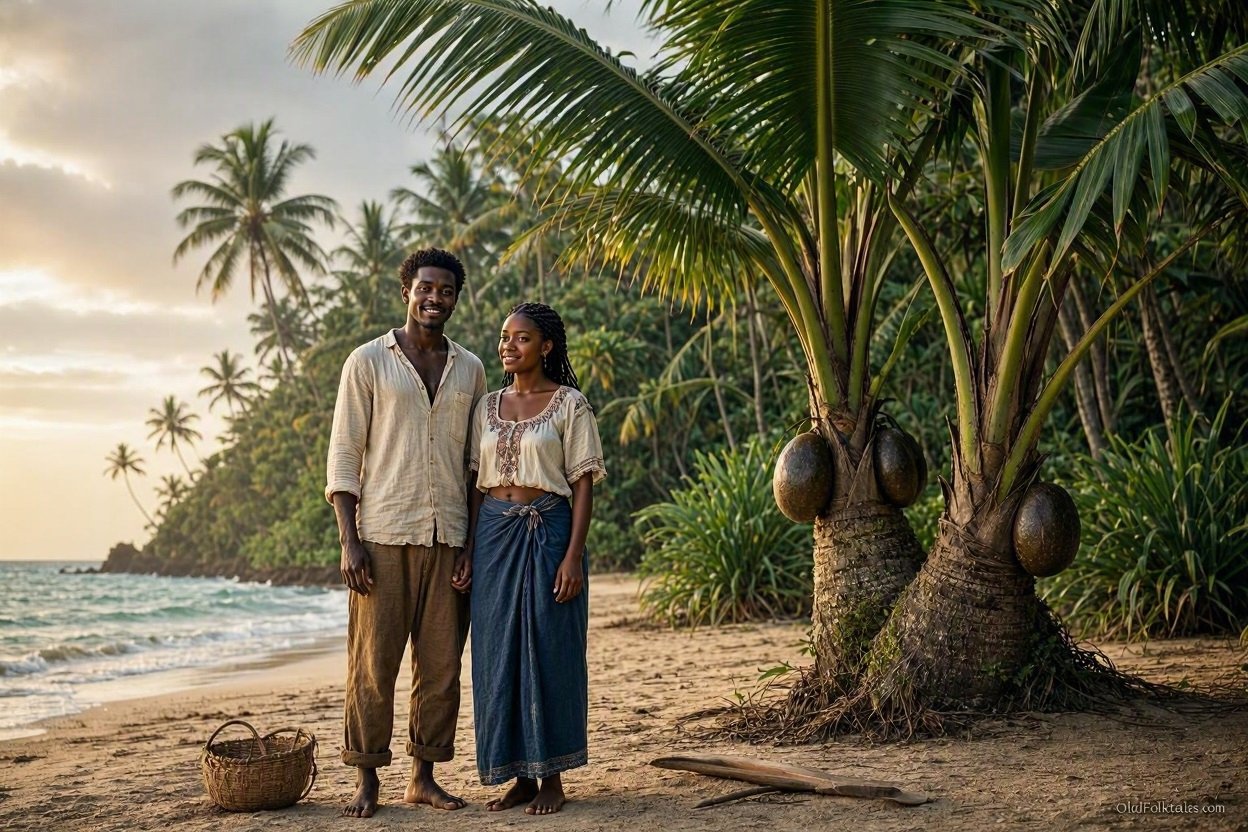
The two young people had grown up knowing one another, but as they became older, their feelings changed. What had once been ordinary family affection slowly became a deep love that neither of them could easily hide. They knew that their relationship would not be accepted by their families, and every attempt to ignore their feelings only made the situation more difficult.
Their families strongly opposed the relationship. The young couple was expected to accept the boundaries placed around them and forget what they felt for each other. But the more they were separated, the more determined they became to remain together.
They eventually realised that staying where they were would never allow them to live peacefully. Rather than give up their love, they made a secret decision. They would leave their home and find somewhere they could live together without the constant opposition of their families.
One night, they quietly escaped and travelled to another island. They carried little with them, but they carried something they considered far more valuable: the hope of building a life together.
Want more? Read more West African folktales now
The island was unfamiliar, but it offered them something they had never been allowed to enjoy at home. They were free from the arguments and disapproval that had followed their relationship. Together, they found a place to stay and began building a simple life.
Their days were peaceful. They worked together, shared what they had and enjoyed the freedom of being able to live without constantly looking over their shoulders. Although they had left behind their families and everything they knew, they believed that their love had been worth the sacrifice.
For some time, happiness seemed possible.
But their peaceful life did not last.
One day, a group of bandits arrived on the island. The couple found themselves caught in circumstances they could not control. The bandits were violent, and the young couple had little chance of defending themselves.
They tried to escape, but the danger followed them.
Their new life, which they had created with so much hope, was suddenly destroyed.
The couple were killed, leaving behind the island that had once represented freedom and happiness.
Their deaths brought an end to their earthly love, but according to the legend, their story did not end there.
After they were gone, something extraordinary happened at the place where they had died.
Two unusual trees began to grow.
They were unlike the ordinary trees found around them. Their appearance seemed almost mysterious, as though nature itself had preserved something of the young couple’s story.
The people who eventually learned what had happened began connecting the trees with the lovers.
The trees became a symbol of the couple’s love, their separation from their families and the tragic end of their journey.
Over time, the story became intertwined with the legendary coco de mer.
The remarkable palm became more than a plant in the imagination of those who heard the tale. It became connected with romance, mystery and the memory of two people whose love had survived family opposition but could not survive violence.
The legend gave the natural world a human story.
The trees were no longer simply trees.
They represented two lives that had been joined together in love and separated through tragedy.
The story also explained why people regarded the coco de mer with such fascination. Its unusual appearance and enormous seeds had already made it one of the most extraordinary plants associated with the Seychelles. Through storytelling, its mystery became connected with an equally extraordinary tale of love.
The couple had left their home because they wanted to choose their own future.
They believed that another island could give them the freedom they had been denied.
For a while, they were right.
They found happiness away from the arguments and restrictions of their families. They created a life based on their own choices and shared their days together.
But the tragedy that eventually found them transformed their story into something larger than their individual lives.
Their love became part of the landscape.
The trees that grew after their deaths were remembered as living reminders of what they had shared.
People could look at them and remember that love can inspire people to make extraordinary sacrifices.
But the story also carries a darker lesson.
Leaving behind those who oppose us does not mean that every danger disappears.
The couple escaped one kind of conflict only to encounter another.
Their greatest enemies were not the families who had rejected their relationship, but the violent bandits whose arrival brought their lives to a tragic end.
The legend therefore contains both romance and warning.
The lovers had wanted freedom.
They wanted to create a home where they could live according to their own wishes.
They found that freedom, but their happiness was fragile.
Their story survived because the natural world seemed to preserve a memory of them.
The two trees became symbols of their connection.
As generations passed, the tale continued to be told, allowing the couple’s love to live on even though their lives had ended.
The story became part of the cultural imagination of the Seychelles, where the natural environment is deeply connected with legends and traditional storytelling.
The coco de mer, already remarkable because of its unusual form and enormous seed, became associated with a tale of passion, escape and loss.
For those who heard the legend, the tree could be seen as more than a part of the landscape.
It could be imagined as a memorial created by nature itself.
The lovers had disappeared, but something remained.
Their story remained in people’s memories.
Their love remained in the tale.
And according to the legend, their presence remained in the extraordinary trees that grew after their deaths.
That is why the story continues to carry a strange beauty.
It is not simply about two people who fell in love.
It is about two people who refused to abandon each other when their families stood against them.
It is about the freedom they found after leaving everything familiar behind.
It is also about how quickly happiness can be destroyed by forces beyond human control.
Most importantly, it is about memory.
The lovers could not remain together forever, but the story gave their relationship another form.
Nature became the keeper of their memory.
The trees became reminders of their lives, while the legend connected their tragic romance with one of the most fascinating symbols of the Seychelles.
Their story suggests that love may end in the lives of those who experience it, but the memory of that love can continue through stories, places and symbols.
And whenever the legendary coco de mer is remembered through this tale, the lovers’ journey is remembered with it: a journey that began with forbidden love, continued through secret escape and happiness, and ended in tragedy, leaving nature itself to carry their memory forward.
Continue your journey: Read more East African folktales
Moral Lesson
Love can inspire courage and sacrifice, but difficult choices can carry unexpected consequences. The story also reminds us that memories can survive through nature, culture and storytelling.
Knowledge Check
1. Why was the couple’s relationship opposed by their families?
Their families did not accept their relationship and wanted them to remain apart.
2. What did the young couple decide to do when they realised they could not remain together at home?
They secretly escaped to another island to build a life together.
3. What kind of life did they initially have on the new island?
They lived peacefully and happily, enjoying the freedom to be together.
4. What eventually brought their happiness to an end?
A group of violent bandits attacked them, resulting in their deaths.
5. What happened after the couple died?
Two extraordinary trees grew from the place where they died.
6. How did their story become connected with the coco de mer?
The unusual trees became associated with the lovers’ tragic story and were connected through legend with the remarkable coco de mer.
Source
Adapted from “Zistwar Pye Kokodmer,” documented in Kont ek Lezann Volim 1 (1990), Institut Kreol, pp. 123–126.