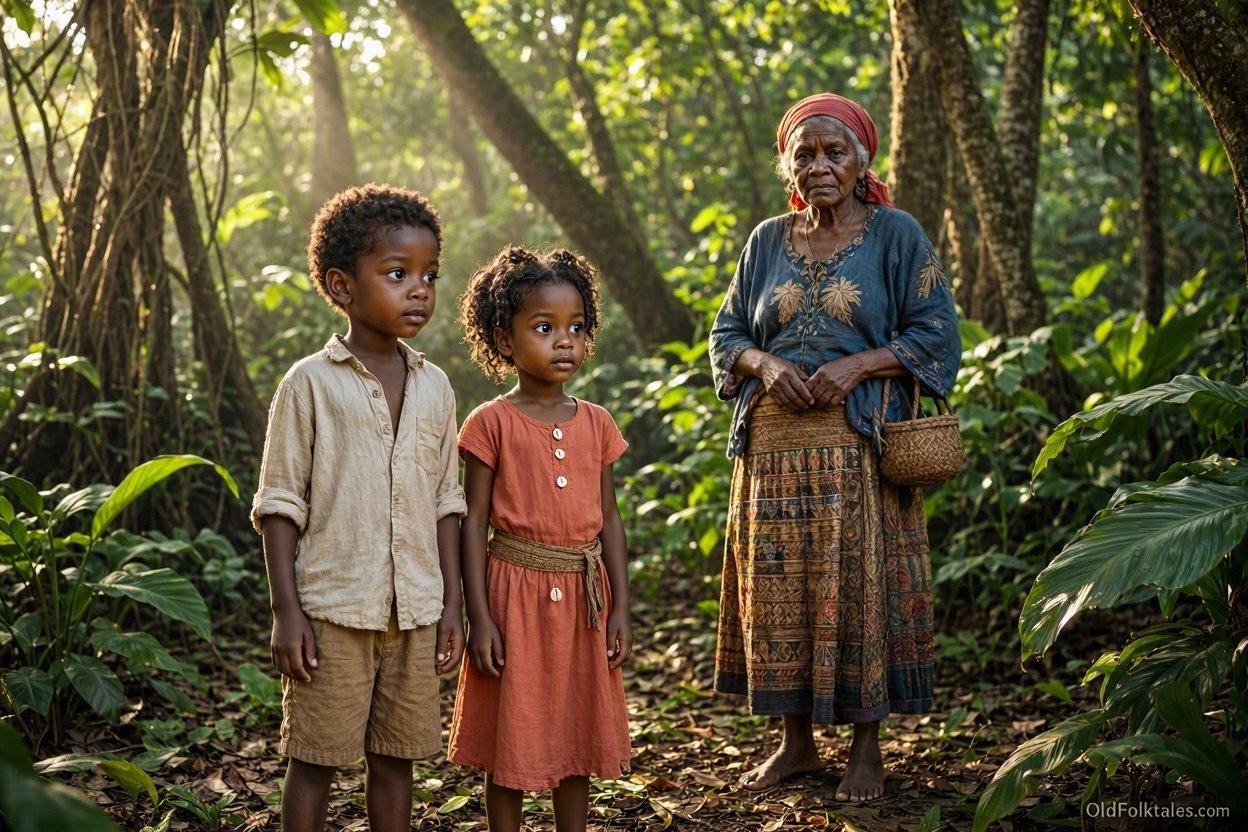
The two children had been warned not to wander too far from the village. They knew the paths around their home well, but curiosity often made familiar places seem too ordinary. One day, while playing together, they followed a path that took them farther from the houses than they had ever gone before. At first, neither child was worried. They could still see the familiar surroundings behind them, and they were certain they would find their way home whenever they wanted.
They continued walking until the village was no longer visible. The path became narrower, and the trees around them seemed taller and denser. When the children finally stopped to look around, they realised that they did not recognise the place at all.
They tried to retrace their steps, but every path seemed unfamiliar. The more they searched, the more confused they became. Fear slowly replaced their earlier excitement.
As they walked on, they came across an elderly woman. She appeared harmless and spoke to them gently. When she noticed that the children were alone, she asked where they were going.
The children explained that they had lost their way.
The woman smiled and offered to help them.
She invited them to follow her home, promising that they could rest there and find their way back later. Exhausted and frightened, the children were relieved to meet someone who seemed willing to help. They followed her, believing that they had finally found safety.
Don’t miss out: Read more Southern African folktales
The woman’s home stood away from the village. It was quiet, and there was little movement around it. As soon as the children entered, however, something about the place made them uncomfortable.
The woman continued behaving kindly, offering them food and telling them not to worry. Yet the children began noticing things that did not seem right. Her questions became increasingly strange, and the warmth of her welcome began to feel like a disguise.
The older child watched her carefully.
Something was wrong.
The child quietly warned the younger one to remain alert.
They began looking around the house and realised that they were not simply guests. The woman had brought them there for another reason.
The children were frightened when they understood the danger.
The woman who had appeared kind was hiding a terrible secret.
She intended to harm them.
The children realised that they had walked into a trap.
They knew that they could not simply wait for the woman to decide what to do with them. They had to find a way out before it was too late.
But escaping would not be easy.
The house was unfamiliar, and the woman knew the surroundings better than they did. The children also feared that running without a plan might lead them deeper into the wilderness.
They needed to think carefully.
The younger child began to cry, but the older one encouraged the child to remain quiet.
“We have to stay calm,” the older child whispered.
They watched the woman closely and waited for an opportunity.
Their fear was real, but so was their determination to survive.
The children began searching for anything that could help them escape. They noticed an opportunity that the woman had overlooked and quietly began preparing their plan.
They understood that they could not defeat the woman through strength.
They would have to rely on intelligence.
At the right moment, the children acted.
They used the opportunity to leave the place without attracting immediate attention. They moved quickly and carefully, following what they believed was the safest route away from the woman’s home.
For a while, they were terrified that she would discover their escape.
They kept moving.
The forest seemed endless, and every sound made them look behind them.
They had no certainty that they were heading in the right direction.
Then, when their hope was beginning to weaken, they encountered unexpected help.
Someone noticed that the children were alone and understood that they were in trouble. The children explained what had happened and received assistance in finding a safer path.
The help gave them renewed courage.
They followed the guidance they were given and continued their journey.
Eventually, the surroundings began to look familiar.
The trees became less dense.
The path became wider.
Then the children recognised the places they had seen before.
They were getting closer to home.
When they finally returned to the village, their family was relieved to see them alive and safe. The children explained what had happened and warned others about the elderly woman who had deceived them.
Their experience changed the way they looked at unfamiliar kindness.
They had learned that appearances could be misleading.
The woman had seemed harmless because of her age and gentle manner, but her intentions had been dangerous.
The children also understood why they had been warned not to wander away from home.
The warning had not been meant to prevent them from exploring the world forever.
It was meant to protect them from dangers they were too young to recognise.
Their journey had begun as an innocent adventure.
They had wandered away because they believed they could always find their way back.
But once they became lost, they were vulnerable to anyone who offered help.
Fortunately, they recognised the danger before it was too late.
Their survival depended on several things: remaining alert, trusting their instincts, helping one another and thinking carefully instead of allowing fear to control them.
The older child had protected the younger one by staying calm.
The younger child had also shown courage by continuing despite being frightened.
Together, they had managed to escape a situation that could have ended very differently.
The experience became a story remembered in the village.
Parents used it to remind children that they should be careful when travelling beyond familiar places.
They also taught them that not every person who offers help should immediately be trusted.
At the same time, the story did not teach children to fear everyone.
Instead, it taught them to observe.
Kindness should be recognised, but unusual behaviour should not be ignored simply because someone appears friendly.
The children had made a mistake by wandering too far from home, but they did not allow that mistake to become the end of their story.
They learned from it.
They became more careful.
They understood that courage does not always mean confronting danger directly.
Sometimes courage means staying quiet when necessary, watching carefully, accepting help and waiting for the right opportunity to escape.
Their adventure also taught them the value of staying together.
Had they separated, their chances of finding safety might have been much smaller.
By remaining together, they could encourage one another and share ideas.
When one became frightened, the other provided strength.
When one was uncertain, the other helped them think.
That cooperation became one of the reasons they survived.
The children never forgot the path beyond the village.
It had once represented curiosity and adventure.
After their experience, it also represented a lesson.
The world beyond familiar places could contain wonderful things, but it could also contain dangers that were difficult to recognise.
They had discovered that lesson for themselves.
Most importantly, they returned home wiser than when they had left.
Their journey reminded everyone who heard the tale that children should listen to good warnings, remain alert around strangers and never allow fear to prevent them from thinking.
The children had wandered beyond the village.
They had become lost.
They had trusted the wrong person.
But when danger appeared, they found the courage and intelligence to escape.
Their experience became a reminder that even the most frightening situation can sometimes be overcome when people remain resourceful, help one another and refuse to give up.
Continue your journey: Read more East African folktales
Moral Lesson
Do not ignore warnings or trust strangers simply because they appear kind. When faced with danger, remain calm, stay together and use intelligence to find a safe way out.
Knowledge Check
1. Why did the two children become lost?
They wandered too far from their village while exploring.
2. Who did the children meet after becoming lost?
They met an elderly woman who appeared kind and willing to help them.
3. What did the children eventually discover about the woman?
They discovered that she was hiding a dangerous secret and intended to harm them.
4. How did the children respond when they realised they were in danger?
They remained alert, stayed together and searched for a clever opportunity to escape.
5. What helped the children after they escaped?
They encountered unexpected help from someone who recognised that they were in trouble and helped them find a safer route.
6. What is the main lesson of the story?
The story teaches children to listen to warnings, be careful with strangers, stay together during danger and use courage and intelligence to survive difficult situations.
Source
Adapted from a Heritage Research collection documented in the Seychellois Creole Folklore Database.