Long ago, in a Teke village along the banks of the Congo River in what is now Congo-Brazzaville, there lived a boy named Nguema. Nguema was curious, adventurous, and always eager to explore the dense forests that stretched beyond the village. While other children played near the riverbanks, Nguema wandered into the forests, listening to the birds, the wind, and the whispers of the old trees.
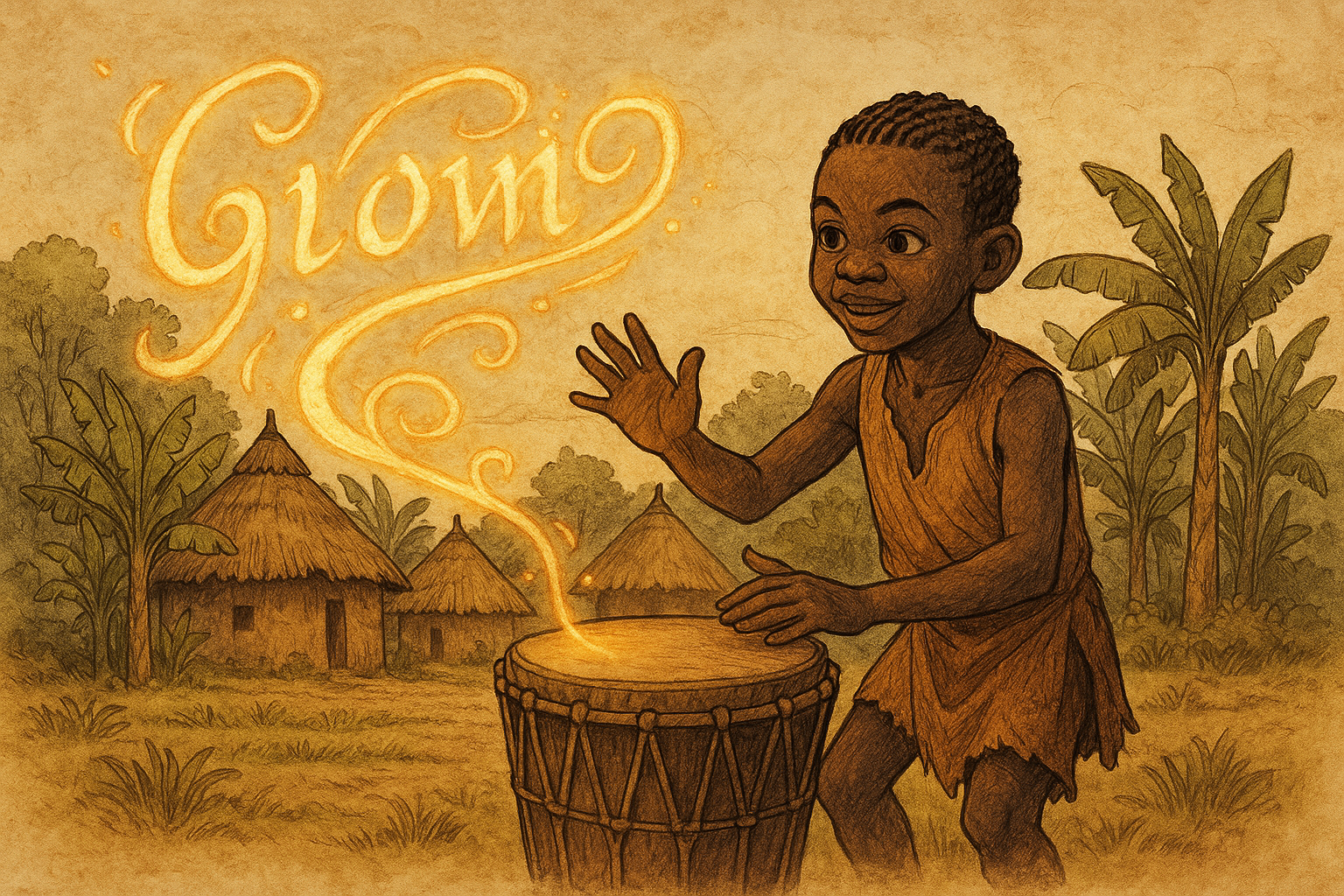
One evening, as the sun dipped low behind the hills, Nguema heard a strange rhythm drifting through the trees. It was a drumbeat, unlike any he had ever heard, and it seemed to call his name. He followed the sound until he reached a clearing where a large drum rested on a carved wooden stand. To his astonishment, the drum spoke. “Nguema,” it said, “I have waited for a boy with a brave heart and a listening ear. Will you hear my story?”
Nguema blinked in surprise but nodded eagerly. The drum told him that it was a special talking drum, a vessel of history and wisdom for the Teke people. Its rhythm could convey messages across villages, summon courage, and even warn of danger. However, the drum could only speak to someone who approached it with respect and patience, not fear or greed.
The boy promised to honor the drum, and the drum began to teach him. It spoke in rhythms and beats, and Nguema learned to translate each beat into words and meanings. He learned the stories of his ancestors, the movements of the river, and the secrets of the forests. Days passed, and Nguema grew more skilled, able to call messages across the village and signal hunters or farmers with the drum’s wisdom.
But Nguema’s gift soon attracted the attention of a jealous village elder named Mabi. Mabi had long been the keeper of the drum, though he could not hear its voice. He saw Nguema’s skill as a threat to his authority and plotted to take the drum for himself. One night, Mabi crept into the clearing, snatched the drum, and tried to beat it with force. The drum fell silent. Its voice would not answer those who approached it with greed or arrogance.
Nguema, hearing the absence of its rhythm, ran to the clearing at dawn. He bowed respectfully before the drum and whispered, “I am here to listen, not to take. Please speak to me again, so I may honor your wisdom.” Slowly, the drum’s voice returned, soft and melodic. It told Nguema that the drum had chosen him because of his patience, humility, and courage. Mabi had failed because he sought control, not understanding.
The villagers soon learned of the conflict. Mabi confessed his greed, and the elders reminded the people that power without respect is empty. Nguema continued to serve as the drum’s keeper, sending messages through its rhythms, preserving history, and guiding the village. Travelers from nearby communities came to hear the drum’s lessons, and Nguema became known not just as a boy who could speak to the drum, but as a wise young man who taught others to listen.
Over time, the story of The Boy and the Talking Drum spread beyond the Teke villages. People learned that the drum was more than an instrument; it was a teacher. Its beats carried knowledge, courage, and warnings, but only those who approached with patience and respect could understand its language. Nguema’s gift reminded the villagers that listening carefully and acting with integrity was more powerful than claiming authority or showing force.
As Nguema grew older, he passed the drum on to another child with a brave heart and a humble spirit. The drum continued to speak, teaching every generation the importance of wisdom, patience, and respect. The rivers and forests echoed with its rhythms, connecting people across villages and reminding them that true understanding comes from listening before speaking, observing before acting, and honoring the gifts entrusted to them.
Moral Lesson
The tale of The Boy and the Talking Drum teaches that wisdom, patience, and respect are the greatest powers. Knowledge and gifts cannot be forced or taken by greed. True understanding comes to those who listen carefully, act with integrity, and honor the lessons of the past. Authority without respect is meaningless, while humility and patience allow even the youngest to carry great responsibilities.
Knowledge Check: The Boy and the Talking Drum
- Who is Nguema in the Teke folktale The Boy and the Talking Drum?
Nguema is a young boy from a Teke village in Congo-Brazzaville who learns to hear and understand the voice of the magical talking drum. - What is special about the talking drum in the story?
The drum conveys messages across villages, preserves history, warns of danger, and teaches wisdom, but it only speaks to those who approach it with respect. - Why could Mabi not hear the drum?
Mabi could not hear the drum because he approached it with greed and arrogance instead of patience and humility. - How did Nguema earn the drum’s trust?
He approached it with patience, humility, and a willingness to learn, listening carefully to the rhythms and meanings without trying to control it. - Why is The Boy and the Talking Drum considered a Teke folktale from Congo-Brazzaville?
It reflects Teke cultural values of respect for elders, the importance of listening, oral storytelling traditions, and the spiritual significance of drums in communication and teaching. - What is the moral of The Boy and the Talking Drum?
The folktale emphasizes that wisdom, patience, and respect are more powerful than force or greed, and that understanding and integrity allow gifts and responsibilities to be properly used.
Cultural Origin: Teke Folktales, Congo-Brazzaville