On the edge of a small Swahili fishing village, where the waves kissed the sand in long sighs, there lived a hyena named Fisi. Fisi had a belly that was never full and ears that could catch the sound of food from miles away. The villagers knew him well, for he often lurked near their cooking fires, hoping for scraps.
One hot afternoon, as the tide retreated and the air shimmered, Fisi heard a strange deep sound echoing from the mangrove forest. DUM… dum… DUM… dum. It was steady, like the heartbeat of the earth. His ears twitched. “That must be a feast drum,” Fisi thought. “Where there is a drum, there is dancing. And where there is dancing, there is food!”
Fisi trotted toward the sound, paws crunching dry leaves. The drumming grew louder, richer, like the sea at high tide. He imagined grilled fish, roasted yams, and bowls of sweet coconut rice. His mouth watered.
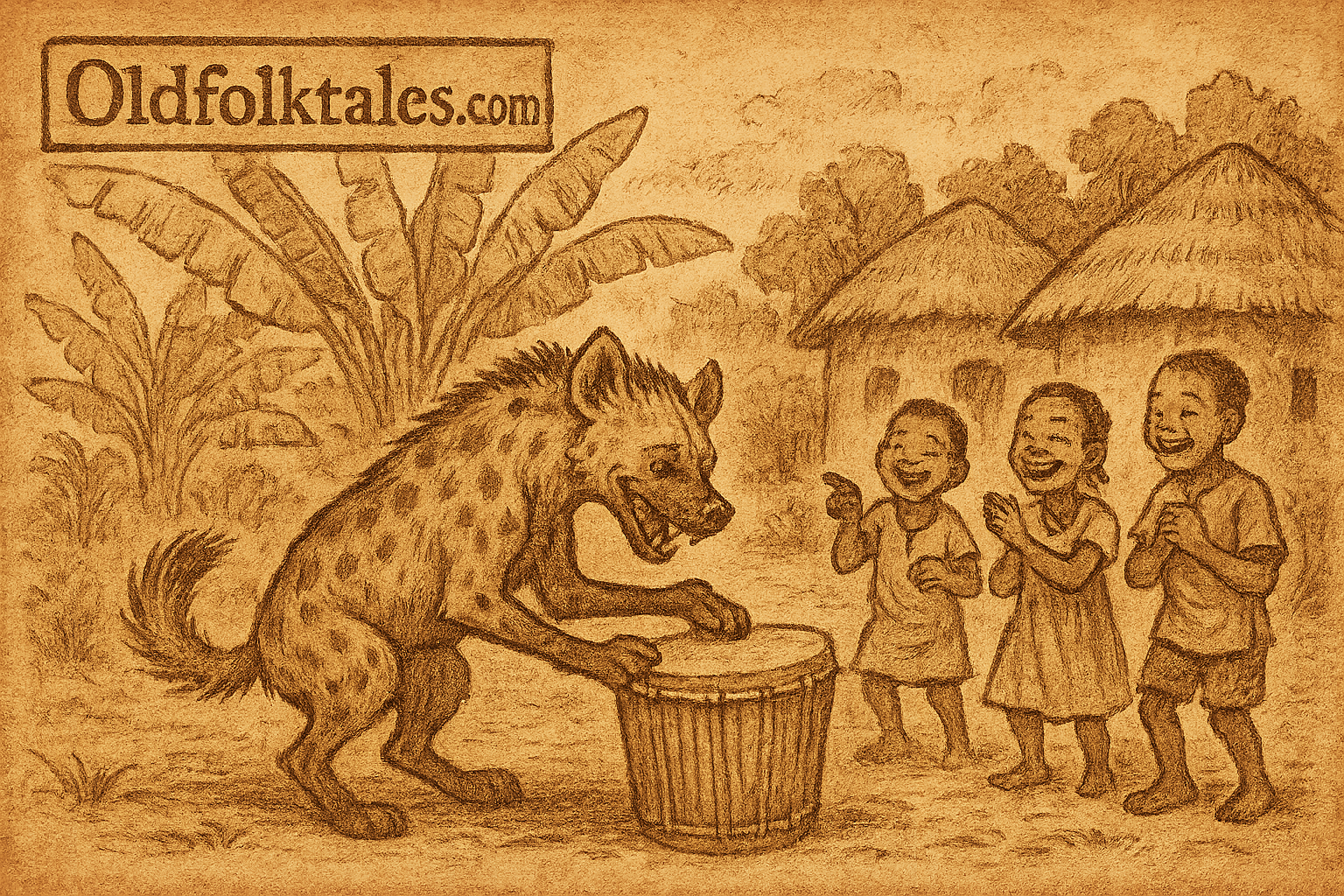
But when he reached a clearing, he saw no feast, no people, only a great drum resting in the shade of a tall baobab tree. It was carved from a hollow trunk, its skin stretched tight, and yet it played itself. The deep sound rolled out as if invisible hands were striking it.
Fisi crept closer. The drum’s voice seemed to call to him: DUM… dum… DUM… dum. He sniffed it. He licked it. “Where is the food?” he muttered.
Suddenly, an old tortoise emerged from behind the tree. “Hah! I see you have found the Drum of the Spirits,” Tortoise said slowly. “It is not for greedy paws. This drum calls rain when the earth is dry. It brings fish to the shore when the nets are empty. But it will not feed your stomach, hyena.”
Fisi’s eyes narrowed. “A drum that can bring fish? Then I must have it. I will beat it myself, and the fish will come to me alone!”
Tortoise shook his head. “No, Fisi. The drum belongs to the whole village. It answers only to those who beat it with a clean heart.”
But Fisi was not one to listen. That night, when the moon rose, he returned. The drum sat silent under the baobab, silver light pooling on its skin. Fisi pounced, lifted a stick, and began to beat it.
DUM DUM DUM!
At first, the sound was glorious. The air trembled, the leaves shook, and far away, thunder rolled. Fisi grinned. Soon the rain would come, and the fish would fill the streams.
But then, the sky darkened too quickly. A wind howled through the mangroves, bending the trees like grass. The drum’s voice grew wild: DUM DUM DUM DUM! Lightning split the clouds.
And then the ground at Fisi’s feet began to soften. Mud sucked at his paws. From the forest came shapes, tall shimmering spirits with eyes like burning coals. They moved in time with the drum, their feet pounding the earth.
“You beat the sacred drum for your own greed,” the spirits thundered. “Now you will dance until the sun rises!”
Before Fisi could run, the spirits formed a circle around him. His legs began to move against his will. Left, right, spin, stomp the rhythm took over. He danced and danced, the drum commanding his every step. The night stretched on, his muscles burned, and still the spirits drove him faster.
By dawn, Fisi collapsed in the mud, his tongue lolling, his belly empty. The drum was gone, carried away by the spirits. When the villagers came to fetch water, they found Fisi groaning.
From that day, the hyena walked with a limp, and whenever he heard a drum, he slunk away with his tail between his legs. And the Drum of the Spirits? It returned only when the village beat it together, not for one creature’s greed.
Moral Lesson of The Hyena and the Drum
Greed often blinds us to the true purpose of the gifts we find. In the Swahili tradition, community tools and blessings are meant to serve everyone, not just the one who seizes them. Like Fisi, those who take what is not theirs for selfish gain may find that their reward is far less than they hoped and the cost far greater. The Hyena and the Drum reminds us that patience, respect, and sharing with the community bring harmony, while greed invites trouble that dances us to exhaustion.
Knowledge Check: The Hyena and the Drum
- What is the main lesson in the African folktale “The Hyena and the Drum”?
The main lesson is that greed and selfishness can lead to one’s downfall, while patience and sharing bring true blessings. - How does the hyena discover the drum in “The Hyena and the Drum”?
The hyena follows the sound of drumming through the forest, expecting to find a feast, but instead finds a magical drum under a baobab tree. - Why does the tortoise warn the hyena in “The Hyena and the Drum”?
The tortoise warns him that the drum is sacred, meant for the whole community, and only works for those with pure intentions. - What happens when the hyena plays the drum for his own gain in the folktale?
The spirits become angry, summon a fierce storm, and force the hyena to dance all night as punishment for his greed. - What cultural tradition does “The Hyena and the Drum” reflect?
It reflects East African Swahili coastal storytelling, where drums are sacred, community is central, and animals often represent human traits. - Why is the drum considered powerful in “The Hyena and the Drum”?
The drum can call rain, bring fish to the shore, and strengthen the community when used with a clean heart and shared purpose.
Cultural Origin: Swahili coastal folktale, Kenya