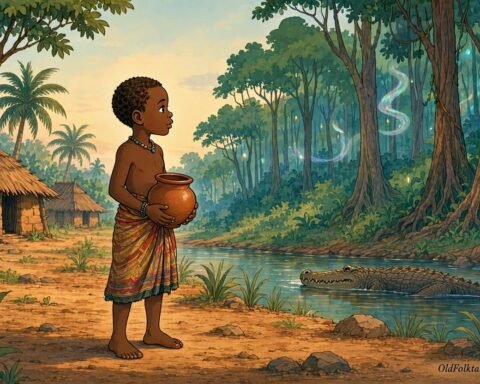
Come closer, for this tale is older than the hills, older than the tallest trees in the forest. Long ago, in a lush village beside the great river, there lived a tortoise whose cunning and greed were known far and wide. His shell shone like polished ebony, smooth and strong, and all the animals admired him for his cleverness and his beautiful home. Yet beneath that dark shell, Tortoise harbored a desire that could not be tamed.
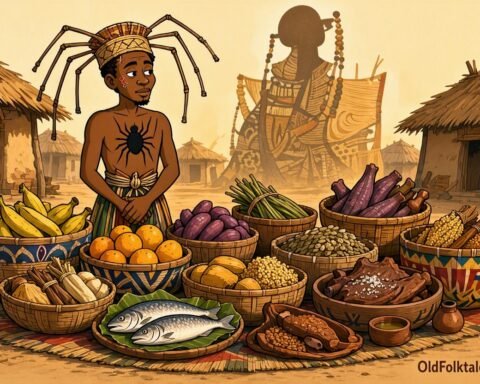
One morning, as the animals gathered by the riverbank for the annual feast of yams, palm nuts, and roasted fish, Tortoise hatched a plan. He wanted more than his fair share. While the birds, monkeys, and deer each brought a portion of their harvest, Tortoise whispered to himself, “If I can have all the food for myself, then none will have cause to envy me.”
As the sun climbed higher, Tortoise approached the biggest pile of roasted yams. He called the other animals together, “Friends, I have a challenge for you! Let us all gather our yams and place them atop my smooth shell. Whoever can balance the most yams shall be rewarded with the largest share.” The animals, curious and trusting, agreed.
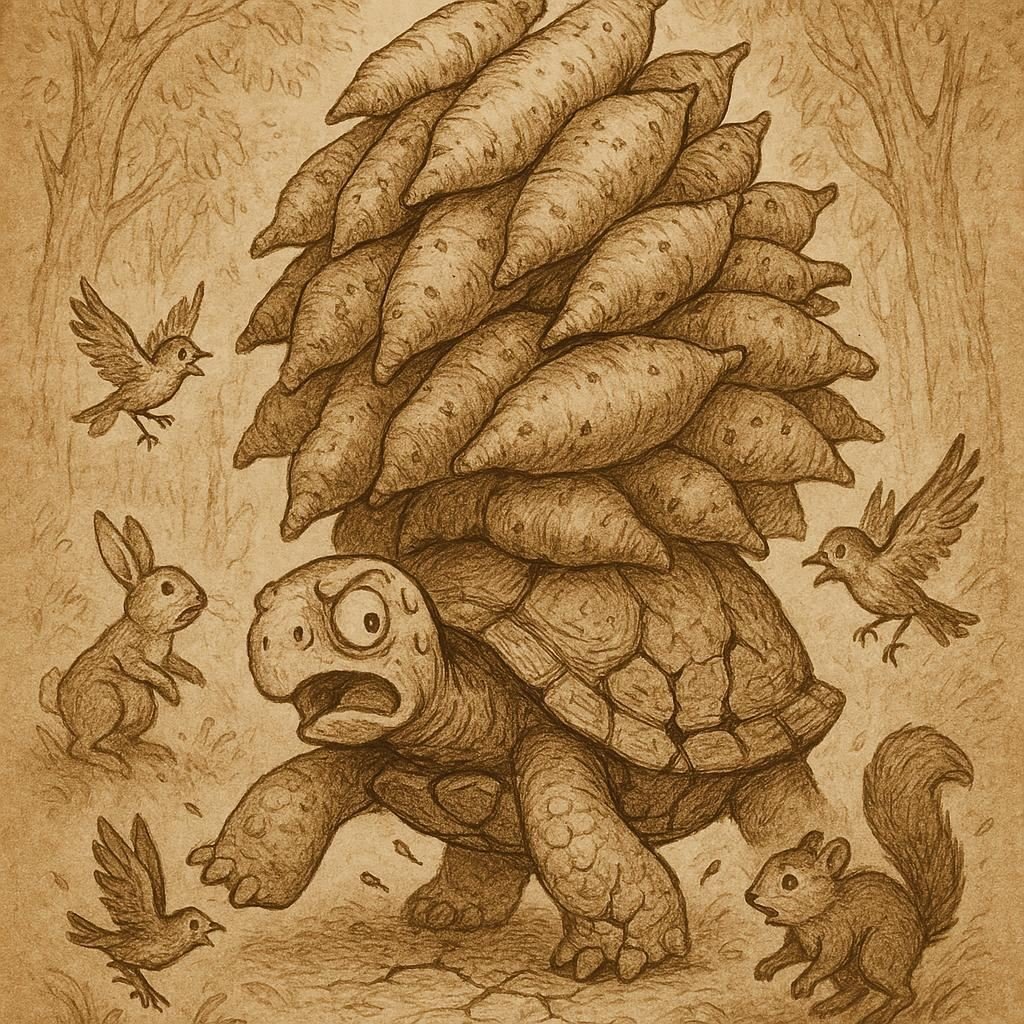
But Tortoise’s mind was already working faster than the river’s current. He secretly planned to take the heaps of food and hide them in his shell. One by one, the animals placed their yams on Tortoise’s back, laughing and joking. Tortoise grinned, feeling clever. By midday, his shell was covered with yams, nuts, and fruits.
Then, as he tried to lift his heavy load and carry it to his burrow, disaster struck. The weight was too much for even his strong shell. Crack! A loud snap echoed through the forest. The animals gasped as Tortoise stumbled and fell, his prized shell splitting into jagged lines. Pieces of yams tumbled down the riverbank, rolling into the water. Tortoise’s smooth ebony shell was now scarred, rough, and uneven, a permanent reminder of his greed.
The animals approached cautiously. The monkeys chattered, the birds shook their heads, and the deer pawed at the ground in disapproval. “See what happens to those who take more than they need,” they said. Tortoise hung his head, ashamed, realizing that his desire for more had not only cost him the food but had ruined the beauty of his shell, admired by all.
From that day onward, Tortoise became a cautionary tale for young animals in the forest. Mothers would warn their children, “Do not be greedy like Tortoise, for greed will destroy even the finest beauty you possess.” And so, the tale of Tortoise’s cracked shell lived on, carried by the wind through the trees, whispered by the river, and told under the light of the full moon.
Moral Lesson: How the Tortoise Broke His Shell
Greed ruins beauty. Tortoise’s once-smooth shell was admired by all, but his desire to have more than his share led to its permanent damage. In life, excessive greed not only harms relationships but also destroys what is precious, leaving behind regret and shame. True contentment comes from appreciating what you have, sharing with others, and not letting desire cloud judgment.
Knowledge Check: How the Tortoise Broke His Shell
Why did Tortoise hatch a plan during the feast?
Tortoise wanted more than his fair share of food. His greed led him to trick the other animals into placing their yams and fruits on his back.How did the other animals respond to Tortoise’s challenge?
The animals trusted Tortoise and agreed to balance their yams on his shell, not realizing his intention to take all the food for himself.What caused Tortoise’s shell to crack?
The weight of the yams, nuts, and fruits was too heavy, causing Tortoise’s once-smooth shell to split when he tried to carry it away.What lesson did the animals learn from Tortoise’s greed?
They realized that taking more than one needs can lead to harm and consequences, emphasizing fairness and moderation.How is Tortoise’s shell described after the accident?
His shell became rough and uneven, scarred permanently by his greed and serving as a warning to others.What is the main moral of the story?
Greed destroys beauty and leads to regret. Appreciating what you have and sharing fairly is wiser than hoarding more than necessary.
Cultural Origin: Igbo, Nigeria