Long ago, in a village surrounded by thick forests, there lived an old mother sheep with seven young lambs. One day, a bat approached her. He was planning to visit his father-in-law, who lived a long day’s journey away, and asked the old sheep to lend him one of her lambs to carry his drinking horn.
At first, the mother sheep refused. But the lamb, eager for adventure and curious about the world beyond the meadow, begged to go. Finally, the mother sheep reluctantly agreed. The next morning, as the sun rose, the bat and the lamb set off together, the lamb dutifully carrying the bat’s drinking horn.
Halfway through the journey, the bat told the lamb to leave the horn under a bamboo tree while he went ahead. Upon arriving at his father-in-law’s house, the bat sent the lamb back to retrieve the horn, and as usual, the bat ate all the food that was brought for them. When the lamb returned, he was too late to eat. This pattern repeated for four days. The lamb grew thin and weak, burdened with carrying the bat’s belongings and suffering from the bat’s greed.
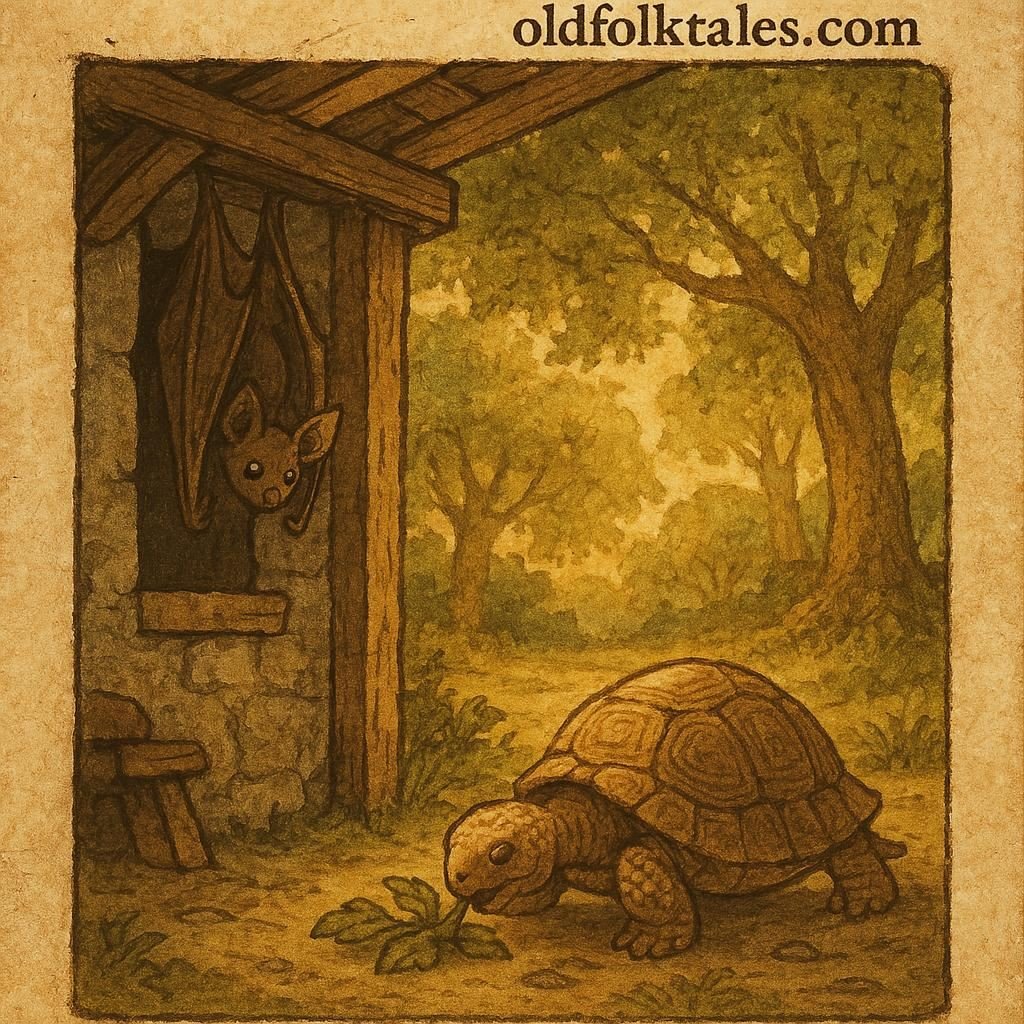
When they finally returned home, the lamb complained bitterly to his mother about the cruel treatment. The old mother sheep, angry and worried for her child, decided to seek justice. She consulted the wise tortoise, who, though poor, was respected for his wisdom throughout the land. After hearing the story, the tortoise promised to take revenge on the bat and teach him a lesson he would never forget.
Soon after, the bat came again, requesting a lamb to carry his load to his father-in-law. The tortoise, overhearing, offered to carry the bat’s load instead. The next day, they set off. As before, the bat attempted the same tricks with the drinking horn. But the clever tortoise, unlike the lamb, secretly retrieved the horn and hid it in his bag, keeping it out of reach until the right moment.
When the food was served, the tortoise allowed the bat to believe he would eat, but instead, the tortoise cleverly switched places. While the bat slept, the tortoise took the bat’s cloth, covered himself with it, and lay down where the bat had been. When the mother-in-law brought the meal, she placed it beside the sleeping bat. The tortoise quietly ate all the food, and then returned the bat to his place, even carefully putting a little palm-oil and foo-foo inside the bat’s lips to create evidence.
The next morning, the bat awoke hungry and furious, blaming his mother-in-law for not serving him properly. She insisted she had done as he asked. The bat denied it and accused the tortoise. To settle the matter, the villagers decided that both the bat and the tortoise should rinse their mouths into separate basins.
When they did, the traces of palm-oil and foo-foo in the bat’s mouth were unmistakable. Everyone could see that the bat had eaten while pretending to starve the lamb. The people judged against the bat. Ashamed and humiliated, the bat fled and vowed never to be seen during the daytime again. From that day forward, the bat only appeared at night, forever avoiding the sun and the eyes of others.
The tortoise returned to the mother sheep and recounted what had happened. The mother sheep praised him, and the story of his cleverness and wisdom spread across the land. From then on, the tortoise’s reputation as the wisest of all creatures grew stronger than ever.
Moral Lesson
This folktale teaches that greed and selfishness can lead to shame and disgrace. The bat’s cruelty and deceit toward the lamb resulted in embarrassment and forced him to live hidden from others. Cleverness and justice, as demonstrated by the tortoise, can right wrongs and protect the innocent. Respecting others and acting fairly ensures harmony and preserves one’s dignity.
Knowledge Check
Who did the bat ask to carry his load in the story Why the Bat is Ashamed to be Seen in the Daytime?
A1: The bat first asked one of the mother sheep’s lambs to carry his drinking horn.What was the bat’s behavior toward the lamb during the journey?
A2: The bat was greedy and ate all the food, leaving the lamb hungry and weak.Who helped the mother sheep seek justice for her lamb?
A3: The wise tortoise helped the mother sheep and planned revenge against the bat.How did the tortoise trick the bat?
A4: The tortoise switched places with the sleeping bat, ate all the food, and left evidence of the bat’s greed.What consequence did the bat face after the villagers discovered the truth?
A5: The bat became ashamed and vowed to hide during the daytime, only coming out at night.What is the main lesson of Why the Bat is Ashamed to be Seen in the Daytime?
A6: Greed and deceit can lead to shame, while cleverness and justice protect the innocent and uphold fairness.
Cultural Origin: West African folktale, Nigeria