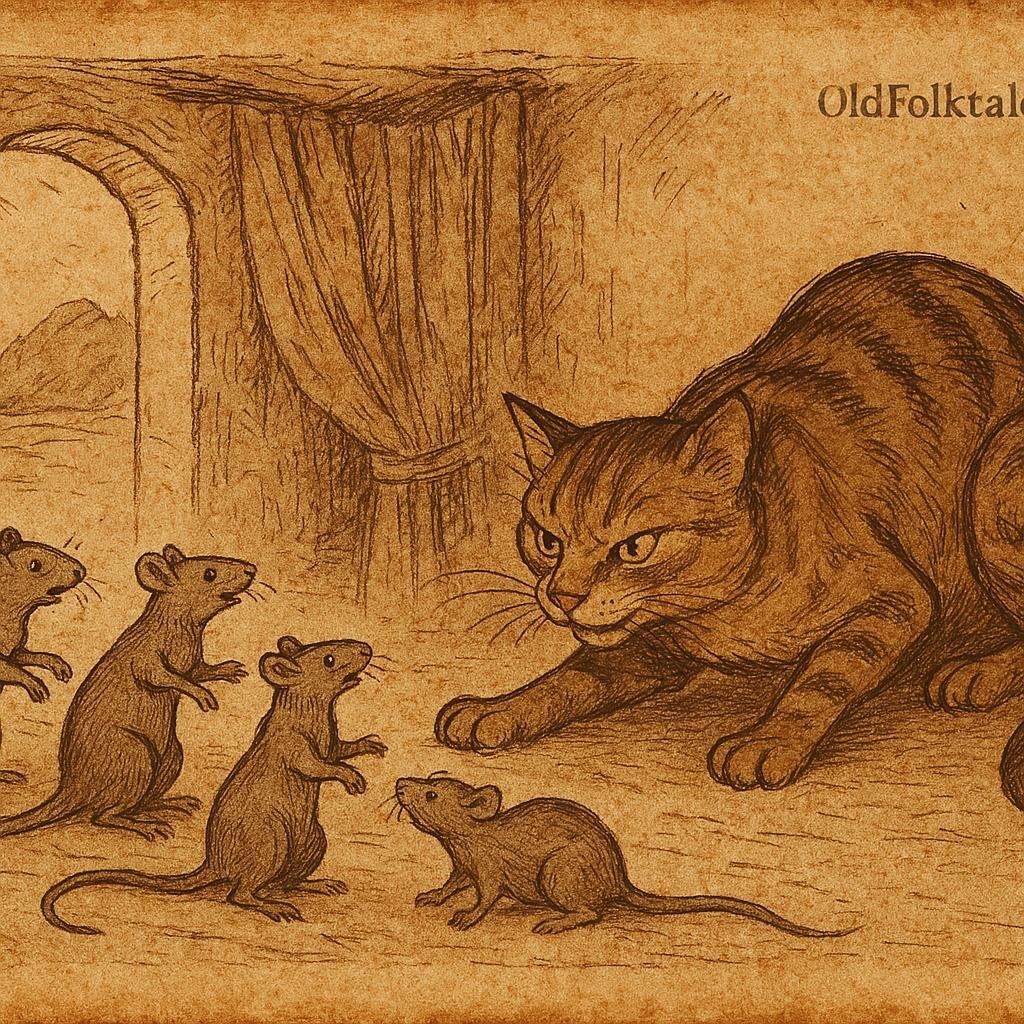
Long ago, in a small village where animals lived and behaved much like people, there was a cat named Efiong. Unlike the sleek, well-fed cats we know today, Efiong was poor and ragged. He wandered about with empty pockets and an emptier belly, surviving day by day without wealth or steady food. His clothes were worn, and his eyes carried the restless hunger of one who was always searching for his next meal.
Now, in that same village, the rats were a different story altogether. Unlike Efiong, they were prosperous. Their storehouses overflowed with grain, dried fish, kernels of groundnut, and coins jingled in their little pouches. They had food to spare, laughter in their gatherings, and music in their homes. The rats lived well, and everyone in the village knew it.
When Efiong came across the rats, they greeted him warmly. Despite his poverty, they offered him kindness and shared their abundance. Whenever Efiong visited their home, they laid out generous portions of food, crumbs of bread, pieces of yam, and palm wine. He ate until he was full and left with gratitude, praising their generosity.
But as Efiong visited more often, a seed of thought grew in his mind. He began to wonder why he should always depend on the rats’ kindness. “If I am to be considered their friend,” he reasoned to himself, “then I must return their hospitality. They feed me in their house; I should invite them to mine.”
And so, one day, with a smile stretched wide across his whiskered face, Efiong said to the rats:
“My dear friends, you have always been so generous to me. Each time I step into your home, I eat and drink to my fill. Now, it is only proper that I return the favor. Come to my house tomorrow, and I shall host you as you have hosted me.”
The rats, pleased and flattered, chattered among themselves. “Efiong is poor,” they said, “but he wishes to honor us. We must go.” Out of politeness and friendship, they agreed to his invitation.
The next day, the rats arrived at Efiong’s house. It was a small, dim place with little to see, no shining coins, no overflowing storehouse, no music to fill the air. But Efiong greeted them warmly at the door, his eyes gleaming with something they could not quite read.
“Welcome, friends! Please, come in. I have prepared something special.”
The rats filed in, their noses twitching. But soon, they noticed that no food was laid out, no drinks were poured, no cooking smells filled the air. Still, they waited, thinking perhaps Efiong would bring out the feast at the right moment.
But Efiong had prepared something else entirely. One by one, as the rats settled inside, he pounced. With claws and teeth, he killed them swiftly and ate them. Their squeaks of surprise filled the air for only a moment before silence returned to his little house.
From that day on, the truth of Efiong’s nature was revealed. The friendship between cat and rat ended forever. What had begun as an act of hospitality turned into betrayal. And since then, cats have hunted rats wherever they find them, driven by that ancient memory of Efiong’s treachery.
Moral of the Story
The tale reminds us that hunger can turn even friendship into betrayal. Just as Efiong’s poverty drove him to deceive those who trusted him, we are warned to be cautious in trusting those who are desperate. The moral is clear: Never trust a hungry man, for need may outweigh loyalty.
Knowledge Check
Q1: Who is Efiong in the story?
A1: Efiong is the cat who was poor and hungry but deceived the rats by pretending to host them.
Q2: Why did the rats welcome Efiong into their home?
A2: The rats were wealthy and generous, so they shared their food and money with Efiong out of kindness.
Q3: What trick did Efiong play on the rats?
A3: He invited them to his home, pretending to return their hospitality, but instead killed and ate them.
Q4: What does the story explain about cats and rats?
A4: It explains why cats have hunted rats ever since, turning them into natural enemies.
Q5: What is the moral lesson of this folktale?
A5: The story warns us not to trust a hungry or desperate man, as necessity may drive him to betrayal.
Q6: What cultural origin does this folktale come from?
A6: It is a Nigerian folktale that reflects traditional African storytelling and moral teaching.
Source: Nigerian folktale