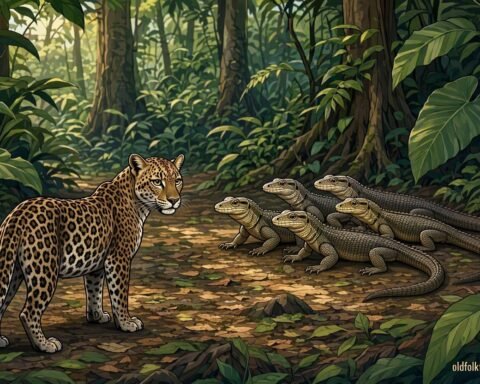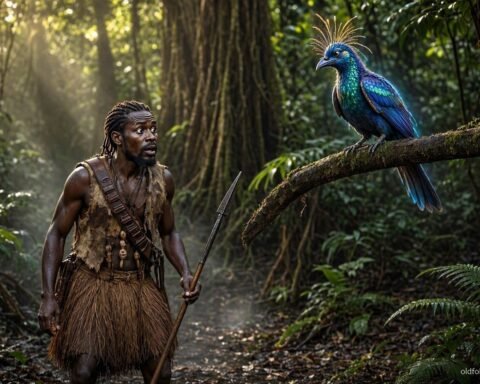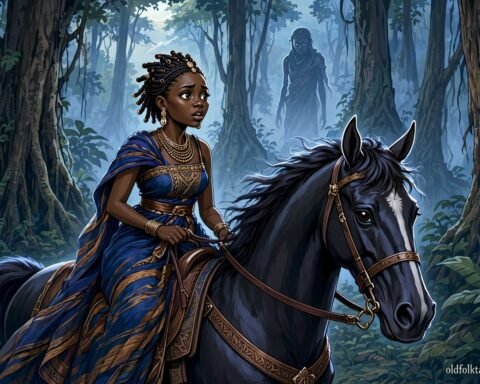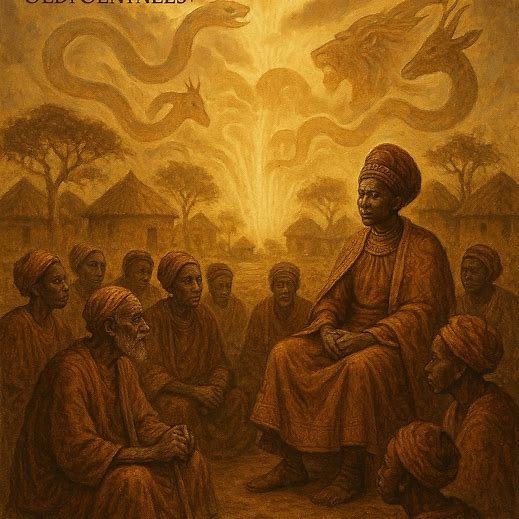
In the early days of the world, people never truly died. Instead, when they grew old, their bodies transformed into snakes, lizards, and other animals. The earth was alive with these shifting forms, and the land quickly became crowded. Everywhere one turned, there were beings some human, some half-animal sharing the same space.
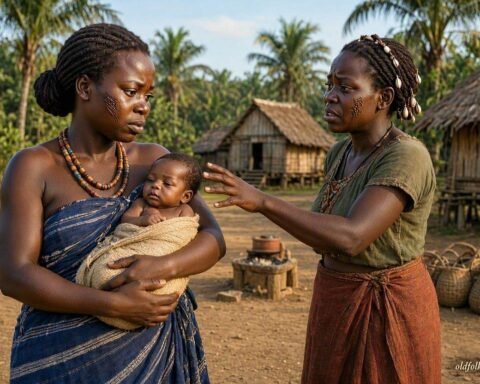
Soon, the living grew restless. The land was too full, the villages too tight, and food began to run short. The people gathered and carried their cries to their king, demanding that something be done.
The king, troubled by their complaints, sought guidance. He sent a messenger to the Creator, asking what must happen to ease the world’s burden.
The answer came back with finality:
“From this day, people shall die as the animals do. Their bodies will return to the earth, buried beneath the soil, so that the land may breathe again.”
From that time onward, humanity’s fate was sealed. The cycle of life became one of birth, living, death, and burial. Where once old age meant transformation, now it meant returning to the ground, giving space for new generations to thrive.
The Moral of the Story
This tale warns us of the dangers of unnecessary complaints. By pressing too hard for change without patience or wisdom, the people made their lives more difficult. What was once transformation became finality. The lesson is clear: do not complain without cause, for in seeking ease, you may bring hardship instead.
Knowledge Check
1. Why did God decide that humans must die and be buried?
God chose this path because the people complained of overcrowding, and burial was a way to make room for new generations.
2. What happened to humans before death was introduced?
They never died but changed into snakes or other animals once they grew old.
3. What does this story teach about complaints?
That complaining without cause can make situations worse instead of better.
4. How does this tale explain burial traditions?
It frames burial as a divine decree to balance life and death, ensuring that humans return to the earth.
5. What cultural value does the story highlight?
The importance of humility, patience, and acceptance of life’s natural cycles.
6. Why is the story still important today?
It reminds us that every choice and word has consequences, and that life is sustained through balance between the living and the dead.
Cultural Origin: West African folklore