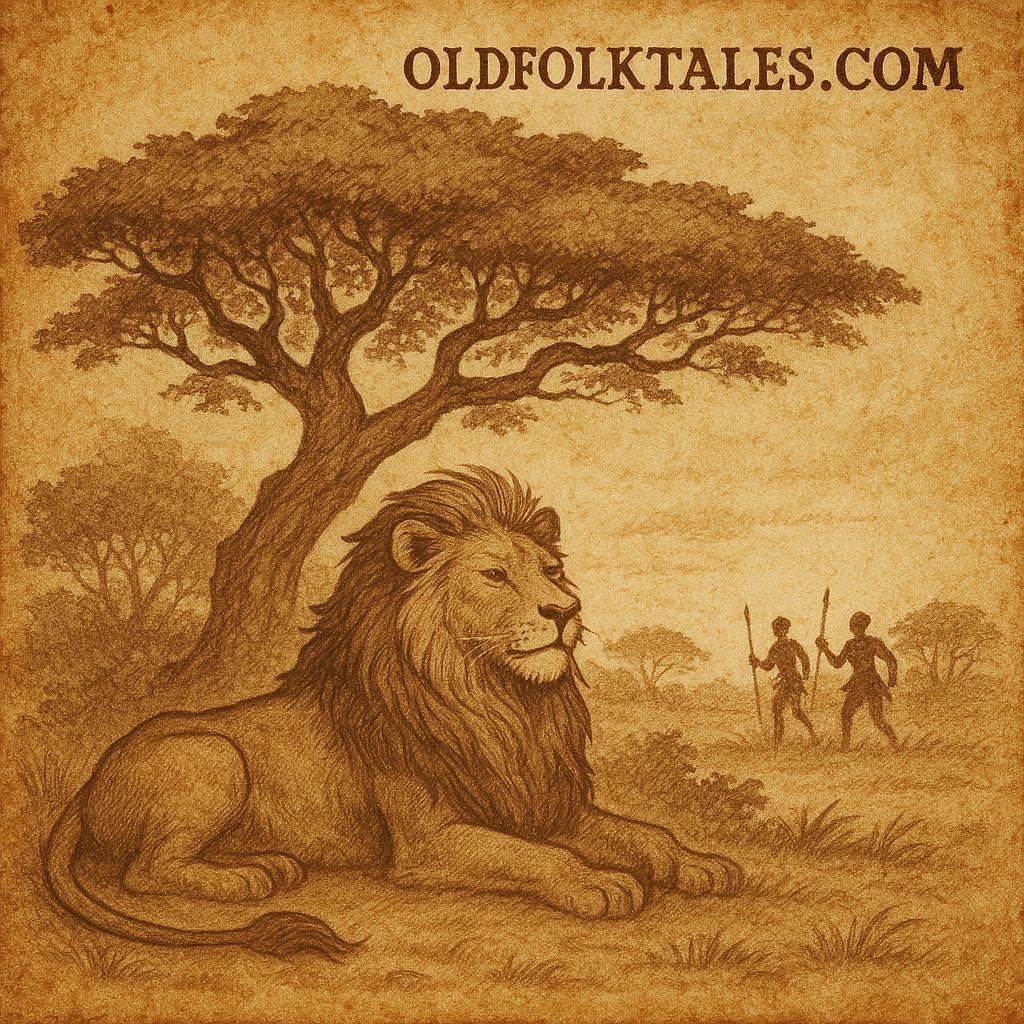
The African sun rose over the endless plains, spreading its golden light across the tall grasses. Birds sang from the trees, and herds of antelope grazed quietly under the sky. In this land lived a young lion who was strong, brave, and proud. With every hunt, his muscles grew, and with every victory, his pride swelled. Soon, he came to believe that no one, not even his mother, could teach him anything.
His mother was wise. She had lived through many seasons and had learned from dangers that her son had never seen. She had watched men with their traps, their spears, and their strange weapons. She had seen hunters move in groups, helping one another in ways that animals never could. She often warned her son with gentle words.
“Listen carefully, my child,” she said one evening as the setting sun painted the sky red and gold. “Hunt the animals of the wild, but never hunt men. Men are not like us. When one of them is harmed, many will rise together to take revenge. If you value your life, leave them alone.”
But the young lion would not listen. He believed his mother was too cautious. He told himself, “My mother is old and timid. She fears what she does not understand. I am strong, and no man can stand against me.”
The next morning, the lion set out on his own. His paws pressed silently into the earth as he moved through the tall grass. The air was cool, and the scent of prey drifted toward him. Suddenly, under the shade of a tree, he saw a man, a Bushman, lying asleep. The man’s bow rested beside him, his quiver of arrows placed carefully near his head.
The lion stared at him with disbelief. “So this is the creature my mother fears?” he thought. “He is weak, small, and helpless. How foolish she is to think such a one could harm me.”
Without hesitation, the lion leapt and struck the man. The Bushman did not even stir before he was killed. The lion stood proudly over the body and roared in triumph.
“See how easily I have done this,” he said aloud to the wind. “My mother’s warnings were foolish. She told me not to hunt men, but I have killed one without struggle. Truly, I am wiser than she.”
The day moved slowly, and as the sun sank low in the sky, the lion grew tired. He lay down, certain that nothing could threaten him. But as night approached, the Bushman’s people discovered what had happened. They mourned the loss of their kinsman, and their sorrow turned into anger.
They gathered together with their bows and arrows. They knew the land well, and they tracked the lion silently through the grass. When they found him resting, they surrounded him without sound. The lion awoke to the twang of many bows.
Arrows flew through the air, each one tipped with deadly poison. The lion roared and tried to fight, but his strength failed as the poison entered his blood. His legs weakened, his roars grew faint, and soon he lay still upon the ground.
Thus the young lion who thought himself wiser than his mother perished because he refused to listen to her wisdom.
Moral Lesson of The Lion Who Thought Himself Wiser Than His Mother
This tale reminds us that pride often leads to downfall. The young lion ignored the counsel of his mother, believing that his strength made him invincible. Yet wisdom is greater than strength, and those who fail to listen to guidance often bring ruin upon themselves. The story teaches that respecting the advice of elders is not weakness but a path to safety and long life.
Knowledge Check
What advice did the lion’s mother give him in The Lion Who Thought Himself Wiser Than His Mother?
She told him never to hunt men because they would rise together to take revenge if one of their own was harmed.Why did the young lion believe he was wiser than his mother?
He thought his strength made him superior and dismissed her warnings as fear and weakness.Who did the lion find sleeping under the tree in the story?
He found a Bushman lying asleep with his bow and arrows beside him.How did the lion react after killing the Bushman?
He boasted to himself that his mother’s warnings were foolish and declared that he was wiser than she was.What happened when the Bushman’s people discovered the death of their kinsman?
They gathered with bows and poisoned arrows, tracked the lion, and killed him together.What is the main lesson of The Lion Who Thought Himself Wiser Than His Mother?
The story teaches that ignoring wise counsel, especially from elders, leads to destruction.Source: Western African folktale