In the earliest days of the world, life was simple, raw, and untouched by the knowledge that now shapes humanity. Men and women survived by eating food as they found it, roots torn from the soil, grains chewed straight from the stalk, meat consumed uncooked. Fire was unknown, and the art of cooking had not yet been discovered.
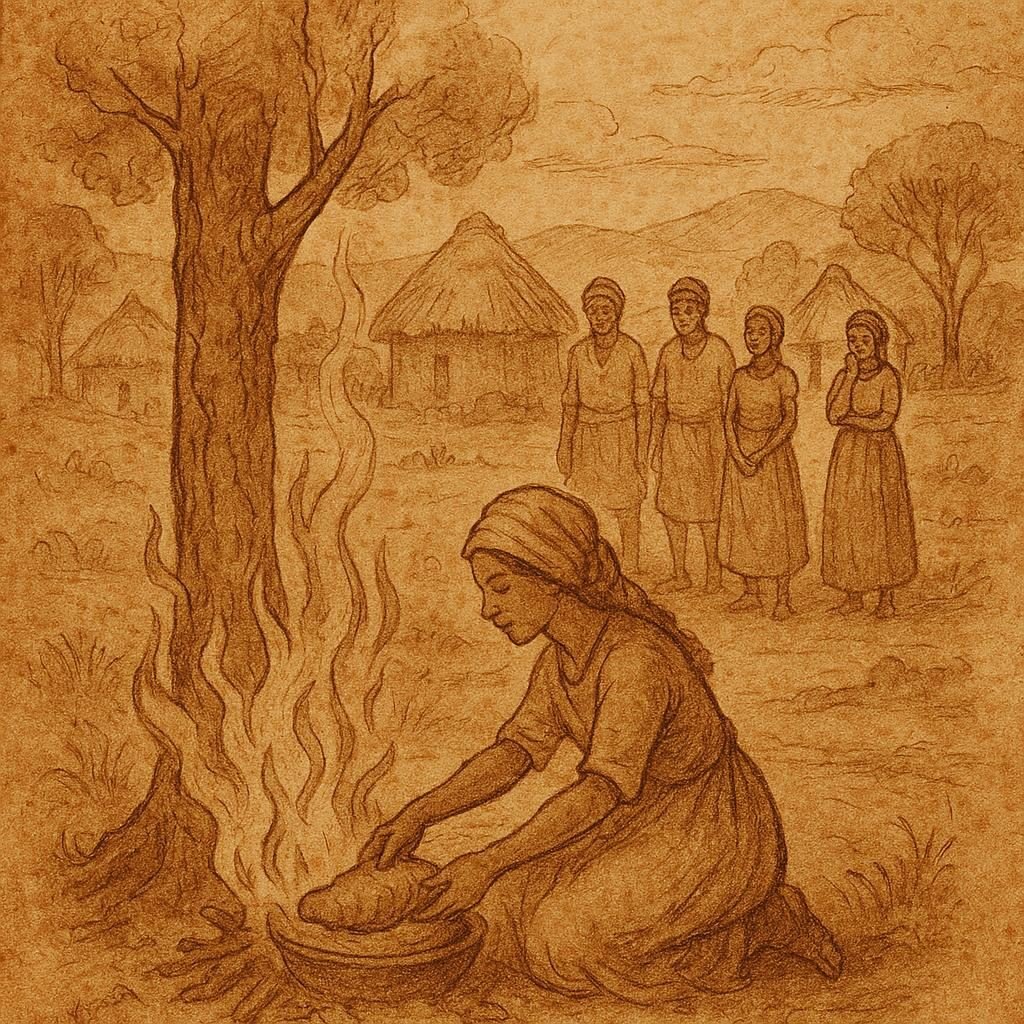
One day, a woman set out into the bush to gather firewood. She walked among tall grasses and scattered trees, her arms filling with sticks and dry branches. As she made her way back, a sudden storm rolled across the sky. Lightning split the air and struck a great tree before her eyes. With a roar, the tree burst into flame, crackling and glowing with heat.
The woman trembled at first, frightened by the fierce blaze. Yet curiosity held her close. She lingered near the fire, watching as sparks leapt and smoke rose into the darkening sky. The heat licked at her face, but instead of fleeing, she stayed. Reaching into the bundle she carried, she pulled out a raw yam. Hesitantly, she placed it near the flames. The skin charred, and the yam softened, releasing a sweet, unfamiliar scent.
When she tasted it, she was astonished, the yam, once bland and starchy, was now rich and delicious. She realized she had discovered something powerful. Carefully, she wrapped a piece of the burning wood in leaves and carried it home. There, she began to cook her food in secret, delighting in the new flavors.
Her husband soon noticed the savory aromas rising from her cooking. He asked what she was eating, but she refused to share. The neighbors, too, caught the scent and grew suspicious. They questioned her, but again she denied them. Driven by curiosity, they watched her more closely. At last, her secret was uncovered. They seized a piece of her fire and carried it back to their homes. One by one, each family in the village claimed a share of this new power.
And so, through this woman’s discovery, fire spread among all people. From that day on, humankind no longer lived on raw roots and flesh alone. Cooked food became the gift that transformed life forever.
But another tale explains why, despite all this wisdom and strength, humanity remains bound to mortality.
Long ago, Mawu, the great creator, gave life to man and declared that he would live without end. Death also dwelled upon the earth in those days, but he was weak and powerless, unable to harm man.
One day, man quarreled with Death. In his pride, he mocked him, saying, “You are nothing. You have no power over me.”
Stung by these words, Death went to Mawu in anger. “Man has insulted me,” he said. “If he despises me, then I will destroy him.”
Mawu listened but answered calmly: “It is true man has spoken foolishly. But you are not greater than he.”
Still, Death was not satisfied. He returned to Mawu again and again, demanding justice for the insult. At last, Mawu grew weary of his complaints. She said, “Since man has shown no respect for you, I will hand him over to you. From this day forth, every man will be your subject.”
Thus it was decreed. Though man gained fire, strength, and wisdom, yet Death became his master. No matter how powerful, every human must one day bow to him.
Moral Lesson
These two tales from Benin remind us of the dual nature of human progress. On one hand, curiosity and discovery, like the woman who first cooked food, bring advancement and joy. On the other, arrogance and disrespect, as shown when man insulted Death, bring downfall. Wisdom lies in gratitude and humility before forces greater than ourselves.
Knowledge Check
Q1: Who discovered cooked food in the Beninese folktale?
A woman who placed her yam near a tree struck by lightning.
Q2: How did fire first spread among the people?
The woman’s neighbors seized her fire and carried it to their homes.
Q3: What lesson does the tale of the first cooked meal teach?
That curiosity leads to discovery, but selfishness cannot keep knowledge hidden forever.
Q4: Why did Death gain power over man in the second story?
Because man insulted Death, and Mawu handed mankind over to him as punishment.
Q5: What is the symbolic meaning of Death’s victory?
It shows that pride and disrespect toward powerful forces lead to humanity’s subjugation.
Q6: What is the cultural origin of these folktales?
They come from the traditions of Benin, specifically Dahomean (Beninese) folklore.
Source: Beninese Folktales