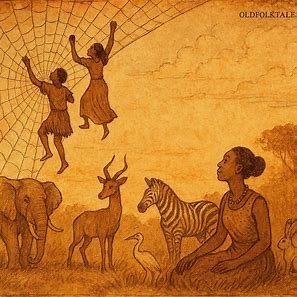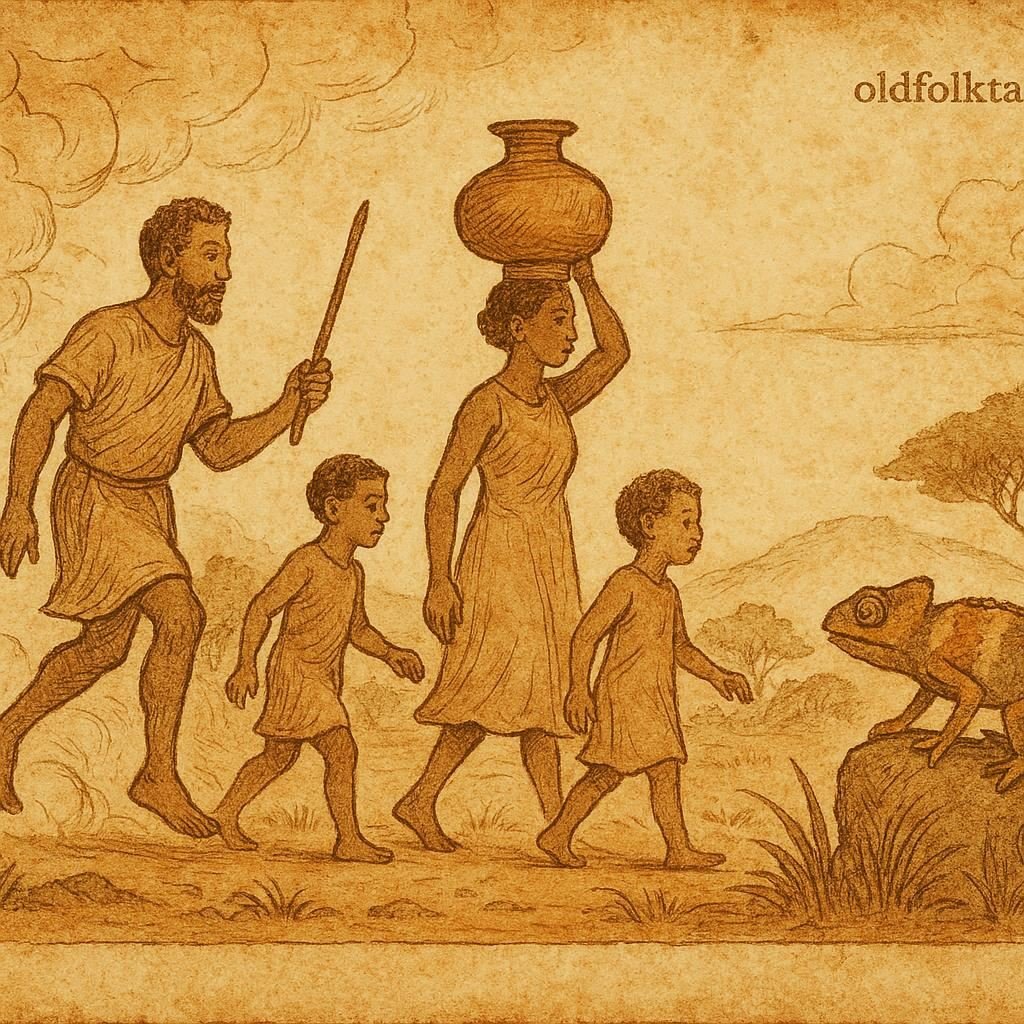
Long ago, before the lands of Dahomey were fully settled, the first human family descended from the sky. From the heavens came a man and a woman, radiant and purposeful, chosen to establish the first homes on earth. The man carried a wand, which he raised to the ground and proclaimed, “Here shall be our home.” Upon her head, the woman balanced a calabash, full of life and sustenance, marking their arrival as both sacred and practical.
Following them were others, their descent heralded by gentle rains that nourished the land. These early ancestors brought with them knowledge of Mawu-Lisa, the Creator, and instructed the people in the sacred worship that had guided the heavens. Altars were raised, shrines were constructed, and offerings of food and drink were made to honor the divine. Children were taught to respect the sacred ways, learning the rites and traditions that would sustain the human family for generations.
Each son of the first family carried a wand like his father’s, a symbol of guidance and authority, and used it to lead his own family across the emerging land. Their journey was never without protection. A chameleon, sacred to Lisa, accompanied them. This mystical creature, ever-shifting in color, warned of danger and shielded the family from harm. When enemies approached, the chameleon’s hues changed to signal threat. When storms gathered, its skin shifted to signal caution, allowing the family to seek shelter and survive nature’s fury.
Through the generations, these sky-born ancestors spread throughout the land of Dahomey, sowing crops, building villages, and establishing communities rooted in divine guidance. The worship of Mawu-Lisa became central to their lives, and the knowledge of the sky, its rhythms, powers, and sacred laws, was passed from parent to child. Life on earth, they taught, descended from the heavens, just as their own family had done.
The people honored both the gifts of the earth and the blessings of the sky. They learned to cultivate crops, fish rivers, and hunt in the bush, always mindful of the sacred connection between heaven and earth. Through their leadership and guidance, the first human family ensured that communities were not merely surviving but thriving, bound together by respect for the divine and for one another.
And so, the first humans of Dahomey established a civilization where knowledge, worship, and family guidance intertwined. They were not simply settlers of land; they were the custodians of sacred wisdom, teaching that humanity’s origins were celestial and that harmony with the forces above was essential to life below.
Moral of the Story
This tale teaches that human life is sacred and divinely guided. Knowledge, respect for the Creator, and the passing of wisdom from one generation to the next ensure the prosperity and safety of communities.
Knowledge Check
1. Who were the first humans in Dahomey?
A man and a woman who descended from the sky to establish homes on earth.
2. What did the man carry, and what was its purpose?
He carried a wand to mark homes and guide his family across the land.
3. What did the woman carry on her head?
A calabash, symbolizing life, sustenance, and the sacred journey of the family.
4. What was the role of the chameleon?
Sacred to Lisa, it protected the family by signaling danger and storms through color changes.
5. How did the first humans teach their children?
They instructed them in the worship of Mawu-Lisa and the sacred rites and laws of the heavens.
6. What lesson does the story convey about human life?
Life descends from the sky, and harmony with divine guidance ensures survival, growth, and community prosperity.
Source: Beninese Folktale