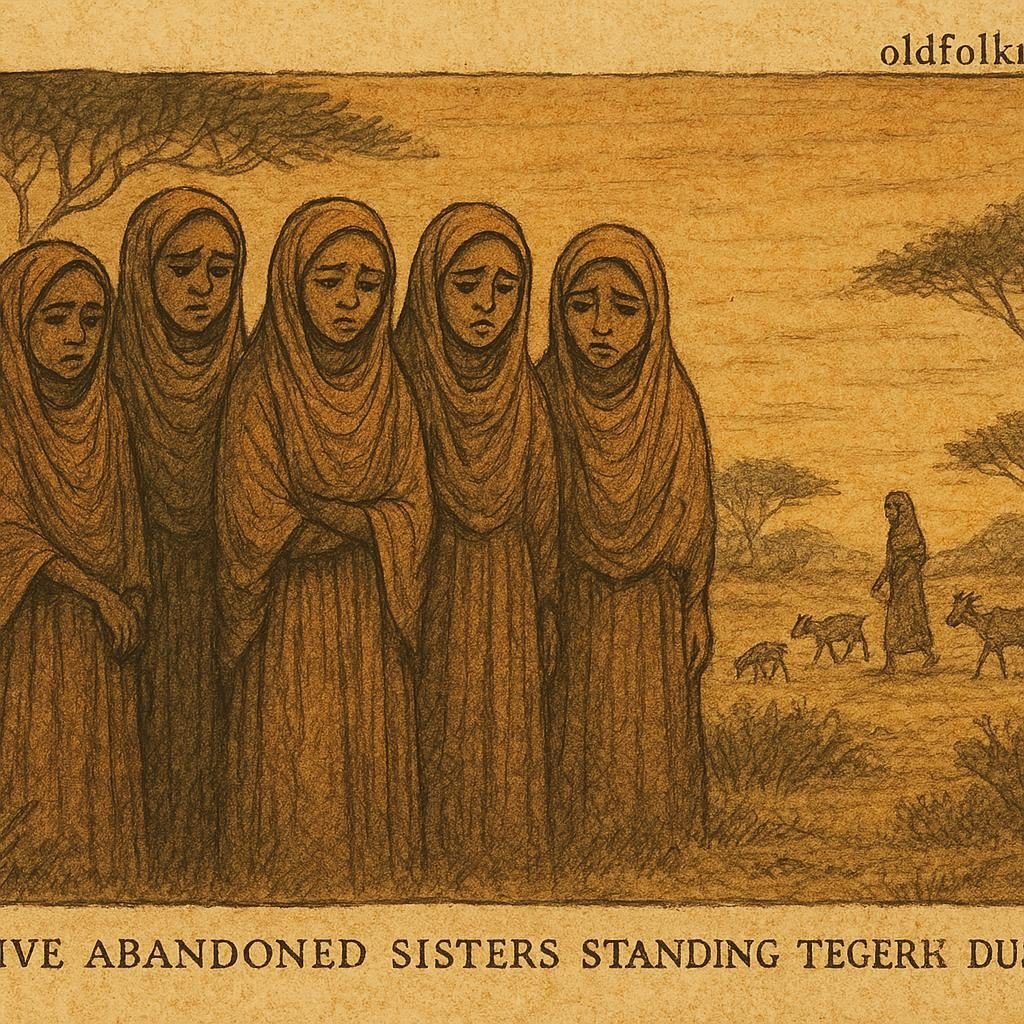
Long ago, in the wide sun-baked lands of Somalia where acacia trees cast their thin shadows and camels groaned in the thorny bush, there lived two brothers. One had five sons, the other five daughters. Both men were widowers, and in time they married again. The second brother’s new wife, however, grew bitter. She despised her husband’s daughters, quarreled endlessly, and nursed a deep hatred for the children not her own.
One day, her anger boiled over. “Listen, husband,” she said sharply, “you must choose. Either you divorce me, or you send away your daughters. I cannot share this home with them.”
The man faltered. He had no family apart from these children, yet he also feared losing his wife. Torn, he sought counsel from his brother.
“Keep at least one child,” the brother advised, “and give me one to raise. If you must, abandon the others.”
But when he relayed this to his wife, she stamped her foot. “No. All of them must go. If you keep even one, I will leave you.”
Blinded by weakness, the man obeyed. He led his five daughters deep into the bush.
READ THIS: The Boy Lion of Fafen: A Somali Folktale
“Father?” the children called softly.
“Yes,” he answered, though shame weighed heavy on him.
When they called again, he grunted like a camel, trying to deceive them. The sound reassured them for a moment, but soon they realized their father had vanished. Only the frayed rope tied to a tree remained, and around them loomed the danger of lions and hyenas.
Alone and afraid, the sisters cried out in sorrow, their voices rising like a mournful poem: “Alas, we are alone!”
As night fell, a shepherd girl appeared, driving her sheep home. The sisters begged her for shelter.
“My mother is a degder, a long-eared ogress,” the girl warned. “She eats human beings. If you come, she will devour you.”
“Please,” the sisters pleaded. “The wild beasts will consume us anyway. Give us one night of refuge.”
Reluctantly, the shepherd girl agreed. “Hide in the dust raised by the goats as they enter the homestead. At dawn, slip through the hole in the fence and flee before my mother notices.”
That evening, as the dust cloud swirled, the sisters concealed themselves. But the degder sniffed the air and growled, “I smell humans.”
“It is me, your daughter,” the girl said quickly. “You smell my breast.”
The degder grumbled but allowed herself to be distracted. She devoured a fat goat and demanded its tail fried and placed in her ear to ease her pain. Yet the moment her daughter obeyed, the degder fell dead.
The shepherd girl rejoiced, crying:
“Degder has died!
The land now is peaceful.”
The five sisters sang the same refrain, their voices filled with relief. Soon others joined, including men seeking brides. They admired the eldest sister, now of marriageable age.
But she shook her head. “I cannot marry yet. My little sisters still depend on me.”
Meanwhile, suitors sought the shepherd girl’s hand. She warned them, “If I bear six children, I too will become a degder like my mother.” But they insisted. She married and left.
The five sisters traveled to a town, where they worked hard and prospered. The eldest baked injera, while her younger sisters sold it in the markets. In time, they grew wealthy.
One day, their father and his cruel wife, now old and destitute, came begging at their door. At first, the sisters did not recognize them. But the youngest looked closely and cried, “This is our father!”
Ashamed, he admitted the truth. Instead of bitterness, the daughters embraced him. They bathed him, gave him new clothes, and welcomed him into their home. Forgiveness replaced betrayal.
Life improved steadily. Yet in the town’s only well lurked a great snake guarding treasure. When the snake rose, people fled. When it sank, they drew water.
One day, the youngest sister went to fetch water. The serpent caught her, dragging her into the slippery hole. Her cries reached home, and the eldest sister rushed to the well. She saw her sibling struggling and pulled her out before the snake could devour her.
That night, she devised a plan. With sword and trap, she waited. When the serpent slithered forth to claim its prey, she struck. The sword pierced its body, and the beast died. The sisters retrieved the hoard of gold hidden in its hole, and with it their fortune multiplied.
From abandonment to triumph, from despair to wealth, the five sisters endured. Above all, they chose forgiveness over resentment, and through that, they secured peace.
Moral Lesson
This Somali folktale teaches that betrayal wounds deeply, yet forgiveness heals stronger. The five sisters had every reason to hate their father, but instead they welcomed him in his weakness. Through resilience, unity, and compassion, they transformed hardship into abundance. True strength lies not only in survival but also in the courage to forgive.
Knowledge Check
Who forced the father to abandon his daughters?
His new wife, who hated the girls.
What trick did the father use to deceive his children in the bush?
He grunted like a camel to make them think he was nearby.
Who was the degder, and what did she do?
A long-eared ogress who ate human beings.
How did the degder die?
Her daughter placed a goat’s tail in her ear, and she died instantly.
What act showed the sisters’ forgiveness?
They welcomed their impoverished father, bathed him, and clothed him.
What happened to the snake guarding the well?
The eldest sister killed it with a sword and claimed its gold.
Source: Somali folktale, Somalia.