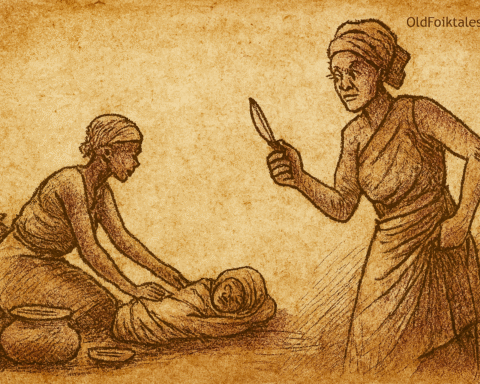
Once upon a time, deep in the forest, a Leopard became the proud mother of seven cubs. She loved her young ones dearly, but motherhood also came with responsibility. Each day, she had to hunt to provide food for herself and her children. Knowing she could not leave the cubs unattended, she turned to a neighbour she trusted, the Jackal. “Please, watch over my little ones while I am away,” she said. The Jackal, though wary of the great responsibility, agreed to serve as nurse and guardian of the cubs until her return.
Not long after the Leopard had departed, the Gazelle appeared. Unlike the Jackal, the Gazelle was not there to help. Mischief glittered in his eyes as he whispered to the Jackal, “Why not eat one of the cubs? After all, the Leopard will still have plenty left.”
The Jackal shivered at the thought. “But what shall I do when the Leopard returns and finds one missing?” he asked nervously.
“Do not worry,” promised the sly Gazelle, “I will help you.”
Tempted and reassured, the Jackal yielded. Together, they ate one cub. Soon, the Gazelle coaxed him into giving up another, and then another, until at last all seven of the Leopard’s cubs were gone. When there were none left, the Gazelle, determined to escape blame, devised a cruel trick. He tied the Jackal firmly to a tree.
READ: Why Fowls Never Shut Their Doors: A Traditional African Folktale
“When you hear the Leopard coming,” instructed the Gazelle, “shout loudly: ‘Murder! Thieves! Help!’ That way, she will believe you were the victim and not the cause.” Then, with mischief accomplished, he disappeared into the forest.
Not long after, the Jackal heard the Leopard bounding back through the undergrowth. His heart pounded. Remembering the Gazelle’s instruction, he cried out at the top of his voice: “We are robbed! We are robbed! Help! Thieves!”
The Leopard rushed to the scene, her sharp eyes darting around. “What has happened here? Why do you cry so?” she demanded.
“Oh!” sobbed the Jackal, struggling against the ropes, “I do not know who tied me up, but alas, all your children are gone.”
The Leopard’s heart burned with grief and anger. But before she could act, the Gazelle had already scampered far away, leaving no trace.
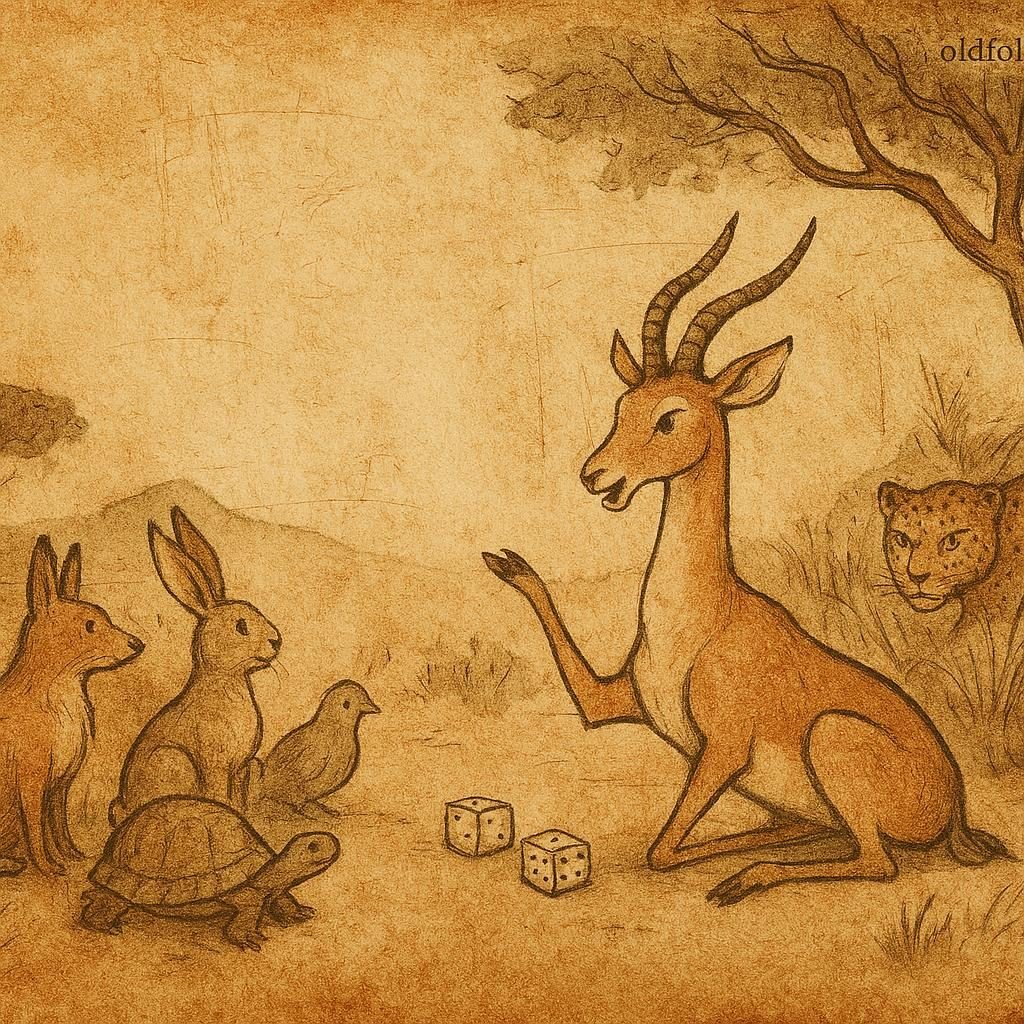
Soon after, the Gazelle arrived at a clearing where many animals were gathered. They were playing a gambling game with dice, laughing and shouting as they tested their luck. The Pigeon handed the dice to the Gazelle, and with a toss, he landed a winning throw, known as “Leopard.” The Gazelle, seizing the moment to boast, exclaimed loudly, “Oh, dear me! I have consumed seven young leopards, and yet nothing has happened to me!”
The other animals gasped at his daring words. But instead of taking warning from his arrogance, they mistook it for a charm of good fortune. “This must be the secret of his luck!” they murmured among themselves. One by one, as each animal threw the dice, they repeated his phrase: “Oh, dear me! I have consumed seven young leopards, and yet nothing has happened to me!”
The Gazelle smirked. “Do not imitate what does not belong to you,” he warned. “Trouble comes to those who echo the words of others blindly.” But the animals ignored him, convinced that he wished only to keep the fortune to himself.
Quietly, the Gazelle slipped away into the forest. He made his way to the Leopard, who was still filled with sorrow. “Do not be angry at what you are about to hear,” he told her. But his words were only meant to draw her to the clearing.
When the Leopard arrived at the games, she froze in disbelief. One by one, she heard the animals throwing the dice and boldly repeating the boast: “Oh, dear me! I have consumed seven young leopards, and yet nothing has happened to me!”
The Leopard’s heart, heavy with grief, could not bear such words. Rage boiled within her, and she lashed out in fury at the assembled animals. The forest clearing, once filled with laughter and dice, turned into a scene of chaos. By the time her anger had passed, the other animals had paid dearly for their reckless imitation. The Gazelle, meanwhile, had quietly removed himself from danger, leaving others to face the consequence of his mischief.
And so, it was through imitation and heedlessness that the animals met their downfall, while the Gazelle slipped away unscathed.
Moral Lesson
This folktale reminds us of the dangers of blind imitation and reckless choices. The Jackal, swayed by the Gazelle’s cunning words, lost all sense of judgment. The animals at the dice game, eager to share in another’s fortune, repeated words they did not understand and invited ruin upon themselves. True wisdom lies in independent thought, patience, and discernment. Following others blindly, especially those with mischievous intent, often leads to misfortune.
Knowledge Check
Q1: Who was entrusted with caring for the Leopard’s cubs?
A1: The Jackal was entrusted with watching the cubs.
Q2: How did the Gazelle persuade the Jackal to betray the Leopard’s trust?
A2: The Gazelle convinced him that eating one cub would do no harm and promised to help him avoid blame.
Q3: What trick did the Gazelle play on the Jackal?
A3: He tied the Jackal to a tree and told him to cry out when the Leopard returned.
Q4: What phrase did the animals imitate at the dice game?
A4: “Oh, dear me! I have consumed seven young leopards, and yet nothing has happened to me.”
Q5: What lesson does the story teach about imitation?
A5: Blindly copying others without understanding leads to trouble and misfortune.
Q6: What cultural tradition preserves this tale?
A6: It is preserved through African oral folktale traditions, passed from generation to generation.
Folktale Origin
Source: A traditional folktale from the oral storytelling heritage of Central Africa, often shared among various ethnic groups to teach lessons about wisdom, trust, and the dangers of blind imitation.