In the heart of Eswatini, where the rolling hills stretch like green velvet beneath the endless African sky and the ancient baobab trees whisper secrets to the wind, there exists a rich tapestry of stories that have been woven through generations. These tales, carried on the voices of grandmothers and passed down through countless evenings, hold within them the wisdom of the Swazi people, lessons that shape young minds and guide them toward wisdom.
As the sun begins its descent toward the western horizon, painting the sky in brilliant shades of orange and crimson, a familiar ritual unfolds in a traditional Swazi homestead. The day’s work is nearly done, the cattle have been brought in from the fields, and the sweet aroma of evening porridge drifts from the cooking huts. It is in this magical hour, when day surrenders to night, that the children of the homestead gather around their most treasured storyteller.
“Gogo! Gogo!” the children call out, their voices bright with anticipation as they settle in a circle around their grandmother. She sits on her traditional mat, her weathered hands folded in her lap, her eyes twinkling with the accumulated wisdom of decades. The children know that within her memory lies a treasure trove of stories tales that have traveled through time, carrying with them the heart and soul of their people.
Also read: The Three Whispering Eggs
“Tell us another one, Gogo!” little Nomsa pleads, her dark eyes shining in the flickering light of the evening fire. Her younger brother Sipho nods eagerly beside her, bouncing slightly with excitement. The other children of the homestead join in the chorus, their voices creating a symphony of eager anticipation.
Gogo smiles, the lines around her eyes deepening with warmth. She is indeed the mainstay of this homestead, the keeper of traditions, the guardian of wisdom, the one who ensures that the precious stories of their ancestors will not be lost to the passage of time. Her voice, rich and melodious, has the power to transport listeners to distant worlds and ancient times.
“Ah, my children,” she says, settling more comfortably on her mat, “let me tell you a story that my own grandmother told to me, and her grandmother told to her. It is the tale of ‘imbila yeswela umsila ngekulayetela’ the rock rabbit who lost his tail through his own laziness.”
The children lean forward, captivated already by the musical sound of their native siSwati language mixed with the promise of another wonderful tale. They know that these stories always carry important messages, lessons wrapped in the joy of storytelling that will stay with them long after they become adults themselves.
“Long, long ago,” Gogo begins, her voice taking on the rhythmic cadence of the traditional storyteller, “in the time when the world was still young and animals could speak as clearly as you and I, there came a great day of distribution. The Creator had decided that all the animals should have tails, and so word spread throughout the land that every creature should come to the great meeting place to receive their tail.”
The children’s eyes widen with wonder as they imagine this ancient time when such magical events could occur. In their minds, they can see the vast gathering of animals, all excited about receiving their special tails.
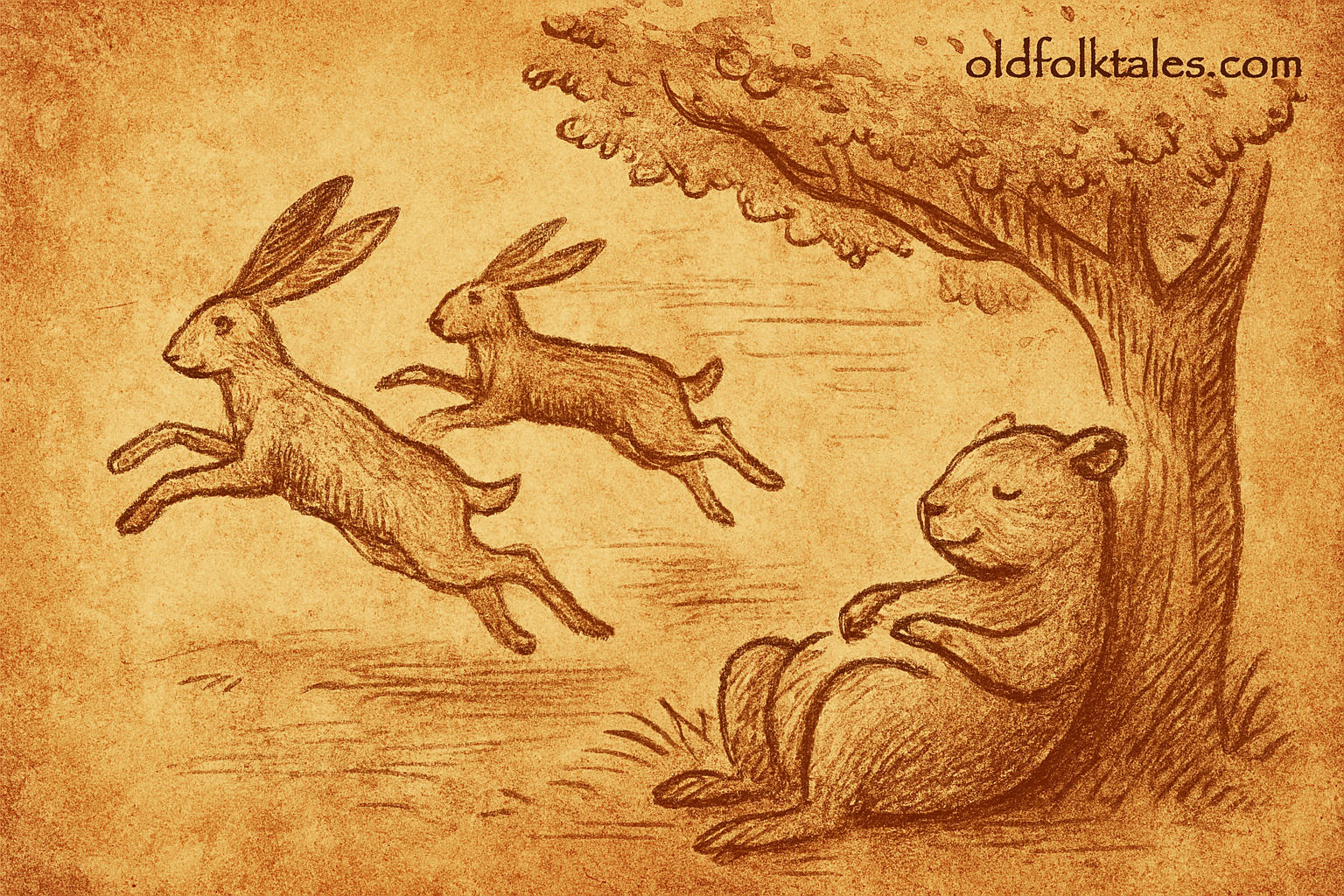
“Now,” Gogo continues, “among all the animals lived a rock rabbit imbila in our language. This rock rabbit was not a bad animal, you understand, but he had one terrible flaw: he was incredibly lazy. While his friends, the swift hares, bounded about with energy and enthusiasm, the rock rabbit preferred to spend his days lounging in the shade of large rocks, doing as little as possible.”
She pauses to let this sink in, watching as some of the children exchange knowing glances. They have all encountered lazy friends or perhaps recognized this trait in themselves at times.
“When the hares heard about the great tail distribution, they were filled with excitement. ‘Rock rabbit!’ they called to their friend, ‘come with us! Let’s go and get our tails! Imagine how magnificent we’ll look with long, fluffy tails to balance us as we run and jump!'”
Gogo’s voice becomes animated as she mimics the enthusiasm of the hares, causing the children to giggle with delight.
“But the rock rabbit, lounging as always in his favorite shady spot, barely lifted his head. ‘Ahh,’ he sighed with complete indifference, ‘I can’t be bothered to make such a long journey. My paws are tired, the sun is too hot, and the journey is too far. Please, my dear friends, just bring me back a tail when you return. Any tail will do.'”
The children shake their heads, already sensing that this decision will not end well for the lazy rock rabbit. Gogo nods approvingly at their understanding.
“So off went all the hares, bounding with joy and anticipation across the hills and valleys toward the great meeting place. They traveled through forests where the trees grew so thick that sunlight barely touched the ground, across rivers that sparkled like diamonds in the morning light, and over mountains whose peaks touched the clouds themselves.”
The children can almost feel themselves making this epic journey alongside the energetic hares, their imagination painting vivid pictures of the landscape Gogo describes.
“Meanwhile, the rock rabbit remained in his comfortable spot, occasionally wondering what was happening at the distribution but mostly just napping and assuming everything would work out fine without any effort on his part.”
“When his friends finally returned, their new tails swishing proudly behind them like beautiful plumes, the rock rabbit suddenly perked up with interest. ‘Ah, you’re back!’ he said excitedly, looking around expectantly. ‘Where’s my tail? I hope you brought me a nice, fluffy one like yours!'”
Gogo pauses dramatically, and the children lean forward, knowing that this moment will bring disappointment but eager to hear exactly how it unfolds.
“His friends looked at him with expressions of regret and shook their heads sadly. ‘Oh, rock rabbit,’ they said, ‘we are so sorry, but they ran out of tails before we could get one for you. There were so many animals there lions, elephants, zebras, monkeys, birds, and countless others. By the time we thought to ask for an extra tail for you, the great distributor said there were no more tails left. Every tail had been given to an animal who had made the journey themselves.'”
The children gasp in sympathetic disappointment, even though they had seen this outcome coming.
“And so,” Gogo concludes with gentle but firm emphasis, “the rock rabbit never got his tail. To this day, if you look at a rock rabbit, you will see that unlike his friends the hares, he has only the tiniest stub of a tail. He had no one to blame but himself for this misfortune.”
She looks around the circle of children, making eye contact with each one to ensure they understand the importance of what comes next.
“This is why we have the proverb ‘imbila yeswela umsila ngekulayetela,’ which teaches us that if you don’t do things for yourself, you might get nothing at all. The rock rabbit learned too late that some things in life require our own effort and cannot be left to others, no matter how good our friends might be.”
The Moral Lesson
This beloved Swazi folktale teaches children the fundamental importance of personal responsibility and self-reliance. The rock rabbit’s laziness and assumption that others will take care of his needs for him results in permanent consequences that affect him for the rest of his life. The story emphasizes that while friends can support us, there are certain things we must do for ourselves, and that avoiding effort or responsibility often leads to missing out on life’s opportunities and blessings.
Knowledge Check
Q1: What is the meaning of “imbila yeswela umsila ngekulayetela” in Swazi culture? A: This siSwati proverb translates to “if you don’t do things for yourself, you might get nothing,” teaching the importance of personal responsibility and self-reliance rather than depending entirely on others.
Q2: Who is the main character in this Swazi folktale and what is his key flaw? A: The main character is imbila (the rock rabbit), whose key flaw is laziness. He prefers lounging in the shade to making any effort, which ultimately costs him the chance to receive a tail.
Q3: What role do the hares play in this traditional Swazi story? A: The hares serve as the rock rabbit’s well-meaning friends who offer to include him in the journey to get tails, and later attempt to help him by asking for an extra tail, demonstrating both friendship and personal responsibility.
Q4: How does this folktale explain a natural phenomenon in Swazi storytelling tradition? A: The story provides a cultural explanation for why rock rabbits (dassies) have only tiny stub tails while hares have longer, fluffier tails, using this natural observation to teach moral lessons about effort and responsibility.
Q5: What is the significance of Gogo (grandmother) as the storyteller in Swazi culture? A: Gogo represents the traditional role of grandmothers as the keepers of oral tradition, wisdom, and cultural values in Swazi society, serving as the bridge between generations and the guardian of ancestral knowledge.
Q6: What cultural values does this Swazi folktale promote in children? A: The tale promotes core Swazi values including personal responsibility, the consequences of laziness, the importance of making effort for one’s own benefit, and understanding that some opportunities require personal action rather than relying on others.
Source: Swazi folktale, Eswatini (Swaziland)