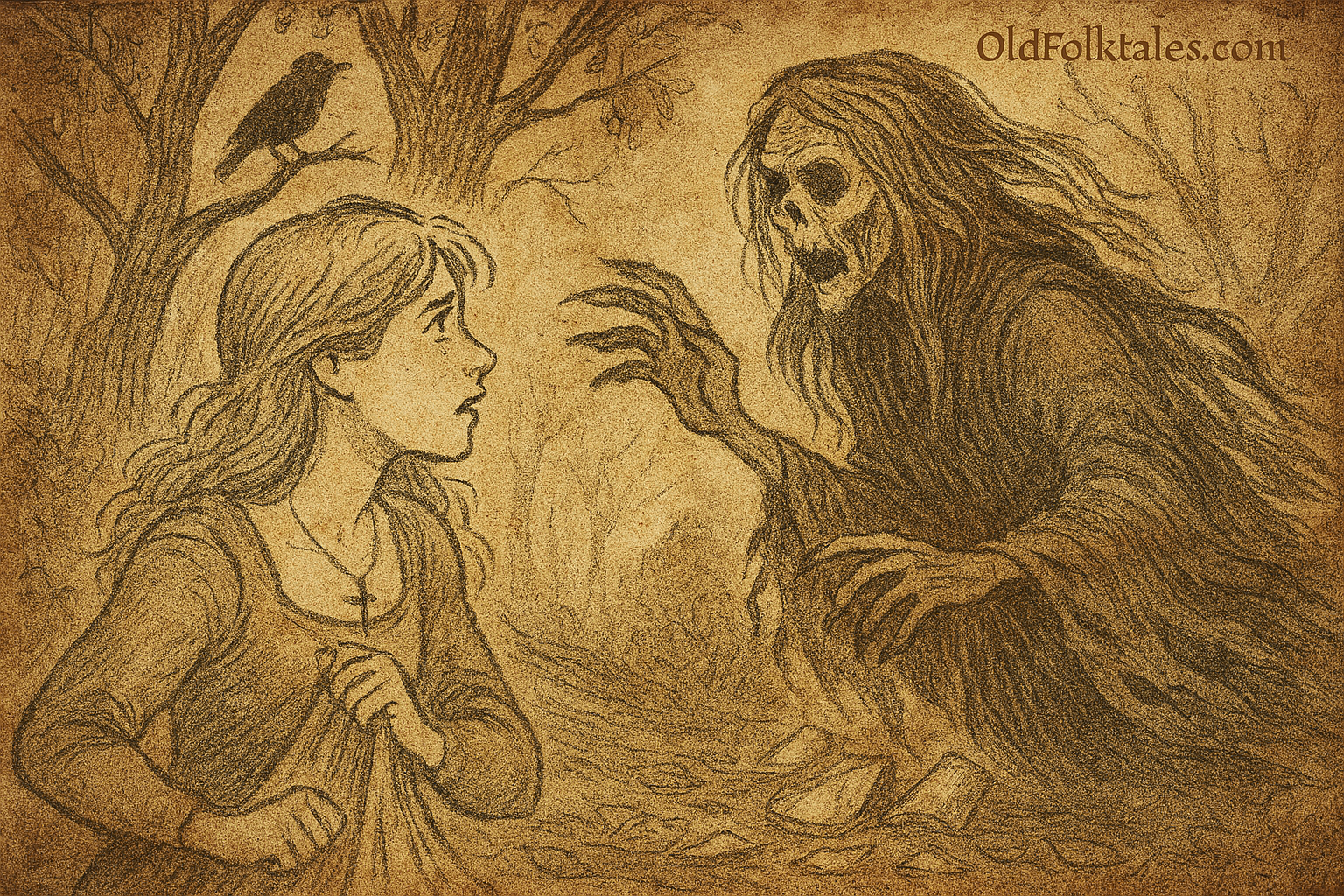
Every night, Juniper recited the same biblical verses, sometimes one hundred times, sometimes five hundred. If she stuttered or changed her voice’s inflection, Saeva’s wooden ruler with its cruel metal edge would bite into her wrists until they bled. The verses about cutting off offending hands and plucking out offending eyes echoed through the cold maid’s room where Juniper slept, haunting promises of the punishment to come.
Three years had passed since her father remarried and abandoned her to this life. Three years of serving breakfast to her stepsisters Kathryn and Jill, of scrubbing bathroom tiles and cleaning foundation droplets from sinks while wondering what makeup felt like. That first morning, when Kathryn complained the scrambled eggs were slimy, Juniper saw the flash of white-hot rage in Saeva’s eyes, a warning of the horrors that would become her daily existence.
When Juniper asked about attending school with her stepsisters, Saeva laughed cruelly in her face. “You haven’t the mind for it,” she whispered, her spidery fingers fluttering as she pressed cold lips to Juniper’s cheek. The years blurred into endless work, scrubbing, cooking, cleaning until calluses formed on her hands and emptiness hollowed out her heart.
If you liked this story, see our Central African folktales collection
Punishments came swiftly. When exhaustion made her fall asleep before making dinner, Saeva whipped her ten times but only after the filet mignon was cooked perfectly. Love, Juniper decided, was as imaginary as storks delivering babies. She couldn’t fathom how anyone could truly love another person when cruelty was all she knew.
Of her stepsisters, Jill showed occasional kindness, slipping toast crusts under Juniper’s door when she was locked away. Kathryn mirrored Saeva perfectly cold, calculating, cruel. One day Kathryn brought home a boy, and Jill slunk behind them with downcast eyes and fingernails bitten bloody. While they went upstairs, Jill asked Juniper to review her homework, fingers tapping nervously on her skirt.
That night, Saeva locked Juniper outside as punishment. “You’re not to come back inside until tomorrow,” she commanded. “And if you try, I’ll give you twenty lashes.”
The freezing air bit Juniper’s skin as she walked toward the stables through rows of golden-leafed hazel trees. There she encountered a boy whose wind-stung cheeks were red as apple halves, hair black as coal, skin pale as frost, and eyes like stained glass from some distant cathedral. He noticed her shivering and spoke gently: “You look cold.”
“I have a sweater in one of the stalls,” she replied, moving past him.
“What’s your name?” he asked.
“Juniper.”
“I’m Wren.”
Wren became her dearest friend, her closest companion, like the brother she never had. She let his name roll around on her tongue at night, afraid to speak it aloud. They met at the stables whenever possible—he cared for the horses and taught Kathryn to ride while Juniper shoveled manure, Saeva watching with a triumphant curl to her lip, as if she knew and savored Juniper’s hidden feelings.
Then came the day Saeva invited Wren for tea. “I think our Kathryn has taken quite a liking to the young lord,” she announced. Juniper’s hands trembled as she set out the finest china. Young lord? She hadn’t known. Wren looked different in his stiff coat and polished boots, staring at her across the room as if she wasn’t what he’d expected.
“Forgive me,” Wren said suddenly. “Won’t your other daughter join us?”
Saeva’s smile cracked like fragile porcelain. “Other daughter?”
“I meant Juniper,” Wren said sweetly.
Saeva’s face twisted with rage. She stood abruptly. “Walk with me,” she commanded Wren. Kathryn muttered that he was “intolerably boring” and she’d go mad if forced to marry him. Juniper’s heart plummeted. Marriage?
Two hours passed. Juniper cleared the table, washed dishes, swept floors. When Saeva finally returned, blood soaked her hands and dress hem. Her eyes blazed with dark fury.
“Fifty lashes,” she hissed. “And you will stay in the stable from now on.”
The whip tore into Juniper’s newly-healed back. Each stroke brought fresh agony as Saeva screamed: “Whore. Prostitute. Harlot. This is your doing.” She threw out Juniper’s belongings, sparing only what she’d hidden from Jill.
“If you behave as an animal, you shall live as an animal, you wicked creature.”
Stumbling through lightning and rain toward the stables, every raindrop felt like another lash. Inside, the horses whinnied frantically. Then Juniper saw him, Wren’s headless corpse slumped against a stall door, his head lying nearby with closed eyes that hadn’t yet sunk.
Through horror and despair, Juniper acted on instinct. She took Jill’s white silk scarf, gently placed Wren’s head back on his neck, and wound the scarf tightly around it. She cleaned his blood with her torn nightgown dipped in rainwater, weeping as she worked. She held his cold body through the long night until dawn brought birdsong.
A wren perched on a hazel branch, cocking its head at her. “Wren is gone,” she wept to the bird.
Saeva stormed down the hill, fury in her eyes. “Your father is here. You will stay in the stables, out of sight.” She struck Juniper so hard she fell onto the rocks, her wounded back screaming in agony.
When Juniper’s father appeared golden-haired with merry eyes, he didn’t recognize his own daughter. He thought her a stablehand until she threw herself into his arms crying, “Father!”
His hands came away bloodied from touching her back. He saw her shoes soaked red with Wren’s blood. “Your shoes are red,” he whispered in horror.
Behind them, Wren’s body unfolded and stood, eyes opening. It staggered toward Saeva, catching her in an embrace that tightened and tightened while wrens filled the air, their wings beating furiously. Saeva screamed as her bones cracked. When it ended, her eyes were gone plucked out and the wrens flew away singing.
The house burst into flames. Juniper’s father and Jill fled, but Juniper remained. She dug a hole by the hazel tree with bare hands and buried Wren’s bones, which had crumbled to dust. She released the horses from their stalls.
As she approached the burning house to warm her cold hands, the flames extinguished. Black smoke spiraled upward. Through the haze, a white hand reached out and grasped hers.
Wren stood before her, smiling sweetly, a white silk scarf tied around his throat.
“Juniper,” he said, “come with me.”
She didn’t ask where. She only said yes.
His warm hand touched her healed back. She wore a glittering golden gown, a crown, and glass slippers. Wren kissed her firmly as they disappeared into the forest together, hand in hand.
The Moral Lesson
This dark retelling explores how cruelty eventually demands payment, and how true love recognizes worth even when others try to diminish it. The biblical verses that Saeva weaponized as tools of torture become prophecy her offending eyes are plucked out by the wrens. The story reminds us that victims of severe abuse can find freedom and transformation, even when the path requires embracing the supernatural and walking through fire. Most powerfully, it shows that love whether romantic, familial, or spiritual can transcend even death itself.
Knowledge Check
Q1: Who are the main characters in “Wren, My Wren” and what roles do they play?
A: Juniper is the abused stepdaughter and protagonist. Saeva is her cruel stepmother who forces biblical recitations and physical punishment. Kathryn and Jill are Juniper’s stepsisters, Kathryn mirrors Saeva’s cruelty while Jill shows occasional kindness. Wren is the young lord who becomes Juniper’s friend and love interest, ultimately sacrificed and resurrected. Juniper’s father is largely absent, enabling the abuse through neglect.
Q2: What is the symbolism of the biblical verses Juniper must recite?
A: The verses about cutting off offending hands, feet, and plucking out offending eyes become darkly prophetic. Saeva uses scripture as a weapon of control and torture, but these same verses foreshadow her punishment the wrens pluck out her eyes, fulfilling the biblical imagery. This irony suggests that those who weaponize faith for cruelty will face the judgment they invoke on others.
Q3: What does the wren symbolize throughout the story?
A: The wren represents love, hope, sacrifice, and resurrection. Wren (the character) becomes Juniper’s salvation through his death and supernatural return. The small bird that appears after his beheading suggests his spirit watching over her. The flock of wrens that attacks Saeva represents divine or supernatural justice, while Wren’s final resurrection shows how love transcends death, a common theme in Gothic literature.
Q4: How does this story function as a dark Cinderella retelling?
A: The story maintains Cinderella’s core elements: cruel stepmother and stepsisters, an abused stepdaughter doing household labor, a prince figure, and eventual escape. However, it transforms the fairy tale into Gothic horror—replacing the fairy godmother with supernatural vengeance, the ball with a tea party, and the happy ending comes through death, resurrection, and implied departure from the mortal world rather than traditional marriage.
Q5: What is the significance of Wren’s resurrection and the white silk scarf?
A: The white silk scarf that Juniper uses to reattach Wren’s head becomes a symbol of their bond and his resurrection. Her act of tending to his body with love and care despite her own suffering triggers the supernatural events. The scarf remains tied around his throat in his resurrected form, marking the boundary between death and life, and symbolizing how love can literally hold someone together even after violence tries to tear them apart.
Q6: How does the story address themes of abuse and trauma?
A: The narrative doesn’t romanticize or minimize Juniper’s suffering. Her dissociation during beatings (“I go away in my head”), her inability to understand love, her numbness to pain, and her fantasies about death are realistic trauma responses. The story shows how prolonged abuse destroys one’s sense of self-worth and makes normal emotions incomprehensible. Her eventual escape through supernatural means suggests that sometimes the real world offers no justice for abuse victims, making fantasy the only path to freedom.
Source: Contemporary Gothic fairy tale retelling by Eden Wilhelm (2021)