In the highlands of Ethiopia, where the morning mist often clings to the rugged escarpments and the call of herders echoes across the valleys, there lived a woman blessed with sons. She bore many, one after another, until at last she gave birth to her youngest child. Yet, for reasons only she knew, this mother concealed the truth of her newborn’s identity. Though the child was a boy, she dressed him in skirts and beads, raising him as a daughter. She named this child Fatuma.
Fatuma grew in beauty and grace. Her skirts swayed like woven cloth in the market wind, and her laughter carried through the compound. In time, her charm reached the ears of the king. Seeing her, the king was taken with her elegance, and soon Fatuma became his wife.
On their wedding night, as the fire crackled low and the moonlight spilled across the royal hut, the king began to untie her skirts. Yet each skirt revealed another beneath it. He loosened one, then another, then another, but still Fatuma’s garments multiplied like secrets hidden in shadow. The night passed, dawn broke, and still the king had not undone them all.
READ THIS: Penda Who Could Not Be Shamed
Whispers began to stir in the marketplace. And in time, gossip fell into the ears of an old woman, sharp-tongued, meddlesome, and eager for mischief. She spread the tale that Fatuma was not what she seemed, declaring boldly, “Fatuma is not a woman but a man in disguise.” The words, like sparks on dry grass, spread quickly.
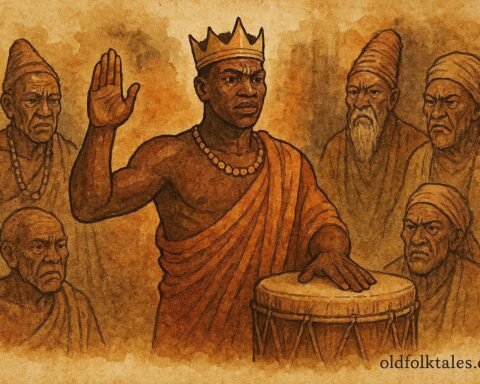
Hearing this, the king declared before all his wives:
“On Monday, you shall dance before the people at the bantaba. Each wife must loosen her skirt, so that truth will be known.”
The day of judgment approached. Fatuma’s heart was heavy. One morning, she wandered into the bush where the acacia trees cast their spiny shadows. There, beneath the whispering branches, she wept. Her tears fell into the dust, carrying the weight of a secret she could not share.
As she cried, a presence stirred. From between the trees appeared a spirit, cloaked in the shape of a frail old woman. Her eyes shone with otherworldly wisdom. She asked softly, “Child, why do you cry?”
Through sobs, Fatuma confessed: “My mother raised me as a woman, though I was born a man. Now the king commands us to prove ourselves before the people. The old busybody has revealed what I am, and shame will fall upon me.”
The spirit listened. Then she said, “Do not fear. If you trust me, and if you tell no one of what I do, I shall help you.”
She drew Fatuma close, sucked her in and spat her out again. The world spun red, then green, then back again. When Fatuma stood once more, she was transformed. Her body bore the marks of womanhood, softened, reshaped, undeniable. The spirit sharpened her teeth until they were fine as polished grains of rice and inked her gums black with tattooed beauty. She pressed something into Fatuma’s hand: a pair of cooked testicles.
“Feed these to the tattler,” she instructed.
Fatuma obeyed. She brought the dish to the old gossip. The woman ate greedily, not knowing what she consumed. But soon, to her horror, great heavy testicles sprouted upon her. Shamed beyond bearing, she withdrew into her hut and refused to emerge.
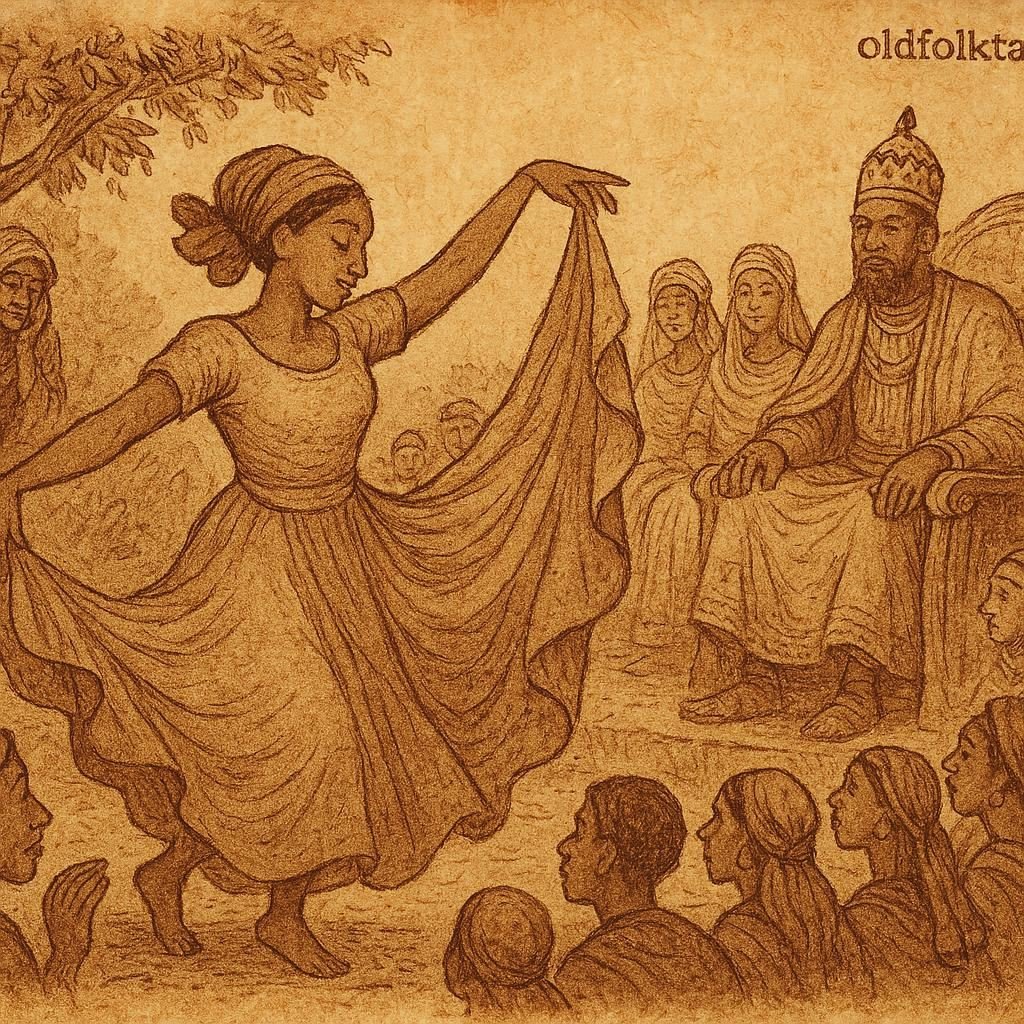
When Monday came, the bantaba filled with drums, voices, and the shimmer of skirts. One by one, the king’s wives danced, loosening their garments to reveal themselves as women. At last, Fatuma entered. She danced gracefully, her steps like the rhythm of the lyre. When she loosened her skirt, the crowd gasped, there before them was no deception. Fatuma was truly a woman.
“All can see,” the people cried, “the old woman lied!”
Humiliated, the gossip could bear no more. She fled from the village, running into the wild bush. There she was transformed into a monkey, condemned to chatter endlessly among the trees.
Fatuma returned to her home, her secret hidden no more.
Moral of the Story
This Ethiopian folktale teaches that truth, though buried under lies and disguises, will ultimately rise. Gossip destroys reputations, but justice and transformation protect the innocent. Envy and malice, like the old woman’s tongue, lead only to disgrace.
Knowledge Check
Q1: Who is Fatuma in this Ethiopian folktale?
A1: Fatuma is the youngest child of a woman who disguised him as a girl and later became the king’s wife.
Q2: What challenge does Fatuma face in the story?
A2: Fatuma is accused by a gossiping old woman of secretly being a man and must prove her womanhood before the king and his people.
Q3: How does the spirit help Fatuma?
A3: The spirit transforms Fatuma’s body into that of a true woman, sharpens her teeth, tattoos her gums, and gives her cooked testicles to trick the gossip.
Q4: What happens to the old gossiping woman?
A4: After eating the testicles, she grows them herself, becomes ashamed, and eventually turns into a monkey that flees into the bush.
Q5: What cultural values does this tale highlight?
A5: The folktale underscores the dangers of gossip, the importance of truth, and the triumph of justice within Ethiopian storytelling tradition.
Q6: What is the symbolic meaning of the monkey transformation?
A6: The monkey represents the punishment of liars—forever chattering but never respected, living on the fringes of society.
Source: Ethiopian folktale