1. The Wife, Her Husband, and the Two Geese
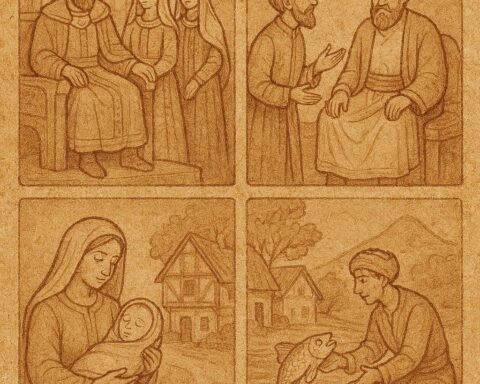
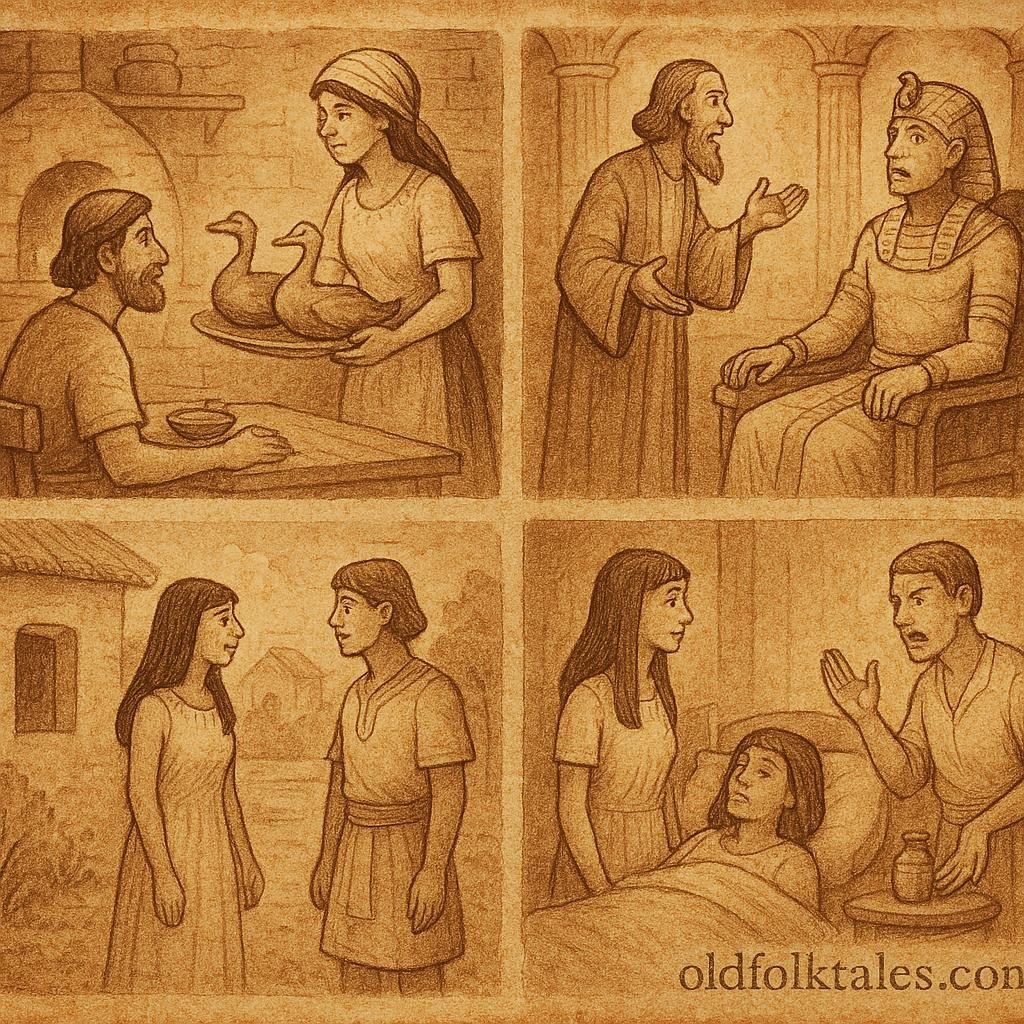
In a quiet village along the Nile, a man purchased two plump geese and entrusted them to his wife. “Cook one today and save the other for tomorrow,” he instructed.
But when he returned home, he found both geese served on the table. “Where is the other goose?” he asked, puzzled.
“It flew away,” she replied with a mischievous smile.
The man laughed. “Cooked geese do not fly.”
“Yes, they do!” she insisted, speaking so persuasively and with such humor that the man could not help but laugh and forgive her. Her cleverness and wit turned a simple mistake into a moment of joy. The story reminds us that humor and ingenuity can resolve conflicts and lighten the burdens of everyday life.
2. The King’s Scholar
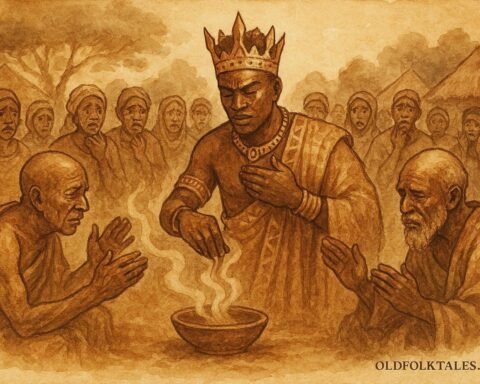
In a grand palace, a wise and faithful scholar served the king. One day, the king decided to test the scholar’s intelligence. “If you tell the truth, I will kill you. If you lie, I will also kill you,” the king declared.
The scholar paused, considering carefully. Then he spoke calmly: “You will kill me.”
The king, caught in a clever paradox, could neither punish nor spare the scholar without contradicting the truth. Amused by the scholar’s wisdom, the king laughed and let him live. This tale celebrates clever thinking, integrity, and the power of careful words in navigating even the trickiest of situations.
3. The Cemetery-Keeper and His Daughter
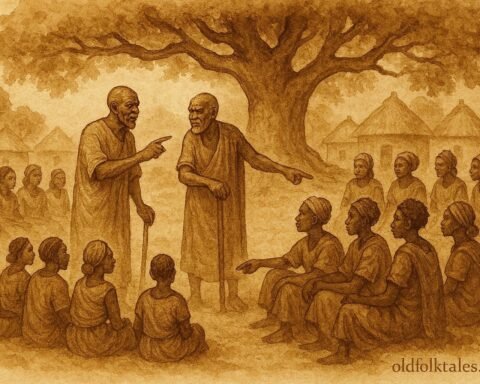
A poor cemetery-keeper had a daughter of extraordinary beauty. Her elegance and charm attracted attention from near and far, yet her father’s humble position seemed to prevent her from marrying well.
One day, a passing prince noticed her grace and fell in love. Captivated by her beauty, he proposed, and she became his wife, rising from humble beginnings to a life of splendor in the royal palace.
Villagers remarked, “Even the daughter of a cemetery-keeper may rise to be a queen.” This story celebrates the unpredictability of fate, demonstrating that humble origins do not limit one’s destiny.
4. The Sick Woman, Her Daughter, and the Doctor
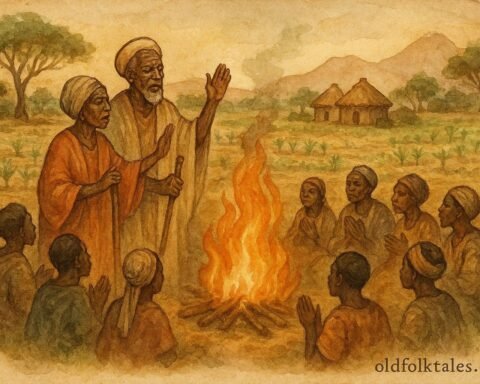
A woman fell gravely ill and called for a doctor. The physician arrived and said, “To recover, you must eat meat.”
Her curious daughter began asking questions. “Will chicken do?”
“Yes,” the doctor replied.
“And fish?”
“Yes, fish will do.”
She continued questioning relentlessly, testing the doctor’s patience. Finally, in exasperation, he exclaimed, “If you will not give her meat, then give her my flesh!”
The tale humorously illustrates human impatience, the challenges of communication, and the limits of persistence, while reminding readers of the importance of listening and understanding in caregiving.
Moral Lesson
These four Egyptian tales offer enduring lessons: cleverness and humor can ease life’s challenges; wisdom and careful words can navigate danger; humble beginnings do not prevent greatness; and patience, understanding, and communication are essential in human relationships. Collectively, they reflect the rich moral and cultural heritage of Egypt.
Knowledge Check
Who is the main character in “The Wife, Her Husband, and the Two Geese”?
The wife, her husband, and the two geese.
What lesson does “The King’s Scholar” teach?
Wisdom and clever thinking can protect one even in life-threatening situations.
What does “The Cemetery-Keeper and His Daughter” illustrate about fate?
Humble beginnings do not limit one’s potential or destiny.
Why does the doctor become frustrated in “The Sick Woman, Her Daughter, and the Doctor”?
The daughter’s endless questions test his patience, highlighting limits of persistence.
How does humor play a role in “The Wife, Her Husband, and the Two Geese”?
It resolves conflict and transforms a potential problem into a joyful moment.
What is the cultural origin of these stories?
Egyptian folktales.
Source: Egyptian Folktale