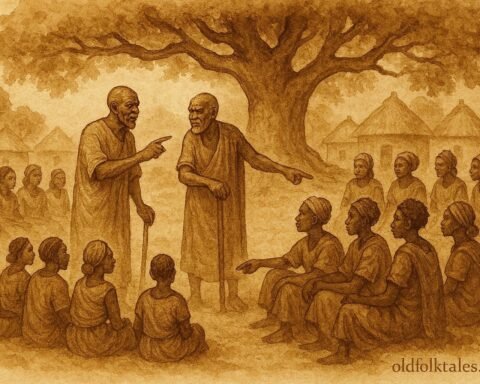
In a quiet corner of ancient Egypt lived a man named Garada, his brother `Asfur, and their sister, also named Garada. They were poor, idle, and troubled, wandering through life without a steady livelihood. One day, the elder Garada turned to his sister in despair.
“What are we to do?” he asked.
She thought for a moment, then smiled with a hint of cunning. “Pretend you can tell fortunes,” she advised. “If someone comes to you, simply scramble the sand. Speak according to who they are: to a young man, promise a beautiful bride; to an old man, hint at wealth or happiness. Let them hear what they wish, and you will find your way.”
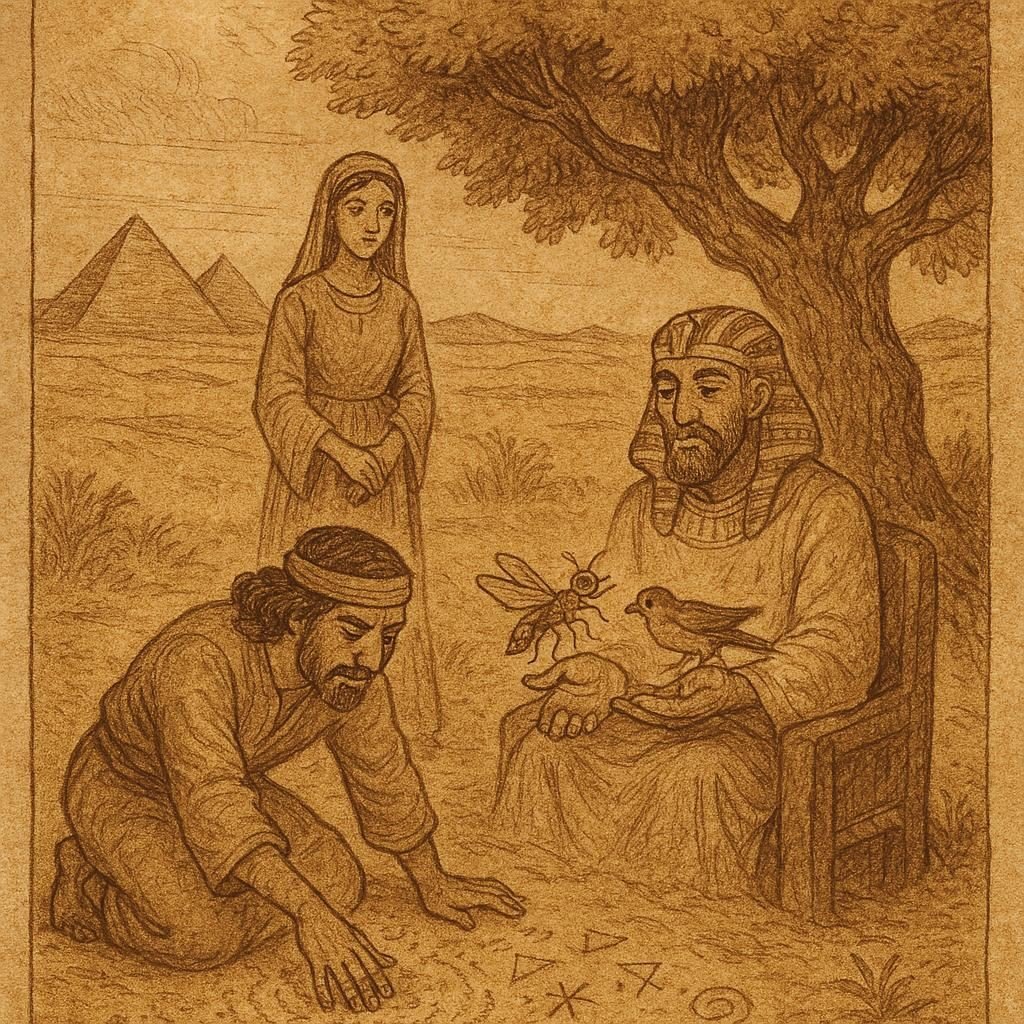
Heeding her advice, Garada adopted this as his craft. He set up near the king’s palace, quietly observing passersby while pretending to divine their futures in the sand. Word of his unusual practice reached the king, who was intrigued but cautious.
One day, as the king rested beneath a sprawling tree, fate intervened. A locust, Garada’s namesake, landed on a branch above him, and a sparrow, `Asfur, alighted on the locust. The two insects clung to each other, then tumbled directly into the king’s lap. Surprised, the king hid the creatures in his hand and summoned the geomancer.
“If you are clever,” the king demanded, “tell me what is in my hand.”
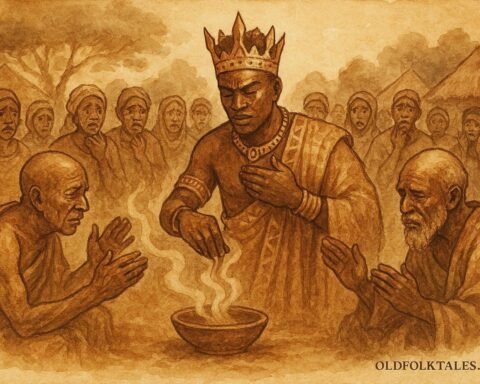
Garada’s heart raced. Inside his vest, a mouse scurried, and he recalled his sister’s words. “Without you, Garada and `Asfur would not have fallen,” he muttered under his breath. Amused, the king applauded and declared, “From now on, you will read the sand for no one but me. You shall stay in my service.”
Garada’s fortunes changed overnight. Pleased with the geomancer, the king granted him favor and status. But peace did not last long. One day, thieves broke into the palace and stole the treasury’s jewels. Distraught, the king turned to his geomancer.
“You must recover what has been taken,” the king commanded.
Garada, knowing he could not instantly produce the treasures, asked for time. “Allow me to visit my sister and contemplate the matter. I shall return with a solution.” The king agreed.
Garada sought counsel from his sister, who instructed him wisely: “Build a house outside the city. Watch and wait. If the treasures appear, all will be well. If not, we shall flee and remain unknown until the danger passes.”
Following her guidance, Garada built a modest dwelling on a remote plot of land. With no calendar to mark the days, he gathered forty stones, placing them beside him to count the passing time, one stone for each day. He was tense and fearful, yet resolute.
Meanwhile, the thieves, forty in number, had learned of Garada’s retreat and feared his insight. One by one, they crept to his house under cover of dawn, hoping to observe him. But Garada, alert and clever, took a stone each morning, saying, “The first of the forty,” “The second of the forty,” and so on, as he tossed each stone. Miraculously, each stone struck a thief, sending them fleeing in terror.
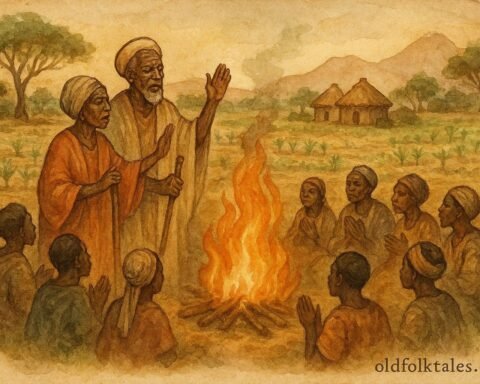
By the third day, the remaining thieves, overwhelmed by fear, approached Garada. “We are the ones who stole the treasury,” they confessed. “If we return it, will you keep our secret?”
“Of course,” Garada replied calmly. “If you offer something extra, I shall claim the recovery came from elsewhere.” They revealed the treasure’s hiding place, and Garada reported it to the king. Delighted, the king exclaimed, “You are a geomancer without equal!”
News of Garada’s cleverness spread far and wide. Visitors came from other lands, eager to witness his abilities. Yet this fame stirred jealousy among neighboring kings. Determined to test him, they buried three containers—one with honey, one with milk, one with tar, and summoned Garada to identify their contents.
Garada hesitated, wishing to remain humble, but honesty prevailed. “The first was milk, the second honey, and the last tar,” he announced. Each statement proved true. The kings applauded, their own geomancers embarrassed by failure, and Garada’s reputation grew even stronger.
Though he seemed all-knowing, Garada’s real secret was wit, courage, and careful observation, not magic.
Moral Lesson
Cleverness, patience, and careful planning can overcome obstacles even when power and wealth are at stake. True wisdom lies not in illusions but in observation, courage, and cunning.
Knowledge Check
Who were the main characters in the Egyptian folktale “Garada and Asfur”?
– Garada, Asfur, and their sister Garada.
What advice did Garada’s sister give to start his fortune-telling career?
– To pretend he could read fortunes by scrambling sand and speaking what each visitor wanted to hear.
How did Garada first impress the king?
– By correctly identifying the locust and sparrow that fell into the king’s lap.
What method did Garada use to recover the stolen treasury?
– He counted forty days with stones and used them symbolically to frighten the forty thieves into revealing the treasure.
What lesson does Garada’s handling of the other kings’ test teach?
– Cleverness and honesty can earn respect and avoid conflict even in competitive situations.
What is the cultural origin of this folktale?
– Egyptian folklore, highlighting themes of ingenuity and wisdom.
Source: Egyptian folktale