In the land of the Akan people, long before great kingdoms rose and fell, there lived the clever trickster known as Kwaku Ananse. His name was whispered everywhere, for he was as famous for his greed as he was for his cunning. No one could outwit him easily, and even kings sometimes fell into his traps.
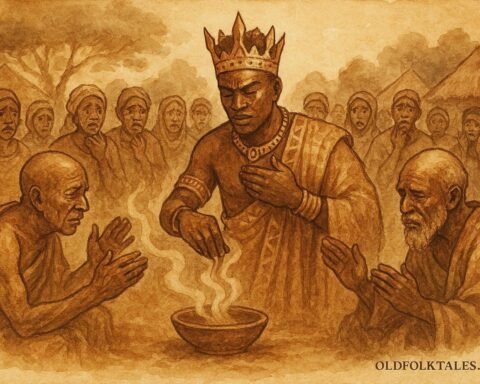
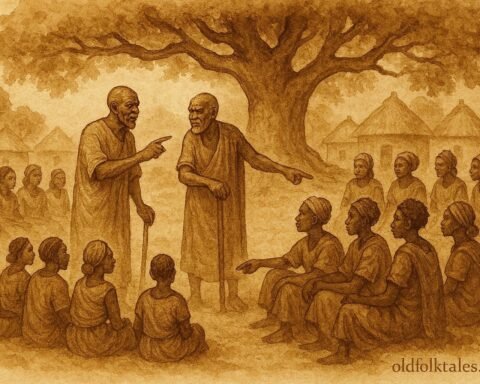
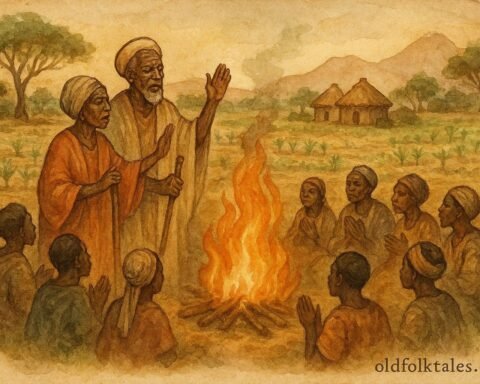
One day, the king of a vast kingdom declared a challenge. He wanted to test the cleverness of his people, for he believed that only the most intelligent could serve close to the throne. The prize was nothing small: whoever won the challenge would inherit part of the royal kingdom. Every villager, farmer, hunter, and traveler longed for this chance. Yet the task seemed so impossible that many gave up before they even began.
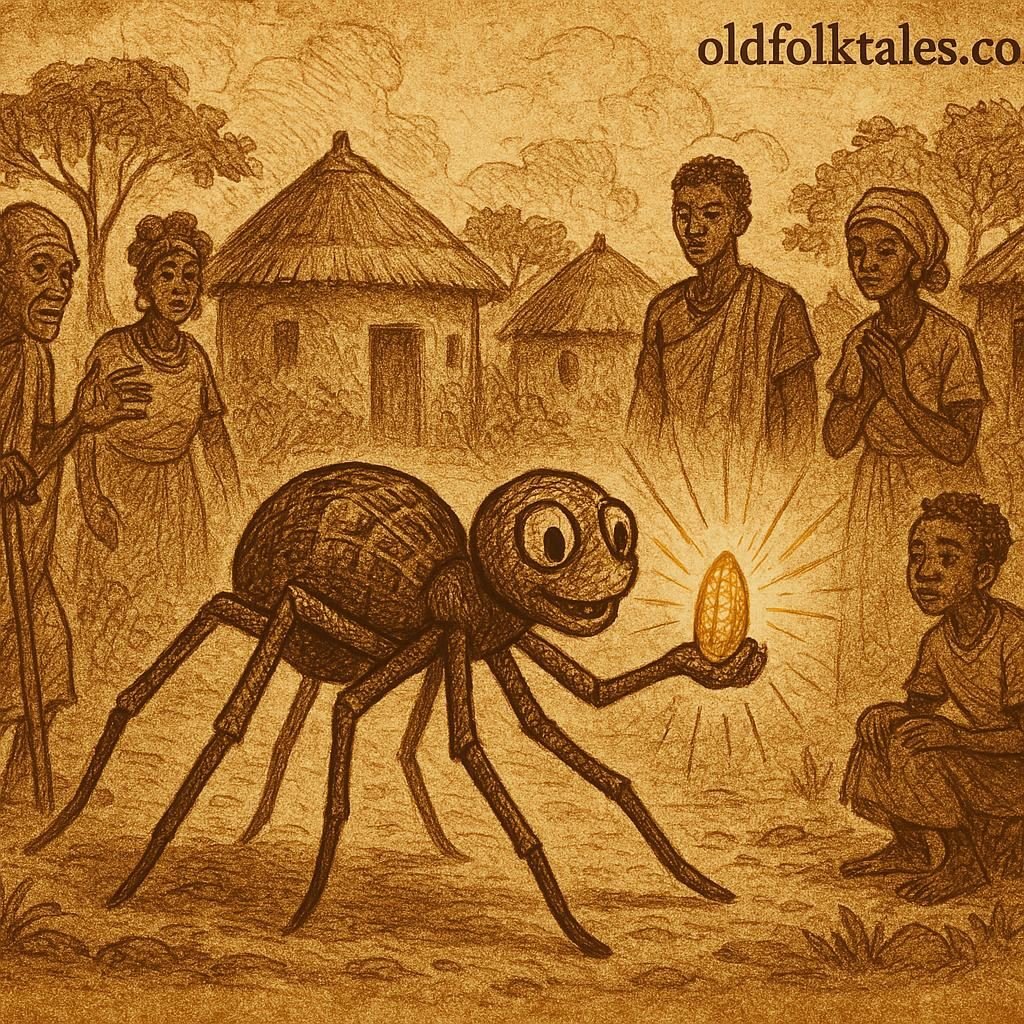
The king gave one grain of corn to each contestant and told them, “Return after some time and show me what you have done with this grain.” Most people looked puzzled. Some ate theirs in hunger. Others threw theirs away in anger. But Kwaku Ananse held his grain tightly in his palm, smiling his sly smile.
The Trickster’s First Step
Instead of planting the grain as many would have done, Ananse carried it to the marketplace. There, he found a hungry traveler who had lost his way. With his smooth tongue and endless confidence, Ananse convinced the man that the grain was no ordinary seed but one blessed by the gods to multiply fortunes. In exchange for this “magical” corn, the traveler gave him a small chicken.
Ananse went home proudly, laughing to himself. “From one grain, I now have a chicken,” he boasted. But he was not finished.
The Trickster’s Second Step
After a few weeks, the chicken grew strong. Ananse, seeing his chance, took it to another village. There he met a farmer who had just lost his fowl to a wild hawk. He pitied the man and said, “Brother, I will give you this chicken. All I ask is that you give me a goat in return, for surely a goat is more useful to a man like me.”
The farmer, desperate and grateful, agreed. Ananse returned home with a goat trailing behind him. He laughed again. “From one grain of corn, I now have a goat.”
The Trickster’s Third Step
Weeks later, Ananse grew restless again. He knew a goat was good, but he wanted more. So he led the goat into a town where a man was preparing for his daughter’s wedding. The man needed meat for the feast. Ananse offered him the goat and said, “Give me only one young cow in return, and I shall save your feast.”
The man, in a hurry, agreed. Ananse returned with a cow, richer than before. By now, people were beginning to talk about his strange fortune. Still, Ananse only smiled and whispered to himself, “The grain of corn is still working.”
The Trickster’s Final Step
At last, Ananse’s ambition drove him to the royal court. He walked proudly, leading the cow before the king. The people gasped, for they remembered that the challenge had started with a single grain of corn.
The king asked, “Ananse, what have you done with the grain I gave you?”
With a bow, Ananse replied, “Great king, I traded it for a chicken. The chicken I traded for a goat. The goat I traded for a cow. And now I stand before you, having turned one grain of corn into wealth.”
The king and his council sat in silence. Then the king laughed and said, “Ananse, your cunning has no equal. Truly you have shown wisdom, even if your wisdom is full of tricks. As promised, you shall win part of this kingdom.”
And so, Kwaku Ananse gained power not through farming, not through strength, but through his sharp tongue and endless cunning. To this day, the story reminds people that wit can sometimes open doors that strength cannot.
Moral Lesson of How Kwaku Ananse Won a Kingdom With a Grain of Corn
This folktale teaches that cleverness and resourcefulness can bring great rewards, but it also warns us about trickery. Kwaku Ananse achieved success not through honest labor but through cunning exchanges. The lesson is clear: wisdom can shape destiny, but true honor lies in using wisdom with fairness.
Knowledge Check
What was the original challenge the king gave to his people in the story of How Kwaku Ananse Won a Kingdom With a Grain of Corn?
The king gave each contestant one grain of corn and asked them to return with proof of what they could do with it.How did Ananse first use the grain of corn?
He traded it with a traveler in the marketplace for a chicken.What did Ananse trade the chicken for?
He exchanged the chicken for a goat.How did Ananse eventually acquire a cow?
He traded the goat to a man who needed meat for his daughter’s wedding feast.Why did the king reward Ananse at the end of the tale?
The king admired Ananse’s cleverness and ability to multiply one small grain of corn into wealth, even though it was through cunning.What is the main moral lesson of How Kwaku Ananse Won a Kingdom With a Grain of Corn?
It shows the power of wit and resourcefulness but also reminds us that true honor comes from using wisdom fairly.
Cultural Origin: Akan folktale, Ghana