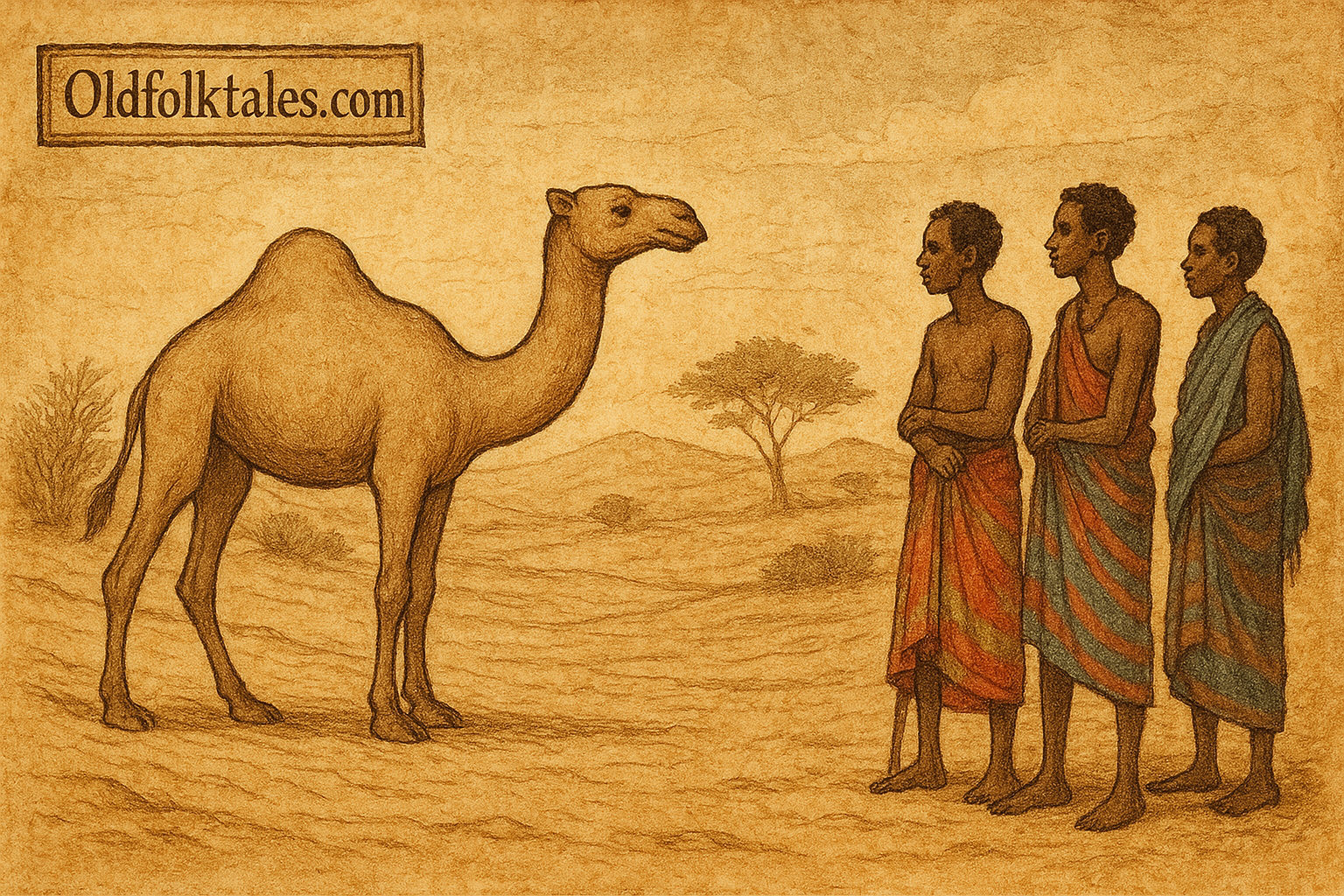
Long ago, before the camel had a hump, he was a lazy creature. His skin was smooth and flat, and he spent most of his days lounging under the hot sun, doing very little. The other animals in the desert worked hard to survive. The ant carried heavy loads to build its home, the ostrich ran swiftly to find food, and even the little lizard darted quickly to catch its meal. But the camel did nothing.
One day, the Great Sky Spirit looked down at the desert. The sun was fierce, and the sand burned like fire. The people who lived nearby depended on animals to carry their water and food across the hot land. But the camel refused to help. “Why should I work when there is so much shade to rest in?” he would say.
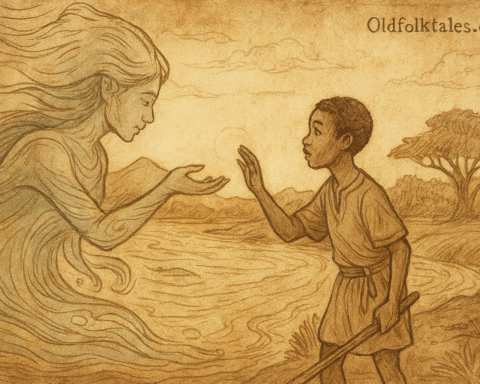
The Sky Spirit decided it was time to teach the camel a lesson. Calling the animals together, the Spirit said, “From this day forward, every creature will have a gift or a task. You, Camel, must carry heavy loads across the desert and help the people survive.”
Camel yawned and replied, “I will do no such thing. I am meant to rest and enjoy the breeze.”
The Sky Spirit frowned. “If you refuse your task, you will carry a reminder of your laziness.”
With a wave of the Spirit’s hand, a small bump appeared on Camel’s back. It grew larger and rounder until it became a great hump. The hump was a store of fat, which would help Camel survive long journeys without food or water.
Camel was surprised. “What is this upon my back?” he asked.
“It is your hump,” said the Sky Spirit. “It will remind you to work hard, to carry your burdens, and to never be lazy again.”
At first, Camel did not understand. The hump made him look odd, and the other animals laughed. But soon, the people came with loads of water and supplies. They needed Camel to carry them across the vast desert to places where no other animal could go.
Camel took the heavy loads and walked through the burning sand, his hump holding the fat that gave him strength. Though the journey was hard, Camel felt proud. For the first time, he was useful and respected.
From that day forward, Camel never refused work again. His hump was a sign of his strength and his willingness to serve others. And so, the camel became known as the ship of the desert, carrying burdens and helping people survive where few others could.
Moral Lesson
How the Camel Got His Hump teaches that laziness brings burden and shame, but hard work leads to respect and usefulness. Even when faced with difficult tasks, embracing responsibility can transform weakness into strength. The camel’s hump is a reminder that effort and patience help us endure challenges and support those who depend on us.
Knowledge Check
1. What is the main lesson in the story How the Camel Got His Hump?
The story teaches that laziness leads to burden, while hard work brings strength and respect.
2. Why did the Great Sky Spirit give the camel a hump?
Because the camel refused to work, the Sky Spirit gave him a hump as a reminder to carry burdens and be hardworking.
3. How did the camel’s hump help him?
The hump stored fat, allowing the camel to survive long journeys across the desert without food or water.
4. What role does the camel play in the desert according to the story?
The camel serves as the ship of the desert, carrying people’s loads and helping them travel across harsh lands.
5. How does this tale reflect African oral storytelling traditions?
It uses animals to teach moral lessons, uses simple vivid language, and has a clear beginning, middle, and end with a memorable message.
6. What transformation does the camel undergo in the story?
The camel changes from a lazy creature to a hardworking animal respected for its strength and service to others.
Cultural Origin: African Animal Fable from the Sahel region