Long ago, in the lands of the Fang people of Gabon, the sky was silent. Rain never fell, and the rivers ran thin. Crops withered in the fields, and the villagers faced great hunger. They prayed to the spirits of the land, begging them to send water, but the sky remained stubbornly dry.
In a small village near the edge of the forest, there lived a clever boy named Akou. He was known for listening to the whispers of the wind and observing the movements of the clouds, though the villagers often called him foolish for speaking to the sky and trees as if they were people. One evening, Akou climbed the tallest hill in the village and spoke aloud, “Great sky, we need your water. Our rivers are empty, our crops are dying. Please teach us how rain may fall.”
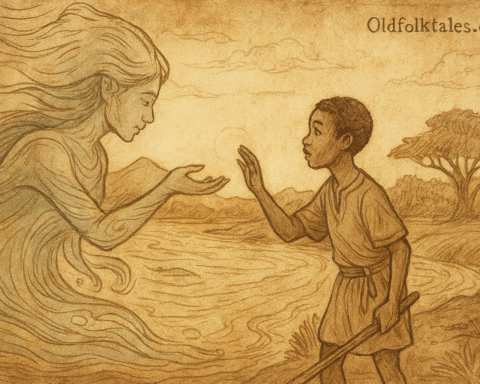
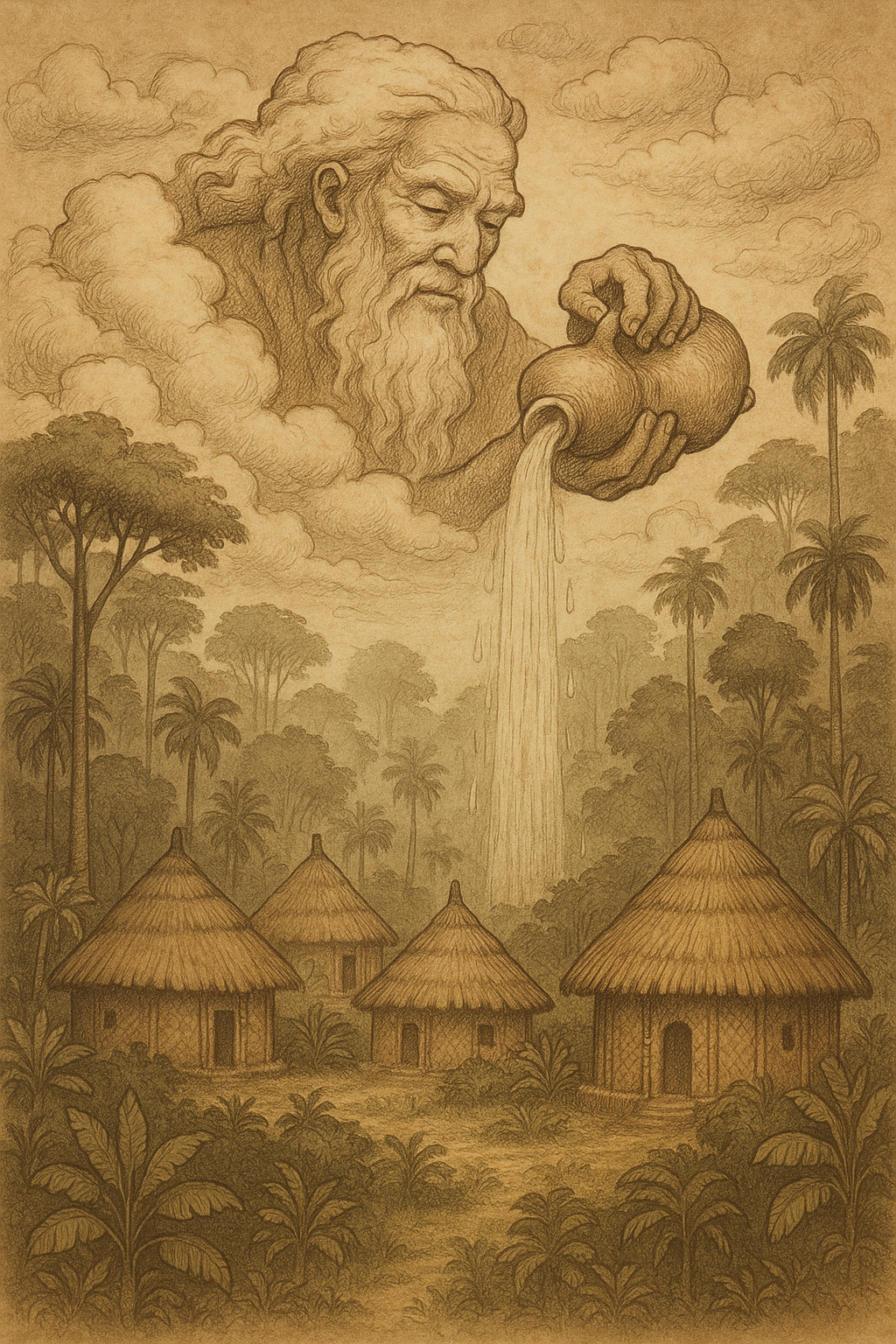
The sky remained silent. But high above, the spirit of the clouds, a mighty being named Ndumbe, heard the boy’s plea. Ndumbe was proud and playful. He had the power to pour water over the earth, but he had never been asked politely. Instead, humans often shouted or demanded. Ndumbe decided to teach the villagers a lesson. That night, the spirit came down as a silver mist and whispered to Akou, “If you want the rain to touch the earth, you must first show patience and cleverness, not haste and fear.”
Akou listened carefully. Ndumbe explained that the clouds could not simply let go of their water. The rain had to learn the journey from sky to earth. Each drop must understand its purpose, its path, and its timing. Akou, determined to help his people, asked, “Spirit Ndumbe, how can I teach the rain to fall?” The cloud spirit smiled. “You must call all the rivers, the hills, the forests, and the animals. Show the rain that every living thing waits for it, and teach it to trust the earth.”
The next morning, Akou ran through the village, gathering children, elders, and hunters. He led them to the open fields and the rivers’ edges. Together, they raised their hands, sang songs of gratitude, and shared stories of how the rivers, trees, and animals needed the water. The cows lowed, the chickens clucked, and even the wind seemed to join in. The rain, high above in the clouds, watched and listened.
But the journey was not easy. The drops of water were nervous. They had never left the sky, and the winds were strong and frightening. Some tried to fall too early, crashing onto the hills, while others scattered across the forests. Akou stayed calm, clapping and guiding the hesitant drops. “Do not fear the fall,” he called, “the earth waits for you, and we welcome you with open arms.” Slowly, the first drops touched the dry soil. The villagers cheered, the rivers shimmered, and the animals danced. Ndumbe, pleased with Akou’s patience and courage, poured more rain, teaching each drop its path from sky to earth.
By the time the sun rose the next day, the village was transformed. Puddles glistened, young crops drank deeply, and the villagers knew that the rain had learned its lesson: to fall gently, at the right time, and in the right place. From then on, whenever the rains came, the villagers remembered Akou and the silver mist of Ndumbe. They sang songs, danced, and thanked the clouds for their gift. The forests, rivers, and animals flourished, and the people understood that rain was not merely water but a teacher, a messenger, and a friend.
Generations later, the story of How the Rain Learned to Fall was told to children across the Fang lands. Mothers would remind their children, “Respect the sky and the water, for patience and understanding are as necessary as the rain itself.” Travelers passing through Gabon heard the story and carried it with them, spreading its wisdom beyond the hills and rivers of the Fang.
Moral Lesson
The tale of How the Rain Learned to Fall teaches that patience, understanding, and guidance are necessary for success. Just as the rain had to learn its journey to the earth, people must learn their paths carefully, respecting timing, nature, and those who help them along the way. Wisdom comes from patience and listening, and cooperation allows even the smallest or most timid to achieve great tasks.
Knowledge Check: How the Rain Learned to Fall
- Who is Akou in the Fang folktale How the Rain Learned to Fall?
Akou is a clever boy from a Fang village in Gabon who teaches the rain how to fall gently and reach the earth. - What problem did the villagers face in the story?
The sky never sent rain, leaving rivers dry, crops withered, and the village facing hunger. - How did Akou communicate with the rain?
He gathered the villagers, animals, and rivers and guided the hesitant drops with patience, songs, and encouragement. - Who is Ndumbe in the story?
Ndumbe is the spirit of the clouds, a mighty and playful being who teaches the rain its path from sky to earth. - Why is How the Rain Learned to Fall considered a Fang folktale from Gabon?
It reflects Fang cultural values of patience, cooperation, respect for nature, and the oral tradition of teaching life lessons through storytelling. - What is the moral of How the Rain Learned to Fall?
The story emphasizes that patience, guidance, and understanding are essential for success, and cooperation helps overcome fear and achieve important goals.
Cultural Origin: Fang Folktales, Gabon