
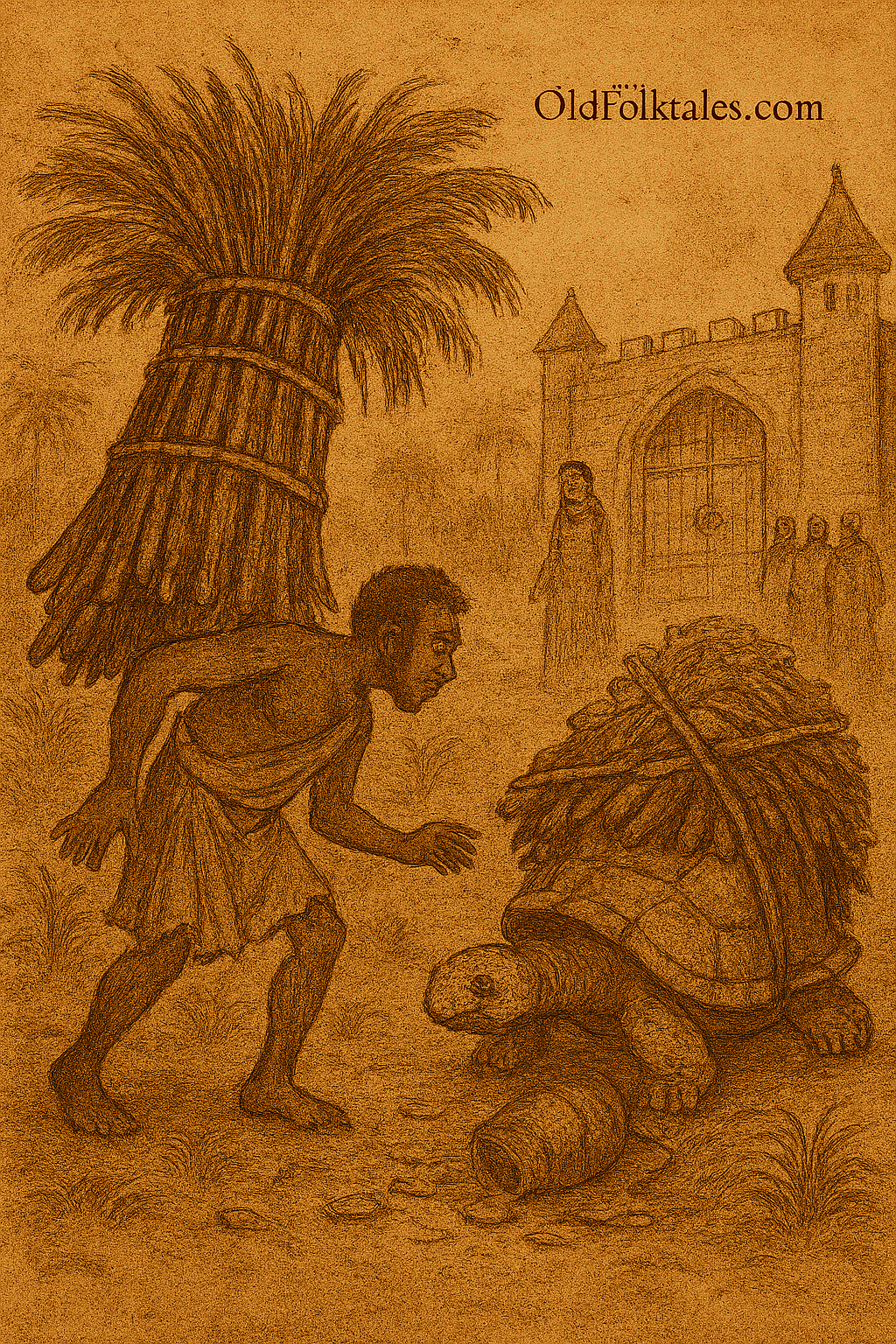
In the time when the world was younger and the boundaries between divine and earthly realms were as thin as morning mist, there lived the great chief Mauri, who was revered as God among his people. Several hundred years ago, when the seasons turned and the yams grew fat in the fertile soil, Mauri decided to host the most magnificent yam festival his kingdom had ever witnessed.
The preparations for this grand celebration required careful planning and abundant resources. Mauri dispatched his swift messengers throughout the land, carrying invitations written on bark cloth to all his chiefs and subjects. The festival was to take place on Fida the sacred Friday when the spirits were said to dance closest to the earth.
As the appointed day dawned with golden light streaming through the palm fronds, Mauri sent his most trusted servants to the neighboring towns and villages with heavy purses of cowrie shells and brass rods. Their mission was crucial: to purchase goats with glossy coats, sheep with thick wool, and cattle with strong backs for the great feast that would feed hundreds of guests.
Among these servants was Mr. Klo, the tortoise, though he bore little resemblance to the creature we know today. In those ancient times, Klo stood tall and proud, his form straight and handsome, his bearing noble. He possessed a reputation as the swiftest traveler in all the land, capable of covering vast distances with ease. His legs were strong, his back straight, and his confidence boundless.
Mauri entrusted Klo with perhaps the most important task of all: securing the palm wine that would flow freely during the celebration. The chief directed him to journey to the renowned palm-fields of Koklovi, the chicken, whose groves produced the finest wine in the region sweet, potent, and crystal clear.
Though the distance to Koklovi’s domain stretched for many weary miles across hills and valleys, through dense forests and across rushing streams, Klo’s powerful legs carried him swiftly to his destination. His confidence soared with each step, for he knew that his reputation as Mauri’s trusted servant would open any door and secure any bargain.
Upon arriving at the palm-fields, Klo found Koklovi seated beneath the shade of his tallest palm tree, enjoying his morning meal of grain and fresh insects. The two exchanged the elaborate greetings customary among respected members of their community, with much bowing and formal phrases of respect and good wishes.
When the pleasantries concluded, Koklovi inquired about the purpose of Klo’s visit. With his chest swelling with pride, Klo declared, “I have been sent by His Majesty Mauri, the mighty ruler of the world, to purchase palm wine for his grand festival.”
Koklovi’s feathers ruffled, and his bright eyes flashed with indignation. “Whether he calls himself ruler of the world or not,” the chicken replied with surprising boldness, “no amount of money can buy my precious wine. If you desire it, you must prove your worth through combat. Fight me, and if you emerge victorious, you may claim not only all my wine but my entire grove of palm trees as well.”
This unexpected challenge delighted Klo beyond measure. The prospect of returning to Mauri not merely with purchased wine, but with an entire grove won through his own prowess, filled him with excitement. His pride whispered that such a feat would surely elevate his status in the court and earn him lasting fame.
The battle that followed was fierce and lengthy. Klo’s size and strength seemed to give him clear advantages, while Koklovi relied on his speed and agility, darting and striking like lightning. They fought from the rising of the sun until its rays slanted long across the palm grove, neither gaining decisive victory.
Finally, through persistence and power, Klo managed to defeat Koklovi. True to his word, the chicken surrendered his entire stock of palm wine and granted ownership of his magnificent palm trees. Klo’s joy knew no bounds as he contemplated his remarkable success.
However, the reality of transporting his winnings soon became apparent. The palm wine filled numerous heavy earthenware pots, and the palm trees though they rightfully belonged to him were massive. Klo’s pride would not permit him to return for the trees later or to seek assistance. Instead, he loaded everything onto his back: the heavy pots of wine and the enormous palm trees, creating a burden of staggering proportions.
The return journey, which had taken mere hours that morning, now became an agonizing ordeal. Each step required tremendous effort, and Klo’s legs trembled under the enormous weight. Yet his pride drove him forward, refusing to abandon any portion of his hard-won prize.
When he finally reached Mauri’s palace gates, his strength nearly exhausted, Klo knocked with what little energy remained. But fate had other plans. As he stood waiting for admission, the sky suddenly darkened with ominous clouds. Without warning, the heavens opened, and torrential rain began to fall not the gentle rain that nourishes crops, but the fierce, relentless deluge that comes perhaps once in a generation.
The palace gates remained firmly closed against the storm, as was the custom during such terrible weather. Klo found himself trapped outside, unable to shed his massive burden, unable to find shelter. The rain fell in sheets so thick that day became indistinguishable from night.
For nearly two months, this supernatural storm raged across the land. The people remained safely within the palace walls, waiting for the deluge to end. Throughout this entire period, Klo remained at the gates, pressed down by his enormous load, growing weaker each day until his strength finally failed him entirely.
When the rain finally ceased and the palace gates creaked open, the people were astonished to discover a massive mound of earth and debris piled before the entrance where none had existed before. Curious and concerned, they fetched spades and began the laborious task of clearing away the mysterious heap.
As they dug deeper, removing layers of mud, palm fronds, and storm debris, they made a startling discovery at the very bottom of the pile. There lay Klo, motionless and apparently lifeless, still bearing his burden. The earthenware pots had shattered under the weight and weather, and their clay had mixed with the accumulated dirt and dust to form a hard, shell-like covering that completely encased his back.
The people carefully carried Klo into the palace, where Mauri’s wisest healers worked tirelessly to restore him to life. Using medicines of great power herbs gathered from distant mountains, waters blessed by ancient spirits, and incantations passed down through generations they managed to bring breath back to his body.
But the transformation was permanent and irreversible. Though Klo lived again, he could no longer stand upright as he once had. His proud, straight back remained forever curved beneath the weight of the hardened shell that had formed during those long months in the storm. From that day forward, he became a creature who must crawl close to the earth, carrying upon his back the permanent reminder of his pride and the consequences of his choices.
Moral Lesson
This timeless West African tale teaches us that excessive pride can transform even our greatest achievements into permanent burdens. Klo’s unwillingness to accept help or make practical choices about his remarkable victory ultimately led to his downfall. The story reminds us that true wisdom lies not in proving our superiority over others, but in recognizing our limitations and accepting assistance when needed. Sometimes, what appears to be weakness—asking for help or making multiple trips is actually the path to lasting success.
Knowledge Check
Q1: What does Klo represent in this West African transformation folktale? A: Klo represents the dangers of excessive pride and stubbornness. His character demonstrates how personal glory and the refusal to accept limitations can lead to permanent consequences, even when one achieves initial success.
Q2: What role does Koklovi the chicken play in this origin story? A: Koklovi serves as the catalyst for Klo’s transformation by challenging him to combat rather than accepting payment. The chicken represents the principle that some things must be earned through effort rather than purchased, setting up the test that reveals Klo’s character flaws.
Q3: What does Chief Mauri symbolize in this West African folktale? A: Chief Mauri represents divine authority and the proper order of society. As the god-like ruler organizing the yam festival, he embodies the community structure that Klo serves, making Klo’s failure to return a violation of both duty and cosmic order.
Q4: How does this folktale explain the tortoise’s physical characteristics? A: The story provides an origin myth explaining why tortoises have shells and crawl close to the ground. Klo’s transformation from a tall, handsome creature to one with a permanent shell demonstrates how his pride literally became his burden, creating the tortoise’s distinctive appearance.
Q5: What is the significance of the two-month storm in African folklore traditions? A: The supernatural storm represents divine intervention and the consequences of moral failings. In African folklore, extreme weather often serves as punishment or testing from the spirits, and the storm’s duration emphasizes the severity of Klo’s prideful choices.
Q6: What cultural values does this West African tale promote? A: The story promotes humility, community cooperation, and practical wisdom over individual pride. It reflects African cultural values emphasizing collective responsibility, respect for limitations, and the importance of completing one’s duties to the community rather than seeking personal glory.

