Tortoise and his wife lived in a small hut at the edge of the village. Times were hard, and their storehouse was empty. Not a yam, not a grain of corn, not even a dried pepper remained to cook. Hunger gnawed at them day and night until Tortoise decided to swallow his pride and visit his father-in-law.
The old man welcomed his son-in-law warmly and did not hesitate to share his wealth. He gave Tortoise yams, corn, and vegetables. Tortoise and his wife returned home dancing with joy, and for a while, they ate well. But as the days passed, the food ran out. Hunger returned, sharper than before.
Ashamed to go back and ask again, Tortoise hatched a plan. Instead of begging, he would take what he wanted from his father-in-law’s farm. One midnight, while the village slept, he crept out silently. He reached the farm and gathered yams, corn, vegetables, and greens into a big basket. But when he tried to lift the load, it was far too heavy for him. Tortoise strained, pushed, and pulled, but the basket would not rise onto his head. Exhausted, he left it there and kept trying until dawn broke.
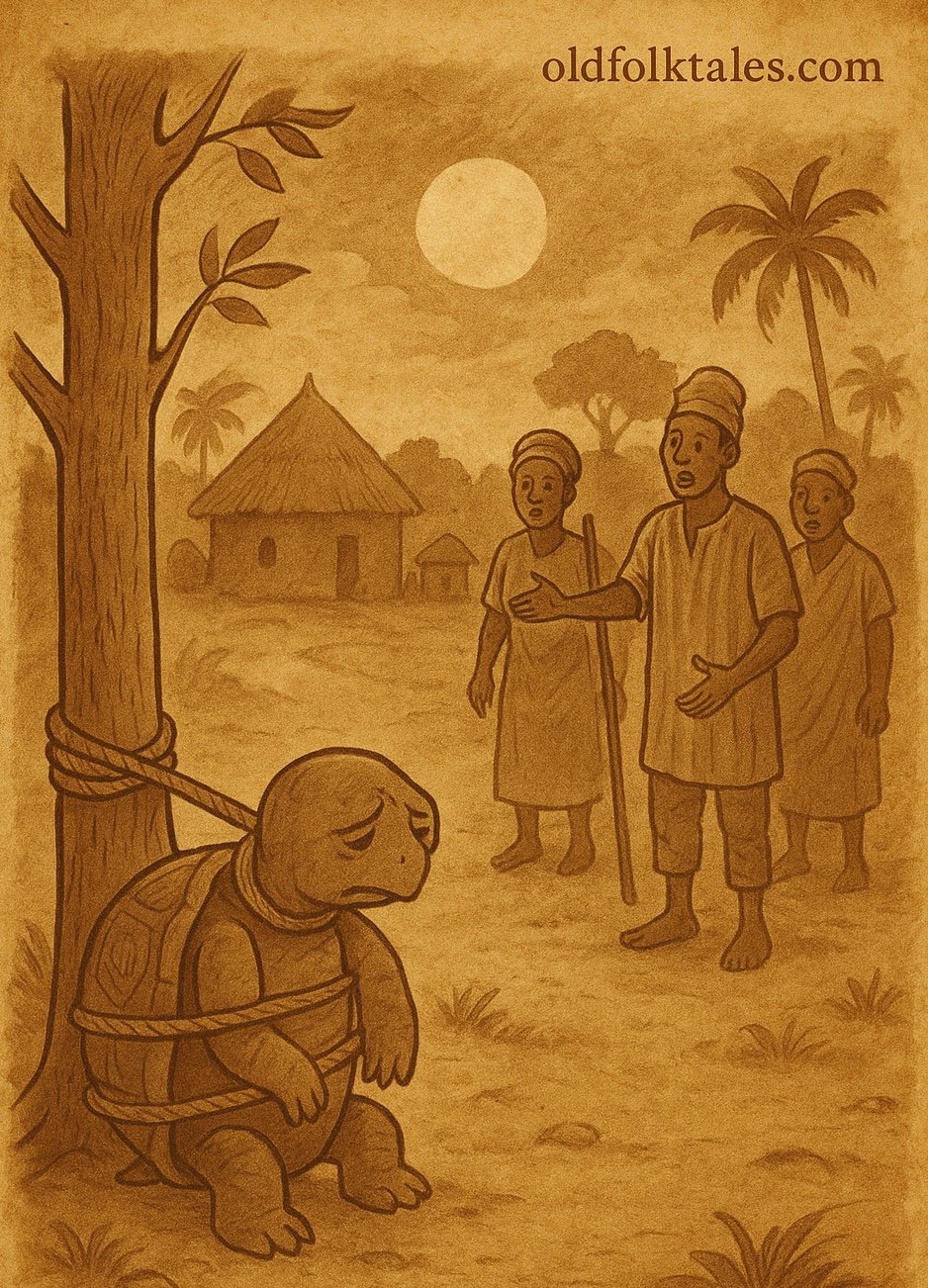
At sunrise, his father-in-law came to the farm and caught Tortoise in the act. Furious at such betrayal, he tied Tortoise to a tree by the roadside for everyone to see. As people passed on their way from the farms, they stopped to stare. Some praised the old man for catching the clever thief. Others laughed at Tortoise’s disgrace. Yet soon the mood began to change.
“Is Tortoise not your son-in-law?” some villagers asked. “Why do you tie a man to a tree from morning till evening, even if he is a thief? Do you want to kill him? Surely you have shown yourself to be more wicked than the one who stole your food.”
By sundown, many began to whisper that the father-in-law had overstepped. His harsh punishment looked more cruel than Tortoise’s theft. The sympathy that had been against Tortoise now turned in his favor. At last, the father-in-law untied him, shamed not for losing crops but for lacking compassion.
And so Tortoise, though disgraced, managed to escape worse punishment. By losing honor, he strangely won the pity of the people. This tale reminds us that strict justice without mercy can turn against even the righteous.
Moral Lesson of How Tortoise Won by Losing
The folktale teaches that selfishness and trickery often bring shame, but it also shows that excessive punishment can make a just man appear unjust. True wisdom balances fairness with compassion. In the end, both Tortoise and his father-in-law lost respect in different ways.
Knowledge Check on How Tortoise Won by Losing
What problem did Tortoise and his wife face at the beginning of the story?
They had no food to eat and were suffering from hunger.Why was Tortoise ashamed to return to his father-in-law for food?
Because he had already been helped once and did not want to appear needy again.What did Tortoise try to steal from the farm?
He tried to take yams, corn, vegetables, and other crops from his father-in-law’s farm.Why did the villagers criticize the father-in-law?
Because they felt tying Tortoise to a tree all day was too harsh and showed more cruelty than justice.What lesson does the story of Tortoise teach about justice and punishment?
That fairness must be tempered with compassion, or else people may see justice as cruelty.How did Tortoise “win by losing” in the story?
Although he was disgraced, people began to sympathize with him, and the blame shifted to his father-in-law.
Source: Nigerian Folktale (West African oral tradition)