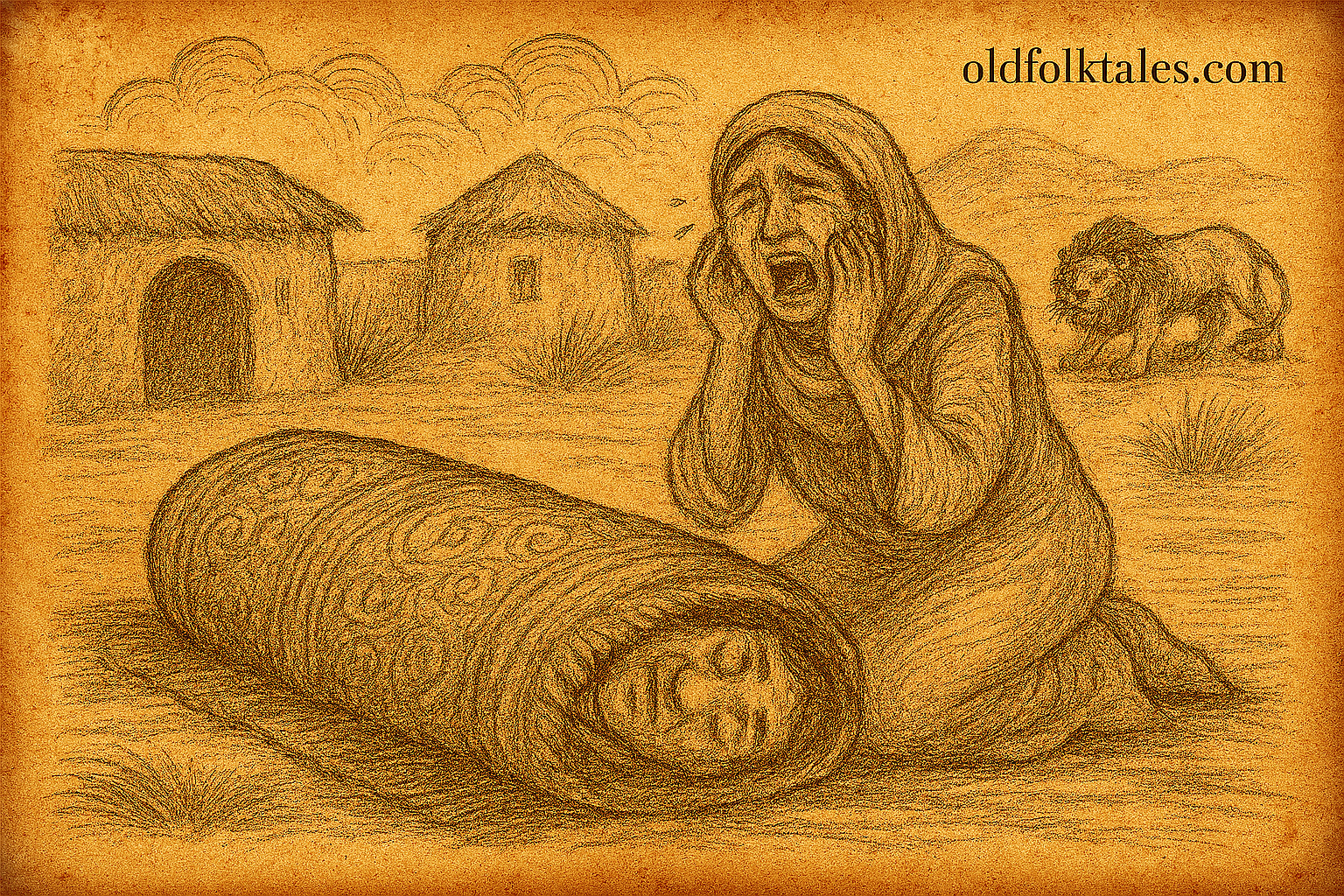
In a small Somali town, where the wind whispered secrets across the arid landscape and the sun beat down mercilessly on mud-brick homes, there lived a man named Igal Shidal. He was known among his neighbors, though not for bravery or wisdom. On one fateful night, while Igal Shidal lay sleeping peacefully in his home, completely unaware of the danger creeping toward his village, his wife’s ears caught whispers that would change everything.
The news traveled like wildfire through the women’s quarters enemies from a neighboring town were preparing to attack. The threat was real, imminent, and deadly. Hearts pounding with fear, Igal Shidal’s wife rushed through the darkness back to their home, her feet kicking up dust as she ran. She had to wake her husband. She had to warn him before it was too late.
Bursting through the doorway, she shook Igal Shidal from his slumber. “Wake up! Wake up!” she cried urgently, her voice trembling with fear and desperation. “The enemy is coming! They’re going to attack us!”
Looking for more? Explore the magic of East African folktales here
But Igal Shidal, groggily opening his eyes, merely rolled over with an exasperated sigh. He looked at his wife with irritation rather than alarm. “You always make things up,” he grumbled dismissively, pulling his blanket tighter around himself. “You tell stories just to frighten me. Let me sleep.”
His wife’s eyes widened in disbelief. How could he not believe her? How could he remain so calm when danger approached? “I didn’t make this up!” she insisted, her voice rising with urgency. “This is the truth! All the women and children are talking about it. They’re terrified. The men have already gathered, they’re preparing to defend the town right now. You are a man, husband. You must help them. You must go!”
Before Igal Shidal could respond with another dismissive comment, the peaceful night air was shattered by the sound of panic. Voices rang out through the village streets: “Here they come! The enemy is here! They’re attacking!”
The reality of the situation crashed down upon Igal Shidal like a collapsing wall. His face went pale, his hands began to shake, and his mind raced with terror. What should he do? Where could he hide? How could he escape? The enemies were already at their doorstep, there was no time to run to safety, no place to hide in the surrounding desert.
Then, in his cowardice, a desperate idea formed in his frightened mind. “Wife!” he said urgently, grabbing her arm. “Listen to me carefully. We cannot escape now, it’s too late. The enemy will kill all the men they find. Quick! I’m going to lie down in front of our house. Roll me up in a rug, and then you must cry. Cry loudly! Wail and scream that your husband is dead!”
Though shocked by his plan, his wife had no time to argue. She quickly grabbed their largest rug and rolled her husband inside it, wrapping him tightly like a corpse prepared for burial. Then she began to cry, her wails echoing through the street. But even in this moment of fear, even wrapped inside a rug pretending to be dead, Igal Shidal couldn’t trust his own wife to perform convincingly enough.
From inside the suffocating darkness of the rug, his muffled voice commanded her: “Cry louder! Cry until real tears come from your eyes! Make them believe it!”
So she cried harder, her performance becoming more dramatic, tears streaming down her face as she mourned her “dead” husband. The sound of her weeping drew attention. Soon, the enemy warriors arrived at their doorstep, their weapons gleaming in the moonlight, their faces hard with the determination of battle.
One of the enemy warriors approached the crying woman and the rug-wrapped form on the ground. “When did your husband die?” he asked, his voice sharp with suspicion.
Before Igal Shidal’s wife could open her mouth to answer, a voice came from inside the rug itself, clear, unmistakable, and utterly ridiculous: “Say that he died yesterday!”
The wife, caught between horror and absurdity, obediently repeated: “He… he died yesterday.”
The enemy warriors stood frozen in shock. They looked at each other in disbelief, then back at the rug. One of them began to laugh, a deep, mocking laugh that was soon joined by the others. They had seen many things in battle, but never had they encountered such pathetic cowardice.
“This is not a real man,” one warrior declared, shaking his head in disgust. “He is such a coward that he cannot possibly hurt us or anyone else. Let him live with the women and the children where he belongs. There is no honor in killing such a creature. Let’s go.”
And with that, the enemy warriors moved on, leaving Igal Shidal alive but utterly humiliated. He had saved his life, but at the cost of something far more valuable in his culture his honor, his dignity, and his standing as a man among men.
The Moral Lesson
This Somali folktale teaches us that while survival is important, the way we choose to survive defines who we are. Igal Shidal’s extreme cowardice saved his physical life but destroyed his reputation and honor. The story reminds us that courage isn’t the absence of fear, but rather how we face our fears. Sometimes the consequences of cowardice, shame, loss of respect, and damaged relationships, can be worse than the dangers we try to avoid. True strength comes from facing our responsibilities, even when we’re afraid.
Knowledge Check
Q1: Who is Igal Shidal in Somali folklore?
A1: Igal Shidal is the main character in this Somali folktale, a man characterized by his extreme cowardice. He refused to fight alongside the other men when enemies attacked his village, instead choosing to hide wrapped in a rug while pretending to be dead.
Q2: What warning did Igal Shidal’s wife bring him?
A2: Igal Shidal’s wife warned him that enemies from a neighboring town were preparing to attack their village. She told him that all the women and children were talking about it and that the men had already gathered to defend the town, urging him to join them.
Q3: Why did Igal Shidal pretend to be dead during the enemy attack?
A3: Igal Shidal pretended to be dead because he was too afraid to fight with the other men. When he realized the enemy had arrived and it was too late to escape, he devised a plan to have his wife wrap him in a rug and pretend he had already died, hoping the enemies would leave him alone.
Q4: What was Igal Shidal’s critical mistake while hiding in the rug?
A4: Igal Shidal’s critical mistake was speaking from inside the rug to tell his wife what to say when the enemies asked when he died. By saying “Say that he died yesterday,” he revealed that he was alive and merely hiding, exposing his cowardice to the enemies.
Q5: How did the enemy warriors respond to discovering Igal Shidal’s deception?
A5: The enemy warriors were shocked and then amused by Igal Shidal’s extreme cowardice. They declared he was “not a real man” and such a coward that he couldn’t hurt anyone. They decided to let him live with the women and children, leaving him alive but completely humiliated.
Q6: What cultural values does this Somali folktale emphasize?
A6: This Somali folktale emphasizes the cultural values of courage, honor, and masculine responsibility. In traditional Somali society, men were expected to defend their community during attacks. The story shows that while Igal Shidal survived physically, his cowardice caused him to lose his honor and standing in the community, which was considered worse than risking his life in battle.
Source: Somali folktale, Somalia (East Africa)