
In the golden age of the animal kingdom, when creatures great and small lived under the rule of organized governments, there existed a mighty realm governed by the king of beasts himself, the majestic lion. This sovereign, blessed with natural authority and commanding presence, chose to live a life of leisure and pleasure, hunting only when the mood struck him and leaving the daily burden of governance to those he deemed worthy of such responsibility.
Among all his subjects, from the largest elephant to the tiniest ant, the lion recognized exceptional wisdom in an unlikely source. Kwaku Ananse, the spider, though physically one of the smallest creatures in the entire kingdom, possessed an intellect so sharp and cunning that the lion elevated him to the highest positions of power. Ananse became both judge and lawmaker, wielding authority over life and death with the full backing of the royal throne.
But power, as it often does, revealed the true darkness that lurked within Ananse’s heart. Beneath his display of wisdom and careful show of justice lay a soul as black as midnight and as cold as winter’s breath. The spider harbored a deep, consuming hatred for all his fellow creatures, a malice that grew stronger with each passing day. When animals were brought before his court seeking justice, Ananse would put on an elaborate performance of thoughtful deliberation, weighing evidence and considering testimony with apparent fairness. Yet regardless of the crime, whether great or small, the sentence was always the same: death.
The kingdom lived in terror under Ananse’s cruel reign. Animals whispered fearfully among themselves, sharing stories of his merciless judgments and wondering when their own turn might come. They despised their spider overlord with every fiber of their being, but they were powerless to act. The lion, comfortable in his lazy contentment and trusting in his judge’s supposed wisdom, would hear not a single word of criticism against his appointed administrator.
Years passed in this atmosphere of fear and oppression, until fate finally intervened in the natural course of life. The mighty lion, ruler of all he surveyed, fell gravely ill. Despite the best efforts of healers and medicine makers throughout the kingdom, the great king’s strength ebbed away like water flowing from a broken vessel. When death finally claimed him, the entire realm mourned with elaborate funeral rites befitting such a noble sovereign.
With the throne empty and the kingdom in need of new leadership, all the animals gathered in the great assembly ground to choose their next ruler. The air buzzed with nervous energy as creatures debated and discussed the future of their homeland. Ananse, sensing the shifting political winds, dispatched his network of spies to observe the proceedings and report back on the likely outcome. His instincts, sharpened by years of cunning manipulation, told him that his reign of terror might be coming to an end.
His fears proved well founded. When the votes were counted and the decision announced, the leopard emerged as the new king, chosen for his strength, intelligence, and natural leadership qualities. The leopard’s first official act as ruler sent shock waves through Ananse’s carefully constructed world of power and control. Without hesitation or ceremony, the new king stripped Kwaku Ananse of all his positions, removing him from both the judgeship and his role as lawmaker.
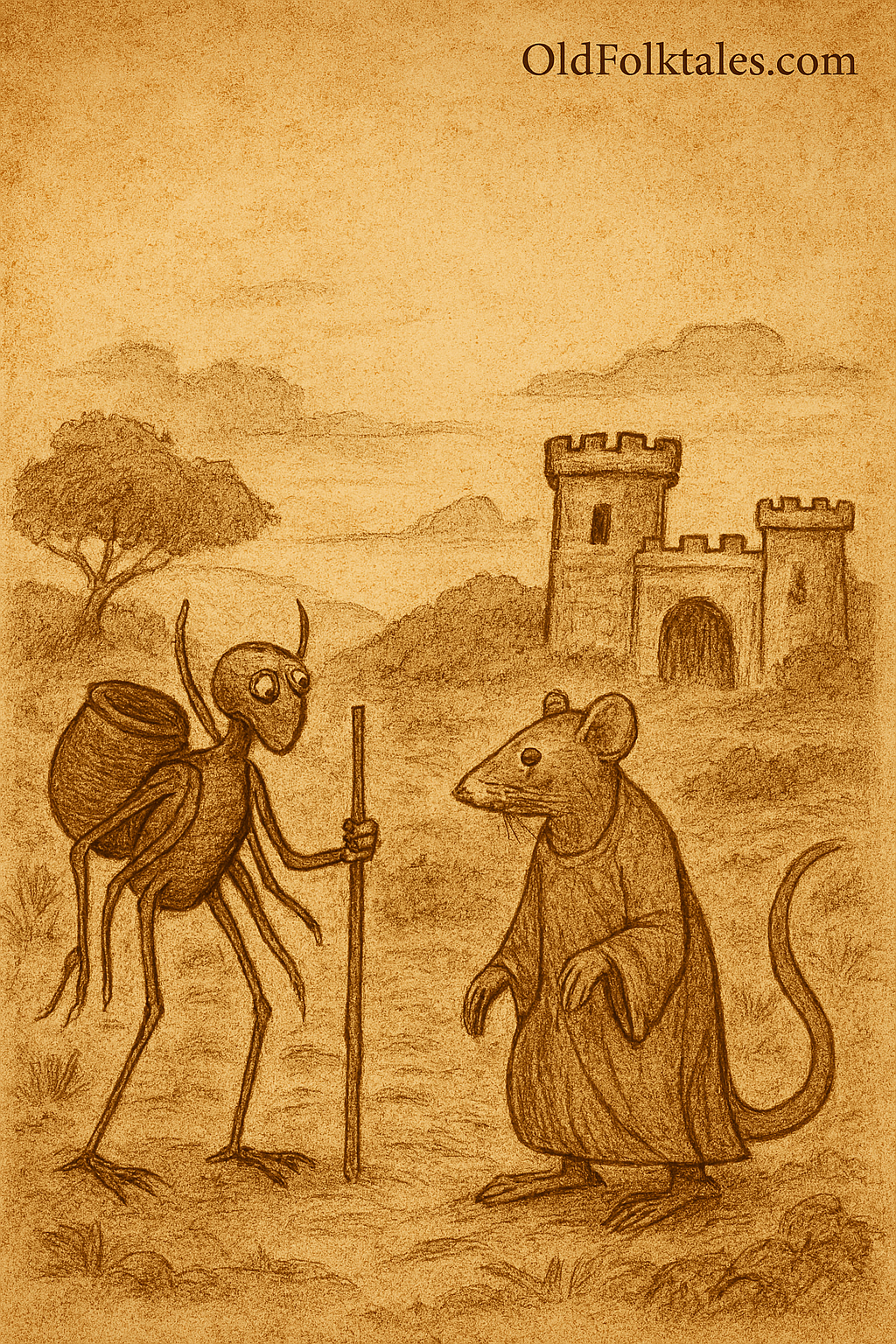
The news reached Ananse through his spy network before any official messenger could arrive at his door. Recognizing the gravity of his situation and the likelihood that his years of cruel judgments would now face scrutiny, the spider wasted no time on regrets or attempts at negotiation. He quickly gathered his most valuable possessions, called his family together, and fled the kingdom under cover of darkness. Their destination was the neighboring realm ruled by the rat, a smaller but prosperous kingdom where Ananse hoped to find sanctuary.
Meanwhile, the new leopard king appointed the cat as his chief adviser and judge, trusting in the feline’s reputation for fairness and wisdom. The cat’s first order of business was to review the records of Ananse’s tenure and prepare formal charges against the former judge. When the court officials were dispatched to arrest Ananse and bring him to trial, they found only an empty house and cold ashes in the fireplace. Despite extensive searches throughout the kingdom, no trace of the spider or his family could be found.
In his new home, Kwaku Ananse began rebuilding his life with characteristic determination and cunning. The rat, having no knowledge of his guest’s dark past, welcomed the spider and his family with generous hospitality. Ananse’s natural intelligence and apparent wisdom soon earned him respect and prosperity in his adopted kingdom, allowing him to establish himself as a valued member of the community.
Time passed peacefully until diplomatic relations between the two kingdoms created an unexpected crisis. The rat king, maintaining friendly relations with neighboring realms, paid a formal state visit to the leopard’s court. During their pleasant conversations over royal feasts and ceremonies, the leopard happened to mention the case of Kwaku Ananse, describing the spider’s cruelty as a judge and his mysterious disappearance before justice could be served.
“Oh dear, brother leopard,” exclaimed the rat king with genuine concern. “I had no idea he was a wanted criminal. The very spider you seek is living peacefully in my kingdom. You are most welcome to send messengers to fetch him if it would serve the cause of justice.”
When the rat returned home and word of his friendly discussions with the leopard reached Ananse’s ears, the spider immediately understood that his period of safety was ending. However, rather than fleeing again to an uncertain fate in unknown lands, Ananse decided to make his stand. His brilliant but twisted mind began crafting an elaborate plan that would eliminate his pursuers and secure his position permanently.
Working with fevered intensity, Ananse dug a deep pit directly in the path leading to his house, a trap so cunningly concealed that even the most careful traveler would fail to detect it. Over this deadly snare, he carefully arranged branches and leaves, creating what appeared to be solid ground but was actually a thin covering that would collapse under the weight of anyone walking across it. The pit was deep enough to ensure that any fall would be fatal, and sharp stakes at the bottom guaranteed that no victim would survive the plunge.
When the first group of messengers arrived from the leopard’s court, they approached Ananse’s dwelling with official documents and orders for his arrest. But as they walked confidently toward the house, the false ground gave way beneath their feet, and they plummeted to their deaths in the carefully prepared trap. Days passed with no word from the messengers, leading the leopard and his advisers to assume they had been delayed by weather or other circumstances.
Concerned by the silence, the leopard dispatched additional groups of officers and messengers, each meeting the same fate as their predecessors. Month after month, more animals were sent to investigate the growing mystery, but none returned to report their findings. Each group that approached Ananse’s house perished in the same way, their bodies hidden in the depths of the concealed pit.
Finally, the leopard and the cat, frustrated by the disappearance of so many subjects and desperate to solve the mystery, decided to undertake the mission personally. They set out for the rat’s kingdom with determination, convinced that their royal presence would succeed where their messengers had failed.
Kwaku Ananse, ever vigilant and cunning, spotted the approaching figures of his greatest enemies from a great distance. With theatrical precision, he positioned his chair prominently in his doorway where they could clearly see him, then settled himself as if taking a peaceful afternoon nap. His eyes, though apparently closed, watched carefully as the leopard and cat drew near.
The two rulers approached with cautious steps, their attention focused entirely on the sleeping figure of their quarry. So intent were they on watching Ananse and planning their arrest that they failed to notice the subtle signs of disturbed earth and carefully arranged branches beneath their feet. Like all who had come before them, they stepped onto the false ground and fell to their deaths in the waiting pit below.
Seeing that his enemies were finally destroyed and his safety secured, Ananse emerged from his feigned sleep and methodically filled in the pit, erasing all evidence of his elaborate trap. With the threat eliminated, he sought out the rat king to share news of this dramatic turn of events.
“O generous rat,” Ananse said with carefully crafted humility, “fate has intervened in the affairs of kingdoms. I have destroyed the king of my old country, and the throne now stands empty. I wish to claim possession of that realm for myself, but I have not forgotten your kindness to me in my time of need. I offer you a share in whatever riches and territories we might find there. My greatest desire is to live in peace and friendship with my neighbors.”
The rat, impressed by Ananse’s apparent generosity and seeing opportunity for expanding his own influence, agreed to the proposal. Together, the spider and the rat traveled to the now leaderless kingdom and took possession of the empty realm. The rat provided Ananse with settlers and workers to cultivate the land and rebuild the abandoned territories.
Thus, through cunning, patience, and ruthless elimination of his enemies, Kwaku Ananse achieved his ultimate goal. The two rulers governed their adjacent kingdoms side by side, maintaining their alliance for many years in apparent peace and friendship, though the true cost of Ananse’s rise to power remained buried beneath the earth like the bodies in his deadly trap.
Moral Lesson
This complex Ashanti folktale explores themes of power, justice, and the consequences of corruption. While Ananse ultimately succeeds through cunning and ruthlessness, the story serves as a cautionary tale about the cyclical nature of power and how cruelty in leadership inevitably leads to resistance and change. It also demonstrates that intelligence without moral compass can achieve short term success but often comes at a terrible cost to society and one’s own humanity.
Knowledge Check
Q1: What position did Kwaku Ananse hold in the lion’s kingdom and how did he abuse his power? A1: Despite being one of the smallest animals, Ananse was appointed judge and lawmaker due to his wisdom. He abused this power by sentencing every animal brought before him to death, regardless of their crime, while maintaining a false show of justice and fairness.
Q2: Why did Kwaku Ananse flee to the rat’s kingdom after the lion’s death? A2: When the leopard became the new king, his first act was to remove Ananse from all his positions. Knowing that his cruel judgments would face scrutiny and expecting charges to be brought against him, Ananse fled before he could be arrested and put on trial.
Q3: How did Ananse eliminate the messengers and rulers who came to arrest him? A3: Ananse dug a deep pit with sharp stakes in the path to his house and covered it with branches and leaves to create a deadly trap. Every group sent to arrest him, including the leopard and cat, fell into this concealed pit and died.
Q4: What deal did Ananse make with the rat king after eliminating his enemies? A4: Ananse told the rat that he had destroyed the king of his old country and wanted to take possession of it. He offered the rat a share in the kingdom’s riches and territories in exchange for his friendship and assistance in ruling the empty realm.
Q5: What does the leopard’s appointment of the cat as judge represent in this Ashanti folktale? A5: The leopard’s choice of the cat as the new judge represents a return to proper justice and fairness after Ananse’s reign of terror. It shows the natural order being restored and the attempt to hold corrupt officials accountable for their actions.
Q6: What cultural significance does this story hold in Ashanti storytelling tradition? A6: This Ashanti folktale serves as both entertainment and moral instruction about the corrupting nature of power, the importance of just leadership, and the consequences of cruelty. It reflects traditional African values about community responsibility and the eventual triumph of cunning, while also warning about the costs of achieving success through immoral means.

