One of the few animals that was ever able to outsmart Kweku Ananse, the famous trickster spider whose first name came from being born on a Wednesday, was Adun, the plains baboon. This remarkable feat has become the stuff of legend throughout the forests and savannas of Ghana.
Although this extraordinary story happened countless seasons ago, when the world was younger and animals spoke freely among themselves, baboons and spiders remain enemies to this very day. It is said by the old storytellers that one of the reasons baboons scratch themselves so frequently is because they constantly feel as though Kweku Ananse is crawling all over their skin and through the thick hair on their backs. The very thought of the spider makes them shudder and scratch with uncomfortable memories.
The details of what transpired between these two creatures have grown hazy with the passage of time, like footprints slowly erased by wind and rain. Only the eldest members of the community, those whose faces are lined with wisdom and whose eyes have seen many seasons come and go, truly remember the complete story of what happened between Kweku Ananse and Adun the baboon. But the lessons of their encounter continue to be shared around fires and in gathering places, reminding all who listen of the dangers of greed and the importance of true friendship.
Also read: Ananse and the Pot of Wisdom
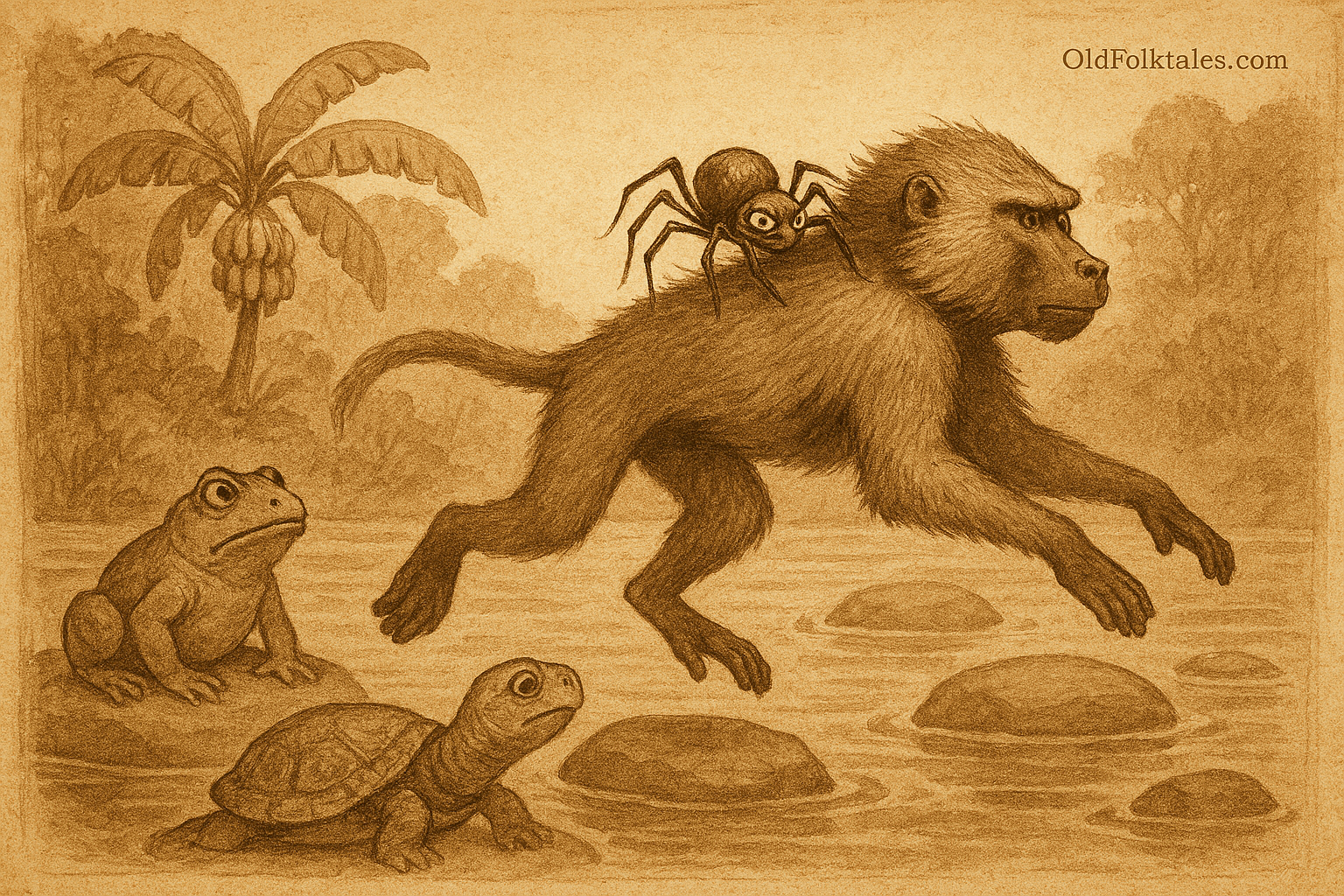
Long, long ago, when the great trees were even taller and the rivers ran clearer than they do today, Kweku Ananse and Adun the baboon were the very best of friends. Their friendship was so close that they went everywhere together, like two parts of the same soul wandering through the world in perfect harmony. Most of the time, the clever spider would simply hang onto the thick, coarse hairs covering the baboon’s strong back, enjoying the ride as his friend moved through the forest with powerful, graceful leaps from branch to branch.
Baboon treated Ananse with enormous respect and genuine affection, carrying his small friend with the tender care of an older brother watching over a younger sibling. Their bond was so strong that other animals often said they were closer than blood relatives, sharing a connection that went beyond mere friendship into something deeper and more meaningful.
All the creatures of the forest admired their remarkable relationship. They marveled at how the two friends protected each other from danger, shared their food without hesitation, and found joy in each other’s company during long days of exploration among the towering trees. When evening came and darkness began to settle over the land like a soft blanket, Baboon would carefully select a large, sturdy tree and create a comfortable bed from fresh leaves and soft grasses. Meanwhile, Ananse would spin himself a secure web and hang safely from the highest branch, far from any prowling predators who might threaten them during the night.
Some of the wiser animals observed that theirs was a truly symbiotic relationship, a perfect example of mutual cooperation where both friends benefited equally from their partnership. Baboon provided strength and mobility, while Ananse contributed clever ideas and sharp observation skills that kept them both safe and successful in their daily adventures.
One particularly beautiful day, when the sun shone golden through the canopy and birds filled the air with melodious songs, the two friends were foraging for food in their usual companionable way. As they explored a new area of the forest, they came upon a wide marsh that stretched before them like a mirror reflecting the blue sky above. The water was dotted with smooth rocks that provided perfect stepping stones across the wetland.
On the far side of the marsh, standing proud and tall like a green beacon of temptation, grew a magnificent banana tree. Its broad leaves rustled gently in the breeze, and heavy clusters of perfectly ripe, golden bananas hung from its sturdy branches like nature’s own treasure waiting to be claimed.
Everyone who knew anything about forest life understood how much baboons loved to feast on sweet, ripe bananas. The fruit was not just food to them but a special delicacy that could make their eyes light up with anticipation and their mouths water with desire. Baboon’s excitement was immediate and infectious as he spotted the precious tree across the water.
Together, the two friends began crossing the marsh by carefully stepping from rock to rock, using the same stones where Frog and Turtle came each day to rest and soak up the warming rays of the sun. The rocks were worn smooth by countless years of water flowing around them, and they provided a safe if somewhat challenging path across the wetland.
“Who goes there?” croaked Frog in his deep, authoritative voice, clearly annoyed at having his peaceful sunbathing interrupted by unexpected visitors.
“No one but me,” answered Baboon politely, trying to show proper respect to the marsh’s longtime residents.
“And who is this traveling companion with you?” replied Frog, his large eyes focusing suspiciously on the small spider clinging to the baboon’s back.
“Well,” said Baboon with obvious pride and affection in his voice, “this is Kweku Ananse. He is my very best friend in all the world.”
“And what exactly are you two doing here?” asked Frog, his tone suggesting that he was not entirely pleased with this intrusion into his quiet domain.
“Yes, indeed,” added Turtle, slowly lifting his ancient head to peer at the travelers with wise, patient eyes. “Why are you disturbing our peaceful rest here? We need our time in the warm sun, you know. It is essential for our health and well-being.”
“We are truly sorry, respected Frog, and our apologies to you as well, honored Turtle,” they replied with genuine contrition. “We certainly do not mean to disturb your important daily rest.”
“Then,” shouted Frog with growing impatience, “why exactly are you crossing through our marsh?”
“We have spotted a beautiful banana tree laden with perfectly ripe fruit on the other side of your water,” they explained, gesturing toward the tempting sight that had drawn them to this place. “As you well know, Baboon simply loves bananas more than almost anything else in the world, and we were hoping to gather some for ourselves to enjoy.”
Frog and Turtle exchanged glances, and after a moment of silent communication between the two old friends, they reached their decision. “Very well,” said Frog with resignation, “you may cross over our marsh. For all we care, you can take the entire tree away with you.” This generous permission came easily because bananas were not part of either Frog’s or Turtle’s natural diet, so they had no personal interest in the fruit.
“Thank you, thank you, thank you!” exclaimed Baboon with overwhelming gratitude, his voice filled with joy and relief. “And thank you again on behalf of my dear friend Kweku Ananse. We promise to share the bananas fairly between us.”
And so the two old friends successfully crossed the marsh and reached the magnificent banana tree. Working together with enthusiasm and cooperation, they carefully harvested the ripe, golden fruit, gathering more delicious bananas than either of them had seen in a very long time. The clusters were heavy and perfectly yellow, promising the sweetest taste imaginable.
But that is precisely where their troubles began, like storm clouds suddenly appearing in a previously clear sky.
As soon as Kweku Ananse saw all those beautiful, ripe bananas laid out before them, an ugly feeling began to grow in his heart like a poisonous weed. Greed crept into his thoughts, whispering tempting ideas about keeping all the precious fruit for himself instead of sharing it with his loyal friend as they had promised each other.
The sight of so many perfectly ripe bananas awakened Ananse’s worst instincts, and he found himself coveting every single piece of fruit. His generous spirit, which had always been part of his friendship with Baboon, suddenly shriveled up like a leaf in drought. He did not want to share even one banana with his best friend, despite all the kindness and companionship Baboon had shown him over their many seasons together.
After heated arguments about how to divide their harvest fairly, arguments that grew more bitter and angry with each exchange, Kweku Ananse proposed what he believed to be a brilliantly clever solution. With a sly smile that should have warned Baboon of trouble ahead, he suggested they divide the banana tree itself rather than the fruit.
“I have a wonderful idea,” Ananse announced with false enthusiasm. “Why don’t I keep all the ripe bananas that are ready to eat right now, and you can have the stump of the plant? That way we each get our fair share of the banana tree.”
Baboon listened to this proposal with growing amazement, hardly believing that his trusted friend could suggest something so obviously unfair. But he was a patient and wise creature, and he had learned many secrets about plants and growing things during his long life in the forest. So he simply nodded his agreement, hiding a small smile of his own.
Kweku Ananse was absolutely delighted with what he considered his masterful trick. He quickly gathered all the sweet, ripe bananas and prepared to enjoy them immediately, congratulating himself on his cleverness in obtaining such a treasure without having to share a single piece with his friend. He thought he was the smartest creature in the entire forest.
But Ananse had made a tremendous mistake, one that revealed the limits of his knowledge and the dangers of his greed. He had no idea that Baboon possessed deep understanding about how banana plants actually grew and reproduced, knowledge that would soon turn the tables completely.
Baboon took his seemingly worthless stump home to his dwelling place and carefully planted it in rich, fertile soil. Then he watered it gently and waited patiently, knowing exactly what would happen next. His wisdom about plants had been earned through years of careful observation and learning from the experienced elders of his community.
Time flowed by like water in a stream, and seasons changed from wet to dry and back again. One day, when Ananse came to visit his old friend, expecting to find him still suffering from their unfair bargain, he was shocked by what he discovered in Baboon’s yard.
There, growing strong and healthy in the sunshine, stood a magnificent banana tree that was even more impressive than the original. Its broad leaves rustled in the breeze, and heavy clusters of perfectly ripe, golden bananas hung from every branch like nature’s own celebration of abundance.
“Where did this incredible tree come from?” Ananse asked, his voice filled with confusion and growing dismay as he began to suspect he had been outwitted.
Baboon smiled with quiet satisfaction as he explained the secret that Kweku Ananse had never learned. “Unknown to you, my former friend, banana trees are very special and peculiar plants. They do not need seeds to grow new trees. Instead, they send up fresh shoots from their roots, which are called rhizomes, or ‘Adzanka’ as our Ga neighbors call them. The stump you thought was worthless was actually the source of endless banana trees.”
Now Baboon had all the sweet, delicious bananas he could possibly eat every time new fruit ripened on his ever-growing plantation. Season after season, new shoots appeared, grew into full trees, and produced abundant harvests that seemed to never end.
When Ananse realized how completely he had been outsmarted by his own greed and ignorance, he begged Baboon to share the endless supply of bananas. But Baboon, remembering the betrayal and selfishness his friend had shown at the marsh, firmly refused to give him even a single banana.
And so it was that Kweku Ananse learned one of the hardest lessons of his life, discovering that greed and trickery can backfire in the most unexpected ways when directed against those who possess true wisdom and patience.
Moral Lesson
This timeless tale teaches us that greed and betrayal of friendship ultimately lead to loss and regret. Ananse’s attempt to cheat his loyal friend backfired because he underestimated Baboon’s knowledge and wisdom. The story reminds us that true success comes from cooperation and fair dealing, not from clever tricks designed to take advantage of others. When we betray those who trust us, we often lose much more than we hoped to gain.
Knowledge Check
Q1: What does the friendship between Ananse and Baboon represent in this Ghanaian folktale? A: Their initial friendship represents ideal cooperation and mutual respect, showing how different creatures can work together for mutual benefit. Their symbiotic relationship demonstrates that true friendship involves supporting each other’s strengths and sharing resources fairly, making their eventual conflict more tragic and meaningful.
Q2: Why is Kweku Ananse’s Wednesday birth name significant in Akan culture? A: The name “Kweku” follows traditional Akan day-naming customs where children receive names based on the day of their birth. Wednesday-born males are called Kweku, connecting the character to authentic Ghanaian cultural practices and showing how folktales preserve and transmit cultural knowledge about naming traditions.
Q3: What does the baboon’s knowledge about banana rhizomes represent in this story? A: The baboon’s botanical knowledge represents practical wisdom gained through observation and learning from elders. This knowledge symbolizes how true intelligence comes from understanding natural processes rather than relying on cunning tricks, and shows that education and experience often triumph over cleverness alone.
Q4: How do Frog and Turtle function in this West African folktale? A: Frog and Turtle serve as neutral arbitrators who grant permission to cross the marsh, representing the importance of respecting territorial boundaries and seeking proper consent from established authorities. Their presence adds authenticity to the setting while emphasizing proper social protocols in traditional African communities.
Q5: What does Ananse’s banana division scheme reveal about trickster characters? A: Ananse’s scheme reveals the classic trickster flaw of being too clever for his own good. His attempt to manipulate the situation through wordplay and unfair division shows how trickster figures often fall victim to their own overconfidence and lack of genuine knowledge, making them cautionary rather than heroic figures.
Q6: Why do baboons and spiders remain enemies according to this Ghanaian tale? A: The ongoing enmity serves as an etiological explanation for natural behavior, explaining why baboons scratch frequently as a reminder of their ancient conflict with spiders. This connects the moral lesson to observable animal behavior, making the story’s consequences feel permanent and reinforcing the importance of maintaining good friendships.