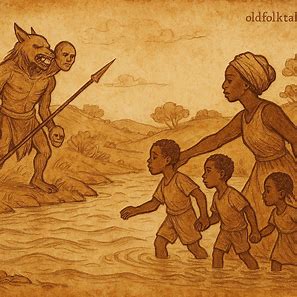
Ngana Samba and the Ma-Kishi: A Kimbundu Folktale of Courage, Motherhood, and Escape.
long ago, during the dry season, the people of a village gathered to burn the prairie. Men and women worked together: the men hunted
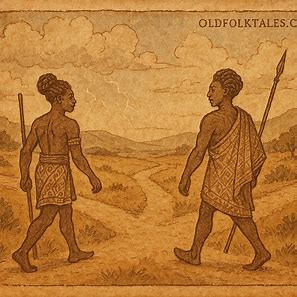
Sudika-Mbambi and Kabundungulu: A Kimbundu Folktale of Courage, Betrayal, and the Division of Brothers.
Let us tell of Ngana Kimanaueze kia Tumba a Ndala, beloved among friends, who begat a son named Nga Nzua of Kimanaueze. One day,
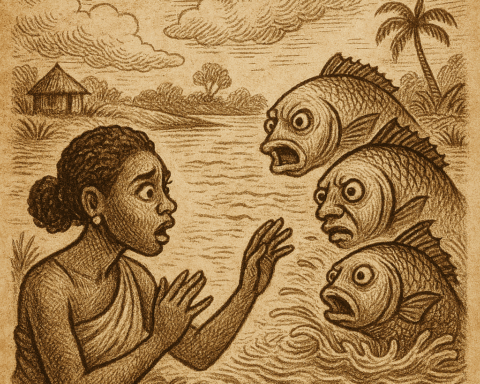
The Greedy Woman and Fish Spirits
In a village where the morning mist clung to thatched roofs like ancestral spirits watching over their descendants, there lived a young woman whose
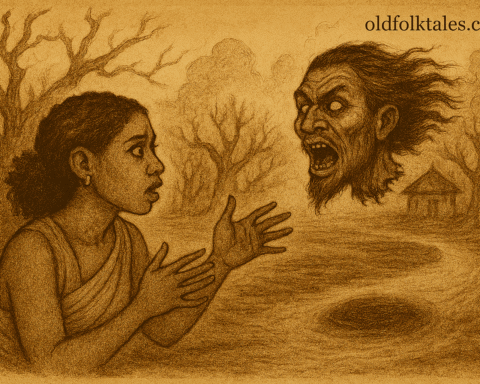
Makuchi and the Head without the body
In the heart of a West African village, where the golden dust of the dry season painted everything in warm hues, lived a young
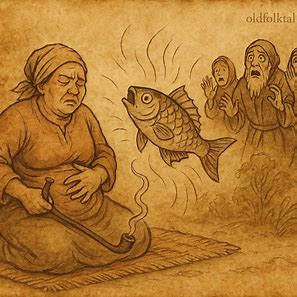
The Woman Who Longed for Fish: A Traditional Angolan Folktale.
Long ago, in the land of the Kimbundu people of Angola, there lived a man named Ngana Kimalauezu kia Tumb’a Ndala and his wife.
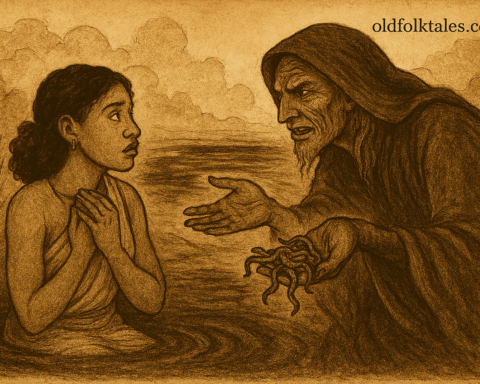
Pride Before the Fall
In a village where the red earth met endless skies, there lived a young woman whose beauty was spoken of in hushed, reverent tones
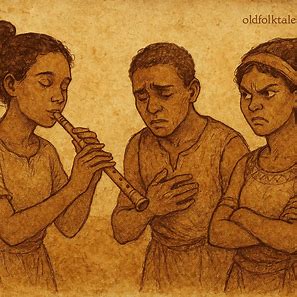
Fenda Maria and Nga Nzua: An Angolan Folktale of Truth, Resilience, and Justice.
In the heart of Angola, among the Kimbundu people, there lived a brother and sister whose bond was tested by tragedy, hardship, and betrayal.
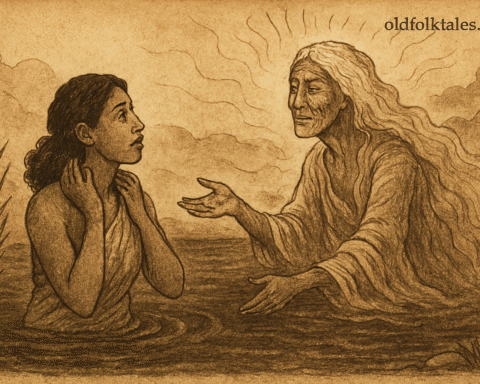
The Kind Sister’s Reward
In a time when drums spoke the language of the spirits and rivers held ancient secrets, there lived a master craftsman named Tachi Nanga.
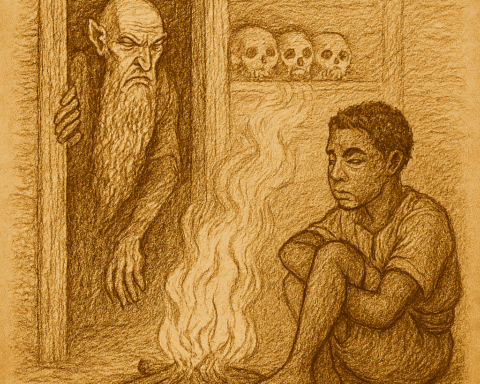
The Boy Who Wouldn’t Listen
The dry season had arrived with its familiar promise of harvest and renewal. Across the village, families prepared for the annual ritual of gathering
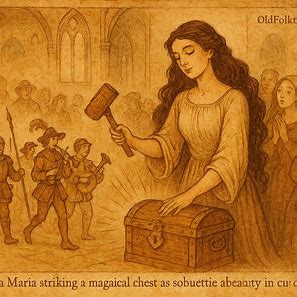
The Story of Fenda Maria and Nga Nzua: Traditional Folktale of the Kimbundu People, Angola
I often tell the story of Nga Nzua, son of Kinoueza kia Tumb’a Ndala. When his father died, and soon after his mother too,
