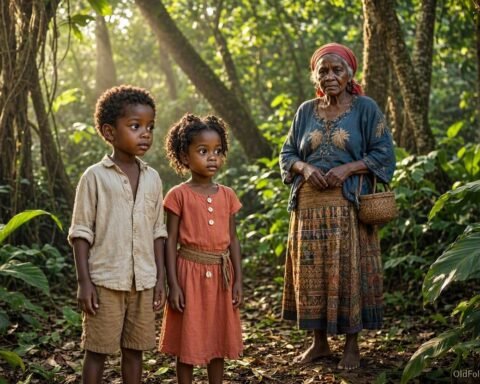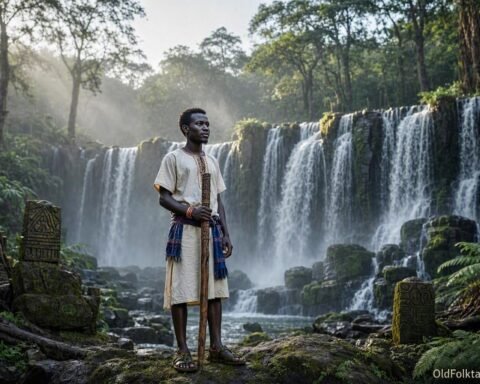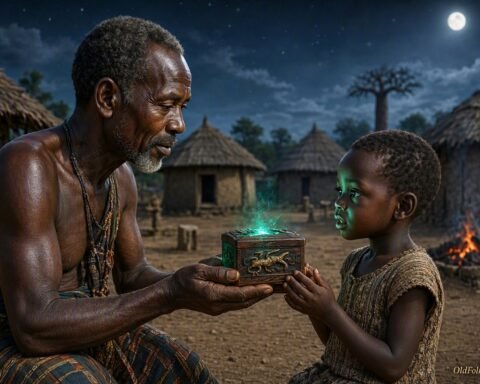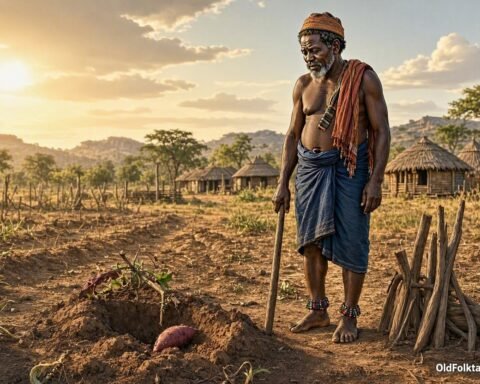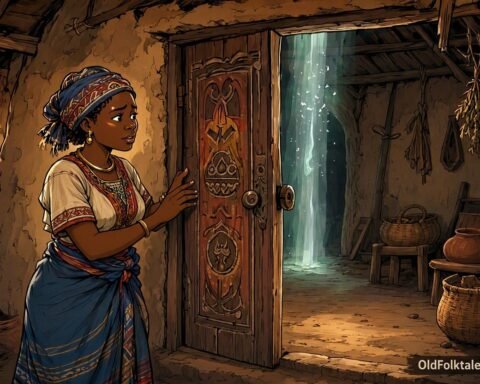
The people of Seychelles often said that the islands held more than beautiful beaches, towering granite cliffs, and emerald forests. Hidden among the valleys and quiet footpaths were mysteries that could not be explained by ordinary eyes. Some believed these mysteries belonged to nature itself, while others believed they were guarded by ancient spirits who occasionally walked among humans.
Of all these mysterious beings, none was spoken of more cautiously than Loulou.
The elders described Loulou as a wandering spirit who never stayed in one place for long. Sometimes the being appeared as an old traveler carrying a walking stick. At other times, Loulou looked like an ordinary fisherman, a lonely widow, or a tired stranger seeking help along a village road.
No one knew Loulou’s true appearance.
The only certainty was that every meeting with the mysterious being became a test of character.
Those who acted with kindness often discovered unexpected blessings.
Those whose hearts were ruled by greed usually found themselves learning difficult lessons.
Don’t miss out: Read more Southern African folktales
In a quiet village nestled between the forest and the sea lived a young coconut harvester named Benoit. Every morning he climbed the tall palms that lined the coast, gathering fresh coconuts before carrying them to the village market.
His life was simple.
He owned little beyond his small cottage, his climbing rope, and a few tools inherited from his late father.
Yet despite having very little, Benoit never refused to help anyone in need.
If an elderly neighbor struggled to carry water, he gladly offered assistance.
If travelers lost their way through the forest, he guided them safely back to the village.
Many admired his generosity, though some believed he was too willing to share what little he possessed.
Not far away lived a wealthy spice merchant named Marcel.
His warehouses overflowed with cinnamon, vanilla, coconuts, dried fish, and other valuable goods brought by trading ships from distant shores.
Although Marcel possessed more wealth than anyone else in the village, he constantly worried about losing it.
Whenever beggars approached his gate, they left empty handed.
Whenever neighbors requested assistance during difficult times, he claimed that business had been poor.
People respected his success but rarely spoke of his kindness.
One bright morning, Benoit entered the forest to collect fresh palm leaves needed to repair the roof of his cottage.
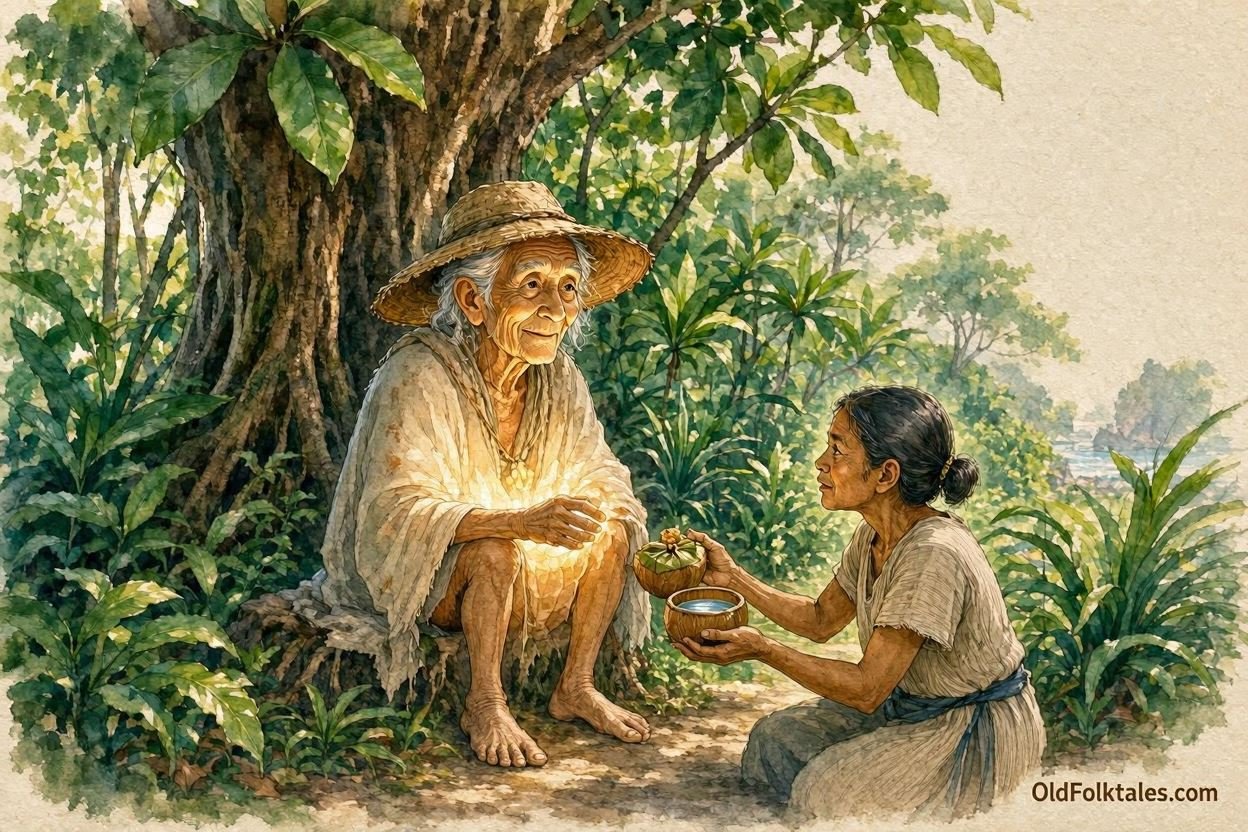
As he followed a narrow footpath beside a clear stream, he noticed an elderly traveler sitting quietly beneath a large takamaka tree.
The old man appeared exhausted.
His clothes were dusty from many days of walking, and his water flask was completely empty.
When Benoit approached, the traveler smiled gently.
“My son,” he said softly, “I have journeyed a great distance. Might you spare a little water and something to eat?”
Without hesitation, Benoit removed the small bundle from his shoulder.
He offered the old man fresh coconut water, ripe bananas, and the cassava bread he had prepared for his own midday meal.
The traveler accepted each gift with gratitude.
“You have shared freely,” he said, “even though your own possessions are few.”
Benoit smiled.
“My parents taught me that kindness loses nothing by being shared.”
The old traveler thanked him warmly before continuing deeper into the forest.
Benoit thought little of the encounter and returned to his work.
Later that same afternoon, Marcel the merchant walked along the very same path while searching for rare spices to sell in the market.
He soon met the elderly traveler resting beneath the takamaka tree.
The old man slowly stood and greeted him politely.
“I have walked many miles without food or water,” he said. “Would you be willing to help an old traveler?”
Marcel frowned.
“I did not become wealthy by giving away my food to strangers,” he replied. “You should have prepared better before beginning your journey.”
Without another word, he adjusted the heavy bag on his shoulder and continued walking, leaving the old man alone beneath the tree.
The traveler watched him disappear among the forest paths.
A gentle smile slowly crossed his face.
It was the kind of smile that suggested the true purpose of the meeting had only just begun.
Several days passed, and life in the village continued as usual.
Benoit returned to climbing coconut palms each morning, while Marcel remained busy trading with merchants who arrived by sea. Neither man spoke again of the elderly traveler they had met in the forest.
Then unusual events began to unfold.
One morning, Benoit discovered a young coconut palm growing beside his cottage. It had not been there the day before. Within a few weeks, the tree grew with astonishing speed and produced healthy coconuts unlike any the villagers had ever seen.
The fruit was larger, sweeter, and filled with cool water even during the driest season.
People traveled from neighboring villages to buy Benoit’s coconuts, and his modest income slowly increased.
Yet although he became more prosperous, his generosity never changed.
He repaired the roofs of elderly neighbors after heavy rains, shared food with families who had fallen on difficult times, and helped young fishermen mend their nets before they returned to sea.
The more he gave, the more his harvest seemed to flourish.
Meanwhile, Marcel’s fortunes began to decline.
The spices stored in his warehouse became damp after an unexpected storm.
Several sacks spoiled before they could be sold.
A trading ship carrying valuable goods changed its route after strong winds delayed its voyage.
Even loyal customers gradually began buying from other merchants whose prices were fairer and whose manners were kinder.
Marcel could not understand why his luck had changed so suddenly.
One evening, unable to quiet his troubled thoughts, he decided to walk through the forest where he had once met the old traveler.
As the sun disappeared behind the hills, he reached the great takamaka tree.
The elderly man was there once again.
This time, however, a soft golden light surrounded him.
The forest grew strangely quiet, and even the breeze seemed to pause among the leaves.
Marcel stepped back in surprise.
“Who are you?” he asked.
The old man smiled.
“I am called Loulou.”
The name alone filled Marcel with astonishment.
Every child on the islands had heard stories about the mysterious being who wandered among humans, revealing what truly lived within their hearts.
“You came to test me,” Marcel whispered.
“I came to offer you an opportunity,” Loulou replied gently. “It was your own choices that became the test.”
Marcel lowered his head.
“I believed that protecting my wealth would make my future secure.”
Loulou looked toward the forest.
“Wealth gathered without compassion becomes a burden. Wealth shared with wisdom becomes a blessing.”
Ashamed of his selfishness, Marcel asked whether he could change.
Loulou’s expression remained kind.
“The heart is like a garden,” he said. “If a person removes the weeds of greed and plants seeds of generosity, new life will always grow.”
As those words faded into the evening air, the golden light surrounding Loulou became brighter.
Within moments, the mysterious being disappeared as quietly as the morning mist rising from the sea.
Only the old walking stick remained beneath the tree.
Marcel picked it up with great respect.
From that day forward, he changed the way he lived.
He offered fair prices in the market, helped struggling fishermen repair their boats after storms, and quietly supplied food to widows and elderly villagers who had no family to care for them.
Although he never became as wealthy as he had once been, he found something far greater than riches.
He earned the trust and friendship of his community.
The elders smiled whenever they saw Benoit and Marcel working together to help others.
They would often tell the children that Loulou still wandered through the islands, appearing whenever people forgot that kindness is the greatest measure of true wealth.
No one could say where the mysterious being came from or where the spirit went after each visit.
But many believed that whenever a stranger appeared unexpectedly on a lonely path, another lesson from Loulou might be about to begin.
And so, the story of Loulou, the Mysterious Being continued to be shared across Seychelles, reminding each new generation that every act of kindness shapes the character of the one who gives it, and that the greatest treasures are found not in overflowing storehouses but in generous hearts.
Looking for more? Explore the magic of East African folktales here
Moral Lesson
This Seychellois folktale teaches that kindness and generosity reveal a person’s true character. Wealth has little value when it is kept only for oneself, but it becomes meaningful when it is used to help others.
Knowledge Check
1. Who was Loulou?
Loulou was a mysterious supernatural being who appeared in different forms to test people’s character.
2. How did Benoit treat the elderly traveler?
He generously shared his food and water without expecting anything in return.
3. Why did Marcel refuse to help the traveler?
He was ruled by greed and feared losing his wealth.
4. What happened after each man made his choice?
Benoit’s kindness brought unexpected blessings, while Marcel’s selfishness led to hardship until he changed his ways.
5. What lesson did Loulou teach Marcel?
He taught that generosity brings lasting rewards, while greed becomes a burden.
6. What is the central lesson of this Seychellois folktale?
The story teaches that true wealth is measured by compassion, generosity, and the willingness to help others.
Source: Seychellois Creole folktale, Seychelles. Adapted from documented traditions preserved in the University of Seychelles Folklore Corpus and academic research on Seychellois mythical beings and supernatural legends.