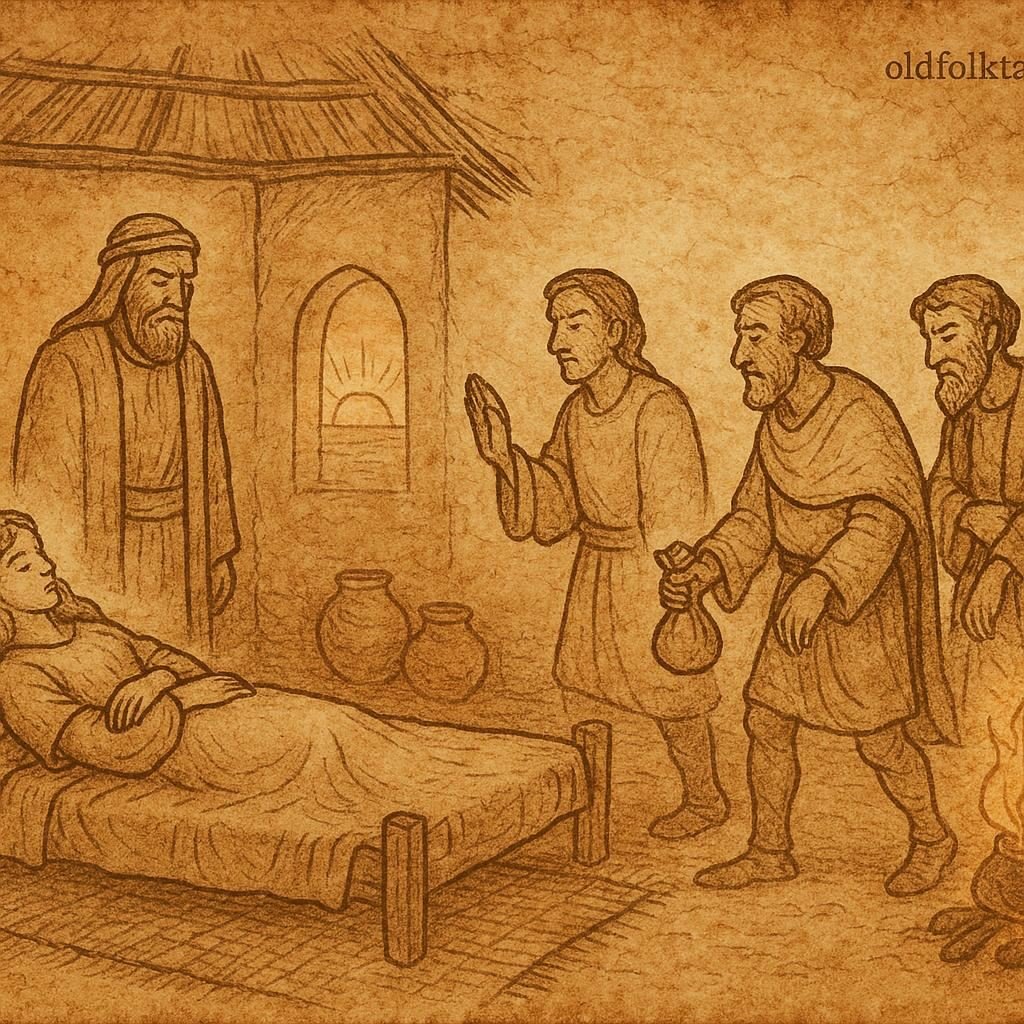
In a quiet Ashanti village long ago, there lived a man blessed with a daughter of extraordinary beauty. Her presence lit up the household like the breaking dawn, so radiant and full of grace that people began calling her Morning Sunrise.
Her skin glowed like the first light of day, her eyes shone with warmth, and her smile seemed to carry the promise of hope and new beginnings. Naturally, many young men desired to marry her. Each who saw her longed to win her hand. Among these admirers, three men stood out: Wise Man, Wit, and Thinker.
They were persistent in their pursuit, and each believed himself the most worthy to claim her as his wife. But her father found himself troubled. He could not simply choose based on charm or words; he wished to discover which of the three possessed true loyalty and devotion. And so, he devised a clever test.
The Father’s Test
One evening, he called Morning Sunrise into their home and whispered his plan. She was to lie down on her bed and pretend to be dead. Though startled by the idea, she trusted her father’s wisdom and agreed. She lay perfectly still, her radiant beauty dimmed under the solemn disguise of lifelessness.
The father then spread word to the three suitors. He sent a messenger to each of them with grave news: Morning Sunrise had died, and her funeral was at hand. Would they come to honor her?
The First Suitor: Wise Man
The messenger first went to Wise Man, who prided himself on his reason and careful thinking. Upon hearing the news, however, he frowned and shook his head.
“What nonsense is this?” he scoffed. “The girl was never my wife. Why should I spend my money on her burial?”
He dismissed the messenger and returned to his own affairs, unwilling to give even a token of respect.
The Second Suitor: Wit
The messenger next visited Wit, known for his quick tongue and clever humor. But his reaction was no better.
“What a strange message,” he muttered. “Her father did not even tell me she was ill! Why should I pay for her funeral expenses?”
With that, he refused to contribute and stayed away, showing no grief, no duty, and no sincerity.
The Third Suitor: Thinker
Finally, the messenger arrived at the home of Thinker. Unlike the others, Thinker wasted no time. His heart was heavy, but his words were firm:
“Certainly I must go and mourn for Morning Sunrise. Had she lived, surely she would have been my wife.”
He gathered money, prepared himself, and immediately set out for her father’s home. His steps were steady, his thoughts full of sorrow, and his devotion plain for all to see.
The Revelation
When Thinker arrived, the father stood outside and called loudly into the house:
“Morning Sunrise! Morning Sunrise! Come forth. Here is your true husband.”
And to the astonishment of all, Morning Sunrise rose from her bed, alive and well, her beauty shining more brilliantly than ever. The test was over, and the answer was clear.
That very day, the betrothal was declared, and not long afterward, the wedding took place. Morning Sunrise and Thinker were joined in marriage, and together they lived in harmony and joy.
Moral of the Story
The tale of Morning Sunrise reminds us that true love is not proven by words, cleverness, or empty wisdom. It is revealed through loyalty, sacrifice, and action. The one who values a person even in times of loss is the one most worthy to share in their life.
Knowledge Check
Q1: Who was Morning Sunrise, and why was she so admired?
Morning Sunrise was the beautiful daughter of a villager, admired for her radiant beauty and grace.
Q2: What test did her father create to determine the true husband?
He asked Morning Sunrise to pretend she was dead and sent word to her suitors to see who would show devotion.
Q3: How did Wise Man react to the news of Morning Sunrise’s death?
He dismissed it, refusing to help with funeral costs because she was not yet his wife.
Q4: Why did Wit also refuse to help?
He claimed her father had not told him she was ill and declined to pay for funeral expenses.
Q5: What set Thinker apart from the other suitors?
Thinker immediately prepared money, went to mourn her, and demonstrated loyalty and compassion.
Q6: What is the central lesson of this Ashanti folktale?
True love and worth are revealed through genuine loyalty and sacrifice, not empty words or pride.
Source: Ghanaian Folktale