In a village at the edge of the Atlas Mountains, where the sun burned bright over golden sands and the air smelled of spices and smoke, there lived a blacksmith. He was a man of simple means, but his hands were strong and steady. From dawn to dusk, he worked at the forge, hammering iron and shaping metal, crafting tools and ornaments for the villagers. Though he was poor, his heart was brave, and he took pride in honest labor.
One evening, as the blacksmith struck the final blow on a horseshoe, a shadow fell across the village. A chilling wind whispered through the streets, and the animals stirred with unease. The villagers trembled, for rumors had long spoken of an Ifrit, a powerful spirit of fire and darkness, that haunted the mountains and demanded tribute from any who dared live near its lair.
The Ifrit had grown hungry and vengeful. It descended upon the village at night, setting fire to crops and frightening livestock. The villagers, terrified and helpless, pleaded with the blacksmith to confront the creature. Though fear gripped him, he could not abandon the people who depended on him.
READ THIS: How the Talking Camel of Marrakech Defeated Greed
Before dawn, the blacksmith prepared his forge. Sparks flew like tiny stars as he heated iron, shaping it into weapons and charms known to repel evil. The air was thick with smoke, and the heat of the furnace matched the fire he would soon face. He carried his crafted tools into the mountains, each step heavy but determined.
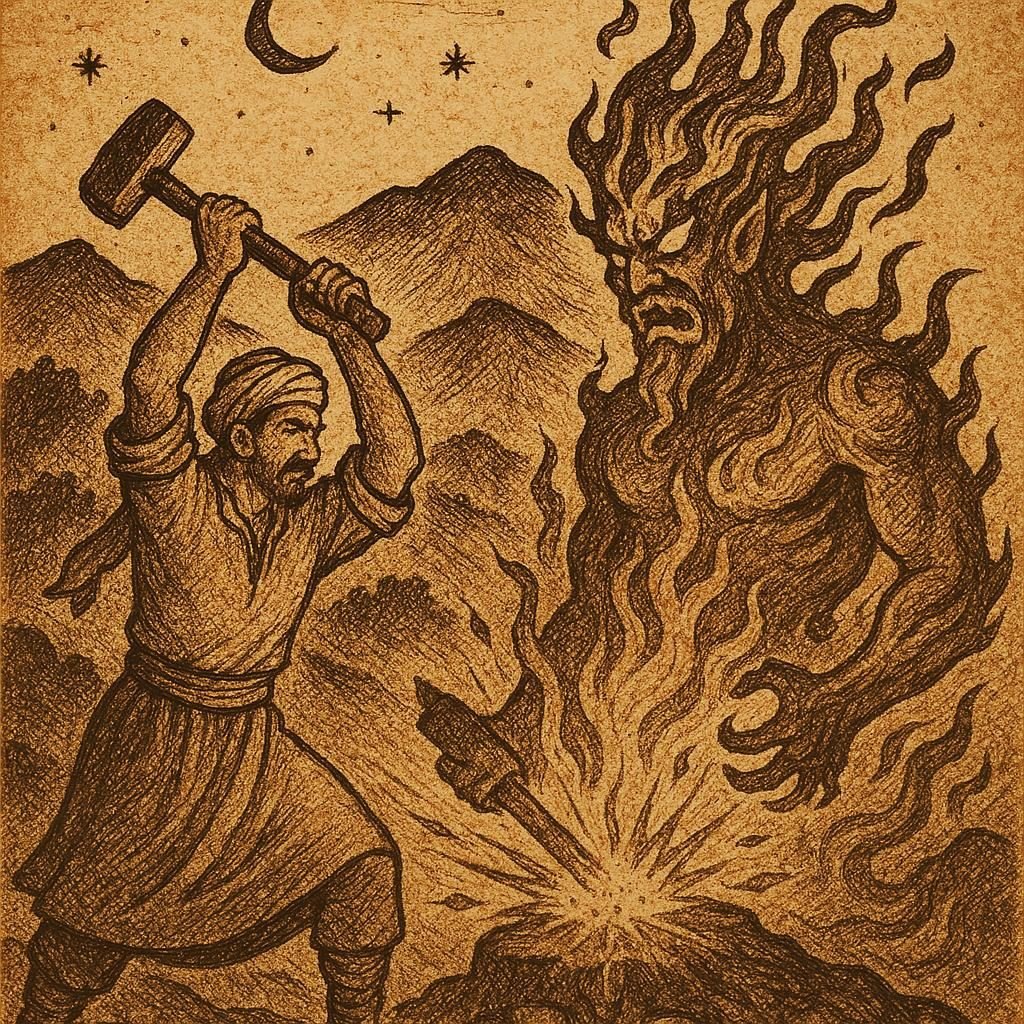
As he climbed the rocky path, the Ifrit appeared in a swirl of flame and shadow. Its eyes burned like molten coals, and its voice shook the stones beneath his feet. “Who dares enter my realm?” it thundered.
The blacksmith lifted his hammer and spoke firmly. “I am a man of hard work and honesty. I will not flee, for your terror ends tonight.”
The Ifrit laughed, a sound like cracking firewood. It unleashed flames and gusts of scorching wind. The blacksmith dodged and pressed forward, using his crafted charms to shield himself. He struck at the Ifrit with his hammer, the iron glowing as it met the creature’s fiery form. Sparks flew into the night, lighting the mountains with bursts of light that glimmered like stars.
The battle raged until the blacksmith noticed the Ifrit waver with fatigue. It had never faced a mortal who combined courage with wisdom. Remembering an old tale his father once told, he hurled a piece of iron shaped with special symbols directly at the Ifrit. The symbols glowed, and the creature screeched, trapped by the power of crafted knowledge and labor.
With one final strike, the blacksmith drove the Ifrit back into its lair. The fire dimmed, the shadows retreated, and a calm returned to the village. Exhausted but triumphant, he descended the mountain, his hands blistered, his clothes scorched, yet his heart full of pride.
The villagers hailed him as a hero. The crops would grow again, the livestock would thrive, and the village was safe. The blacksmith continued his work at the forge, but now he was more than a craftsman; he was a symbol of courage, showing that hard work, skill, and bravery could overcome even the darkest forces.
From that day, parents told their children of the blacksmith who faced an Ifrit. They reminded them that fear could be faced, and that knowledge, labor, and courage were as powerful as any magic.
Moral Lesson of The Blacksmith and the Ifrit
This Moroccan folktale teaches that courage combined with skill and hard work can defeat even the most formidable evil. Bravery is not the absence of fear but the determination to act despite it, and wisdom can strengthen both body and spirit against darkness.
Knowledge Check
What is the main theme of The Blacksmith and the Ifrit?
It emphasizes bravery, hard work, and using skill to overcome dark forces.Why did the blacksmith confront the Ifrit in the story?
He confronted it to protect his village and the people who depended on him.How did the blacksmith prepare to face the Ifrit?
He forged weapons and charms with iron and special symbols to shield and empower himself.What weakness of the Ifrit allowed the blacksmith to defeat it?
The Ifrit grew fatigued and had never faced a mortal combining courage with wisdom.How did the villagers honor the blacksmith after the battle?
They celebrated his bravery and told his story to future generations as a symbol of courage.What does this Moroccan folktale teach about fear and action?
It shows that facing fear with wisdom, preparation, and hard work can lead to triumph over even the darkest forces.
Source: Moroccan folktale documented by Edward Westermarck in Ritual and Belief in Morocco (1926).