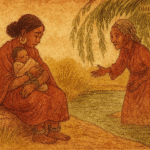
The village of Kpalime lay nestled beside the Volta River, its gentle waters winding like a silver snake through the lush greenery of the land. For generations, the people had lived by the rhythm of the river — fishing in its depths, farming its banks, and listening to its whispers in the stillness of night. The river was more than water; it was life, legend, and home to powerful spirits who watched over the village and its people.
Among the villagers, Nana Asabe stood out — a young woman with eyes like the midnight sky and a heart open as the river itself. She was kind and curious, with a quiet strength that drew others to her. But she was different from many. While others held a fearful respect for the river spirits, Nana Asabe felt a deep friendship with the flowing waters. Her grandmother often warned her, “Nana Asabe, the river is both mother and mystery. Respect its power, and it will respect you.”
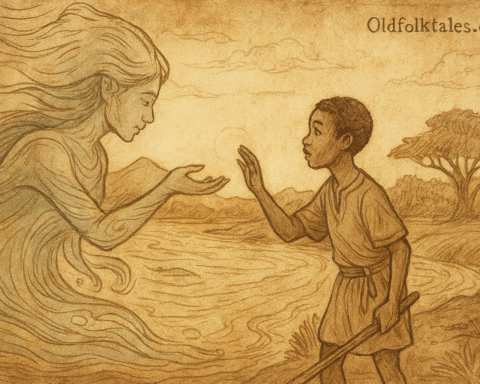
One shimmering afternoon, when the sun poured gold over the river’s surface, Nana Asabe wandered to her favorite spot — a secret bend where the water was calm and clear, perfect for watching the dragonflies darting like living jewels. She hummed a soft tune as she sat on a smooth stone, her fingers brushing the cool water. Suddenly, the river rippled and parted like a curtain. From the depths rose a figure clad in scales that shimmered like emeralds and sapphires, eyes bright as stars in the twilight. It was Nana Ntoh, the ancient river spirit, protector of the waters and keeper of secrets.
Nana Asabe’s breath caught, but she bowed low, showing respect. “Great Nana Ntoh, I come in peace. I honor your home and your watchful eyes.”
The spirit’s voice was like the song of the river itself — flowing, deep, and eternal. “Child of the earth, your respect is rare in these days. For this, I grant you a gift. But know this — the river’s blessings are never without trials.”
With a wave of Nana Ntoh’s hand, the water shimmered and sparkled. Nana Asabe felt a warmth spread through her, and from that moment, she found she could heal the sick with water drawn from the river. Word spread quickly, and soon villagers came with wounds and fevers, finding relief in her gentle touch and the river’s magic.
But gifts from the spirits are never without price. One morning, a heavy silence fell over Kpalime. The sky was cloudless, but the river’s song had stopped. The waters receded, revealing cracked earth where fish once swam. The crops began to wither, and hunger crept into the village like a shadow. The spirits were restless.
That night, Nana Asabe dreamt of Nana Ntoh, who beckoned her to the dry riverbed. Surrounded by shimmering figures of water spirits, she was faced with tests to prove her heart was worthy.
“You have the river’s gift, but do you hold the river’s spirit? Will you stand when the waters fade?” the chief spirit asked.
The challenges were many. First, she faced illusions of temptation — a banquet of gold and power, voices promising wealth if she turned away from her people. Nana Asabe shook her head firmly, whispering, “My heart belongs to my village, not to selfish gain.”
Next, she was shown visions of fear — a night of darkness where shadows tried to consume her, whispering doubts. “You are weak. You cannot save them,” they hissed. Nana Asabe closed her eyes and found her courage deep inside, a flame kindled by love and resolve.
Finally, Nana Ntoh spoke: “To save your people, you must give something precious — something that belongs only to you.”
Nana Asabe understood immediately. Her voice was her pride, her joy, her identity. Without hesitation, she replied, “I offer my voice to the river, so it may flow again and bring life to my people.”
With a serene smile, Nana Ntoh accepted. A gentle wave passed over Nana Asabe, and when she tried to speak, no sound came forth. Though her voice was gone, the river began to swell again, rushing strong and clear through Kpalime. The crops revived, fish returned, and the village breathed again.
Though silent, Nana Asabe’s spirit spoke louder than ever. She became a living symbol of sacrifice and love — a reminder that true power lies not in words but in actions and heart. The villagers cared for her with renewed respect, learning to live in harmony with the river and its spirits.
And on quiet evenings by the riverbank, when the dragonflies danced in the sunset, the villagers would remember the girl who gave her voice so their river might sing forever.
✧ Commentary
This folktale from the Ewe people beautifully captures themes of respect, sacrifice, and harmony with nature. Nana Asabe’s journey reflects the deep belief in West African cultures that humans must live in balance with the spirit world. Her selflessness highlights that true leadership and strength come from giving, not taking. The story also underlines the sacred relationship communities share with their environment, where natural elements like rivers are alive with power and must be treated with reverence.
✧ Moral
True strength is found in selflessness, respect for nature, and the courage to sacrifice for the greater good.
✧ Questions & Answers
1. Q: Who is Nana Ntoh in the story? A: Nana Ntoh is the river spirit who protects the Volta River and grants Nana Asabe a healing gift.
2. Q: What special gift did Nana Asabe receive? A: She was given the power to heal the sick using water from the river.
3. Q: What problem did the village face after the gift? A: A terrible drought caused the river to dry up, threatening the village with famine.
4. Q: What was the final test Nana Asabe faced? A: She had to sacrifice something precious — her own voice to restore the river.
5. Q: How did the village change after Nana Asabe’s sacrifice? A: The river flowed again, crops grew, and fish returned, saving the village.