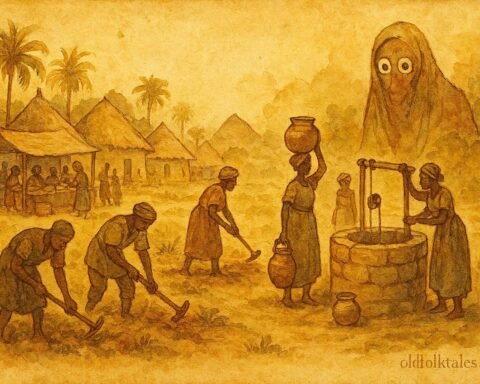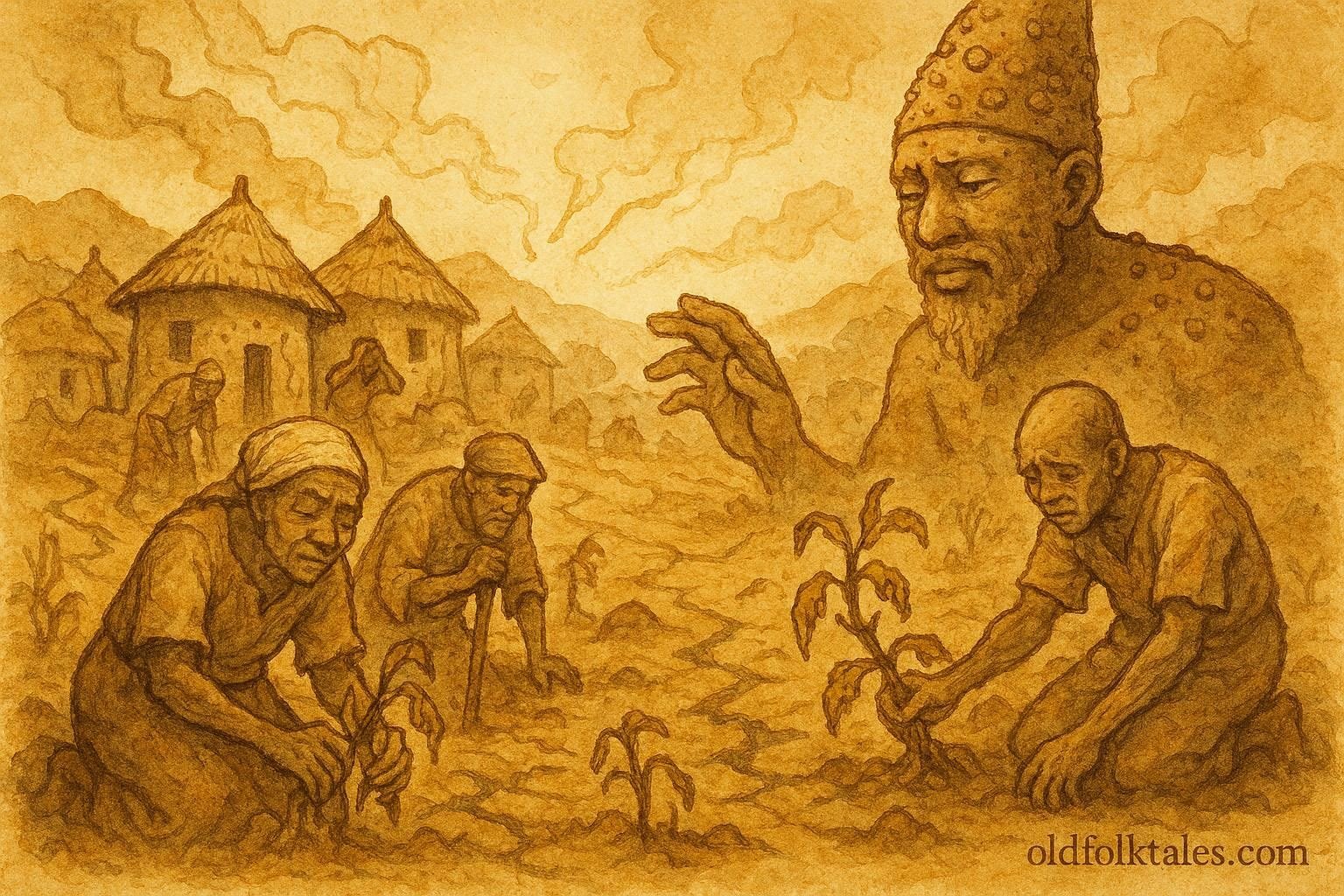
In a fertile region of Dahomey, where villages lay nestled between rolling hills and rich earth, the people had long lived in harmony with the land. Crops flourished, streams ran clear, and children played freely in the fields. At the heart of this region, the villagers worshiped many deities, but none inspired more awe than Sakpata, the earth god who governed fertility, disease, and the balance of life itself.
Sakpata was revered not only as a source of health and abundance but also as a stern guardian of sacred laws. The elders taught that he could bring both prosperity and misfortune, rewarding humility and punishing pride. The villagers knew that to honor Sakpata was to respect the land, the community, and the divine balance that sustained them all.
One year, the harvest had been unusually bountiful. The fields of yams and millet were filled to overflowing, and the villagers celebrated their good fortune with dancing, music, and feasts. Yet, with prosperity came arrogance. The people began to boast openly about their wealth, mocking the modest traditions of their ancestors and neglecting the sacred rituals devoted to Sakpata.
The elders warned them: “Do not forget the earth that feeds us. Do not scorn the laws that keep life in balance. Sakpata watches all.”
Keep reading: Discover more Central African folktales
But the villagers laughed. “The gods have no power over us,” they said. “We are strong, and our fortune is ours to enjoy. We need no reminders of old rules.”
Sakpata watched silently from the earth beneath their feet. The once steady ground seemed to pulse with his presence. In the days that followed, a subtle illness began to spread among the villagers. Coughs and fevers claimed even the strongest, and animals fell ill in the fields. Crops, once abundant, began to wilt in the sun. At first, the people blamed chance or the winds, but as the sickness spread, fear gripped the community.
The elders reminded the villagers again, speaking with urgency: “The god of the earth is displeased. He punishes those who ignore sacred laws. You must restore humility and respect, or this misfortune will not end.”
Some villagers bowed in fear and prayed, but many still ignored the warnings. They continued to boast and consume without thought for the divine balance.
Then, a great tremor shook the earth. The soil cracked in the fields, and deep fissures appeared where the riverbank met the hills. Water turned murky, and the crops that survived began to wither. The people now understood that the punishment was real. They fell to their knees and sent messengers to the elders for guidance.
The elders organized a series of rituals, offering the finest foods and traditional songs to honor Sakpata. They instructed the people to clean the village, share food with the sick, and speak with humility. One by one, the villagers approached the sacred shrines, bowing their heads and asking for forgiveness. They confessed their pride, begged for mercy, and vowed to respect the sacred laws of the earth deity.
Sakpata listened. Slowly, the illness began to fade. The tremors ceased, the soil healed, and water ran clear once more. Crops returned to health, and animals recovered. The villagers had learned that prosperity alone was not enough; they needed humility, respect, and reverence for the sacred balance of life.
From that day forward, the people told the story of Sakpata to their children. It became a tale of caution and moral guidance, teaching that pride brings punishment, while humility restores harmony. When the villagers tilled the fields or celebrated a harvest, they remembered that the earth beneath their feet was alive with Sakpata’s presence and that their actions could either invite blessing or calamity.
And so, the community of Dahomey flourished again, not only in crops and wealth but in wisdom and reverence, ensuring that the punishment of pride would never be repeated.
If you enjoyed this story, explore our full West African folktales collection
Moral Lesson
Pride and disregard for sacred laws invite misfortune, while humility and respect restore balance, health, and harmony in the community.
Knowledge Check
- Who is Sakpata in Fon tradition?
Sakpata is the earth deity governing fertility, disease, and divine balance. - Why did Sakpata punish the villagers?
Because they ignored sacred laws and acted with pride, neglecting humility and rituals. - What forms did the punishment take?
Illness, sick animals, withered crops, and tremors in the earth. - How did the villagers restore Sakpata’s favor?
By performing rituals, offering food, confessing pride, and acting with humility. - What does this story teach about the relationship between humans and the divine?
Humans must honor sacred laws and the divine balance to maintain health, prosperity, and harmony. - What is the cultural origin of this folktale?
Fon (Dahomey) mythology, Benin.
Source
Fon myth, Benin. Recorded by Melville J. Herskovits in Dahomey: An Ancient West African Kingdom (1938).