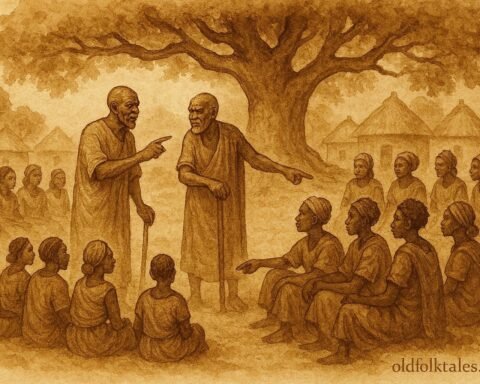
Long ago, when the Creator completed the heavens and the earth, she entrusted her children with the care of the world. Among these children were Sagbata and Sogbo, brothers with contrasting spirits. Sagbata, the elder, was calm and thoughtful. Sogbo, the younger, was fiery, bold, and sometimes harsh. The Creator told them that they must exist together like a closed calabash, carrying the world safely inside them. She declared that Sagbata should take the lower part and Sogbo the upper. Yet Sogbo refused to leave his mother’s side.
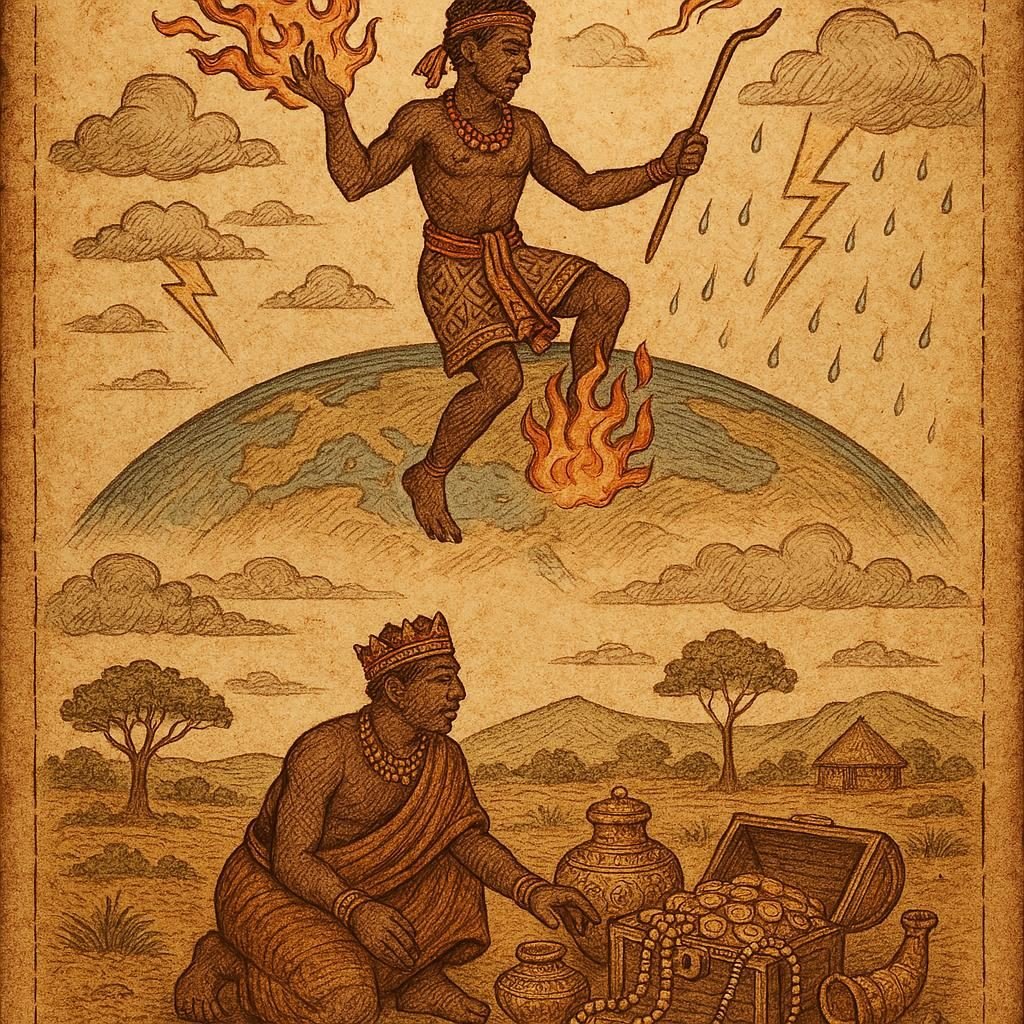
Sagbata, knowing his responsibility, descended to Earth. He carried with him all his inheritance from his mother, including treasures, knowledge, and gifts intended for the world below. Yet he left behind the water, thinking it could not fit in his sack. On Earth, Sagbata established himself as king among the people, who numbered fewer than a thousand. The humans rejoiced at his arrival, and he promised them rain, though the skies remained clouded by Sogbo’s anger.
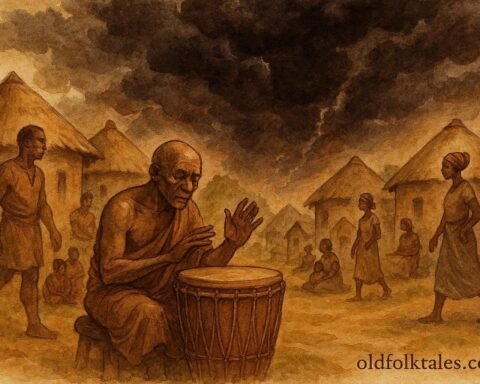
Sogbo, remaining close to their mother, grew in confidence and power. One day, he caused the rains to stop entirely. Rivers dried, and the land cracked under the relentless sun. Crops withered, and the people began to suffer. They came to Sagbata, crying, “Great king, our lives wither. There is no rain, and we are dying of hunger.” Sagbata replied kindly, “Patience, my people. Soon the rain will return.”
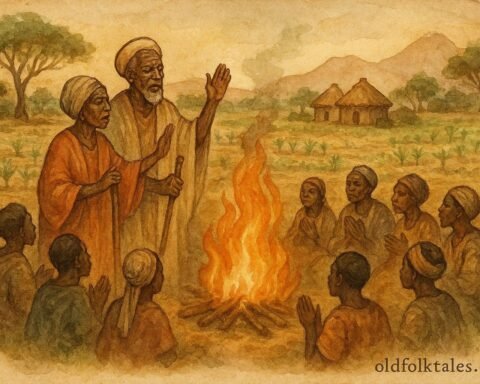
Days turned into months, and months became years, yet no rain fell. Then, two men descended from the sky to a distant land called Fe. They traveled across the world preaching the teachings of Fa, the sacred writing of the Creator. When news of these travelers reached Sagbata, he invited them to his court. Speaking the language of the heavens, the men revealed that Sogbo, the younger brother, was angry and had withheld the water from the world. Through the sacred divination of Fa, they discovered that reconciliation between the brothers was the only way to restore balance.
Sagbata realized that the sky was too far away for him to return. He remembered that he had left behind the water, which had now become essential for life on Earth. The two men advised him that to restore the rain, he must offer a portion of his earthly treasures to Wututu, the loyal friend of Sogbo. They assured him, “When Wututu delivers your message to Sogbo, he will not refuse.”
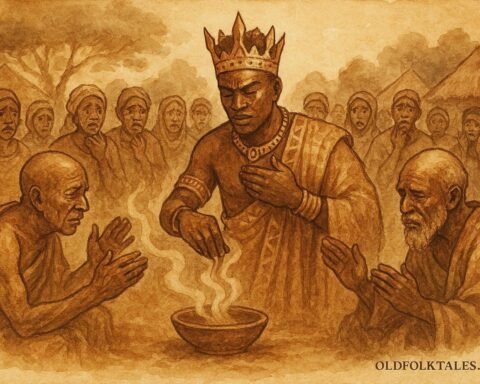
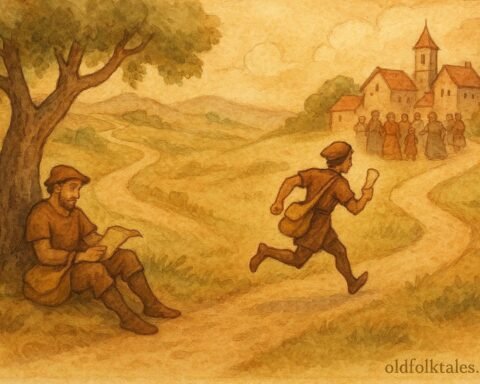
Obeying their counsel, Sagbata gathered a share of his treasures and summoned Wututu. “Go to Sogbo, my brother,” he commanded, “and tell him that I surrender the universe. Tell him that I wish for peace and life to return to our people.” As Wututu flew toward the sky, a great rain began to fall halfway between the heavens and the earth.
When Wututu reached Sogbo, the younger brother listened to the message with compassion. He accepted Sagbata’s surrender, and in that moment, the universe found balance. Sagbata was overjoyed, and he decreed that Wututu would always be honored for carrying the message of peace. Should anyone harm Wututu, a special ceremony would follow, removing the head-pad in recognition of his courage and service.
From that day onward, Sogbo, who embodied fire, and Sagbata, the wise elder, were reconciled. Every year, Hevioso, another name for Sogbo, visits the Earth, bringing thunder and rain. Fallen on the grass, life flourishes. Fallen on humans, blessings abound. Through their actions, the people learned that harmony between fire and water sustains the universe.
Moral Lesson:
The story of Sogbo Becomes Master of the Universe teaches that reconciliation, humility, and cooperation are essential for balance in the world. Even the most powerful forces must work together, for conflict can bring hardship, while understanding restores life and harmony.
Knowledge Check:
Who were Sagbata and Sogbo in Dahomean mythology?
Sagbata was the elder, calm brother, and Sogbo was the fiery, younger brother entrusted to rule the world by the Creator.Why did Sagbata leave water behind when he descended to Earth?
He believed it could not fit in his sack, leaving water under Sogbo’s control, which caused drought on Earth.What was the role of Fa in the story?
Fa was the sacred writing used by the two men from the sky to determine the cause of the drought and to guide Sagbata toward reconciliation with Sogbo.Who is Wututu, and why is he important?
Wututu was Sogbo’s trusted friend who delivered Sagbata’s message, enabling the brothers’ reconciliation and the return of rain.What natural elements do Sagbata and Sogbo represent?
Sagbata represents wisdom and order, while Sogbo represents fire, thunder, and rain.What lesson does the story convey about conflict and reconciliation?
It teaches that harmony, understanding, and compromise between opposing forces restore life, balance, and prosperity.
Cultural Origin:
Source: Dahomean (Fon) folktale, Beninese
This design was created as a visual echo of the story you just read. If you’d like to explore more story-inspired designs, you can visit our store.