In the golden age of ancient kingdoms, when the name of Solomon, son of David, was whispered with reverence from the cedars of Lebanon to the spice markets of Arabia, there lived a king whose wisdom was said to rival that of the angels themselves. Solomon ruled over the Jewish people with such profound understanding that even the winds and creatures of the earth were said to heed his commands. Yet, as this tale reveals, even the wisest of men can be brought low by the power of desire and the sharp tongue of a fearless bird.
The great King Solomon, master of djinn and commander of spirits, possessed wealth beyond measure and wisdom that drew seekers from the farthest corners of the known world. His palace gleamed with gold and precious stones, his gardens bloomed with flowers from every land, and his court buzzed with the constant activity of ambassadors, scholars, and supplicants. But for all his divine gifts and earthly treasures, Solomon remained, at his core, a man and like all men, he was not immune to the intoxicating allure of feminine beauty.
It was during the height of his reign that a woman of extraordinary charm came to capture the king’s attention. Her beauty was spoken of in hushed, reverent tones throughout the palace corridors, and her wit sparkled like the finest jewels in Solomon’s crown. The king, despite his legendary wisdom and vast experience with the affairs of the heart, found himself utterly infatuated with this enigmatic lady. His usually sharp mind became clouded with desire, and his famous judgment grew uncertain whenever she graced him with her presence.
One fateful day, as the afternoon sun cast long shadows across the marble floors of the royal chambers, this bewitching woman approached the king with a most unusual request. Her eyes dancing with mischief and perhaps a hint of challenge, she spoke in honeyed tones that made Solomon’s heart race like that of a young shepherd boy. “Great King,” she said, her voice carrying the musical quality that had so thoroughly enchanted him, “if you truly wish to win my favor, you must prove your devotion through a deed that none other could accomplish.”
Solomon, his judgment clouded by passion and his pride stirred by the implicit challenge, leaned forward eagerly. “Speak, my lady, and it shall be done. What task could possibly be beyond the reach of Solomon, who commands the very elements themselves?”
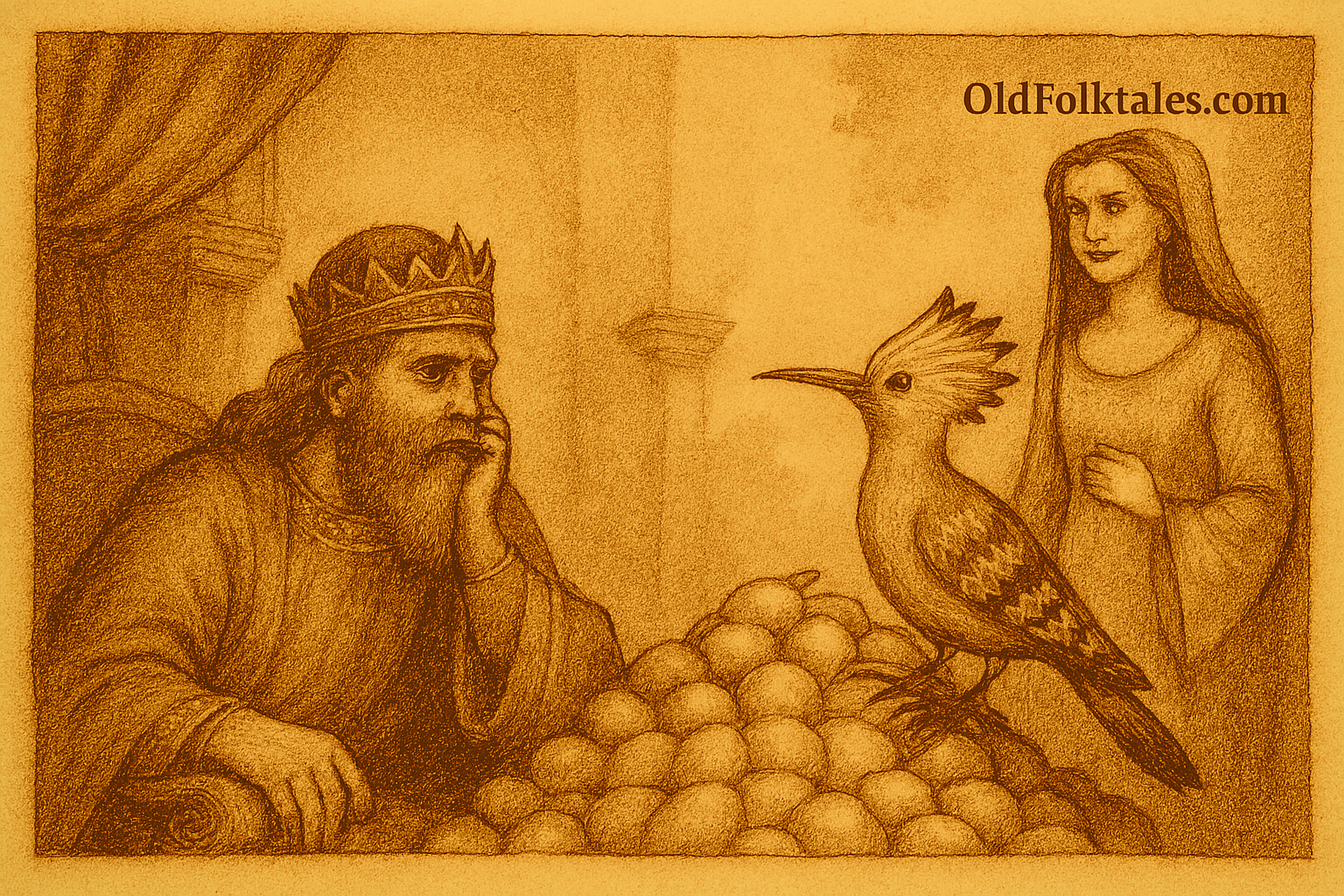
With a smile that seemed to hold secrets of its own, the woman made her extraordinary demand: “Build for me a house made entirely of eggs a dwelling crafted from nothing but the delicate shells that hold life itself.”
Any other man might have laughed at such an impossible request, recognizing it as either jest or folly. But Solomon, his wisdom temporarily eclipsed by his infatuation, saw only an opportunity to demonstrate his unlimited power and earn the lady’s precious favor. Without pause for reflection or consultation with his advisors, the king issued a proclamation that would echo across his entire kingdom and beyond.
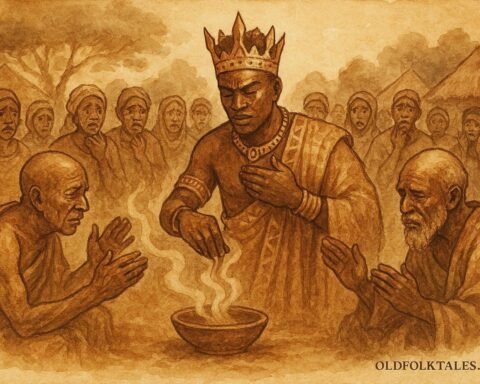
The royal decree went forth with the speed of eagles: every bird that soared through the heavens and every fish that swam in the depths of the seas must bring their eggs to the palace immediately. The command carried the full weight of Solomon’s authority, and the creatures of earth, sea, and sky recognized the power behind it. From the smallest songbird to the mightiest eagle, from the tiniest minnow to the great leviathans of the deep, all began the journey to Jerusalem, their precious eggs carried carefully to fulfill their sovereign’s bizarre request.
The palace courtyard soon became a marvel to behold, as an endless procession of creatures arrived with their offerings. Swans glided in with eggs like polished ivory, peacocks strutted forward with eggs that seemed to hold rainbows within their shells, and great ostriches lumbered up with eggs large enough to feed a family. From the waters came offerings equally diverse: fish of every size and color, their eggs gleaming like pearls and precious gems.
Yet as the great gathering continued and the pile of eggs grew to mountainous proportions, two notable absences became apparent to the royal overseers. The sparrow, that tiny brown bird so common throughout the land, had failed to appear. More significantly, the hoopoe that distinctive bird with its magnificent crown of feathers and reputation for ancient wisdom was nowhere to be seen among the assembled creatures.
King Solomon, accustomed to absolute obedience from all living things, felt his royal anger begin to kindle at this unprecedented defiance. He immediately commanded that both the sparrow and the hoopoe be brought before him to account for their neglect of duty. When the trembling sparrow was finally located and brought to the throne room, she approached the great king with obvious fear, her tiny body shaking like a leaf in a storm.
“Great King,” the sparrow chirped in her small, nervous voice, “I beg your forgiveness for my absence. My egg is so insignificant, so small and worthless, that I could not bring myself to offer such a pitiful contribution to your magnificent project. Surely a king of your stature would find my humble offering beneath notice.”
Solomon, though still displeased, was somewhat mollified by the sparrow’s humble explanation and obvious regret. The little bird’s reasoning, while not entirely satisfactory, at least showed proper respect for his royal dignity.
But when the hoopoe was finally brought before the throne, her demeanor was entirely different. This elegant bird, crowned with her distinctive crest of feathers, approached with neither fear nor apparent remorse. Her bright eyes met those of the king directly, showing a boldness that was both surprising and somewhat unsettling to the assembled court.
“Well, hoopoe,” Solomon demanded, his voice carrying the weight of imperial authority, “what excuse do you offer for your failure to obey my command?”
The hoopoe tilted her crowned head with an air of casual indifference that would have been shocking coming from any other creature. “I was far too busy to bring my egg, Your Majesty, as I was deeply engaged in pondering a question of great philosophical importance: which is longer, the day or the night?”
This unexpected response caught Solomon off guard. Despite his irritation, his scholarly nature compelled him to inquire further. “And what conclusion did your deliberations reach?”
“The day is longer,” the hoopoe replied without hesitation, “for the moon adds to its length by providing light during the darkness.”
Solomon found himself intrigued despite his anger, but the hoopoe was far from finished with her explanations. “Furthermore,” she continued with growing confidence, “I was also contemplating which group is more numerous in the world the living or the dead. After much consideration, I concluded that the living out number the dead, since we continue to speak of the recently departed and the great figures of history as if they were still alive among us.”
The king, though impressed by the bird’s reasoning, pressed her for additional justification for her disobedience. “And what other weighty matters occupied your time?”
The hoopoe’s eyes seemed to glitter with a dangerous light as she delivered her final, devastating observation: “I was also wondering whether men or women are more numerous in the world. After careful observation, I have determined that women are far more plentiful for fools such as yourself, who attempt to build houses from eggs, I do not classify as men at all.”
The throne room fell into stunned silence as the full impact of the hoopoe’s words settled over the assembled court. No creature had ever dared to speak to the great King Solomon with such bold disrespect, and certainly none had ever called him a fool to his face.
Solomon’s face flushed crimson with rage and humiliation. His legendary wisdom had been publicly mocked by a mere bird, and his folly in pursuing such an impossible and ridiculous project had been laid bare for all to see. In his fury and wounded pride, the king pronounced a terrible curse upon the hoopoe that would last until the end of time itself.
“For your insolence and disrespect,” Solomon thundered, his voice shaking the very pillars of the palace, “you and all your descendants shall stink in the nostrils of mankind until the world itself comes to an end.”
And so it came to pass that the hoopoe, despite her wisdom and courage in speaking truth to power, was condemned to bear an offensive odor that would mark her kind forever. According to the beliefs of the people of that land, this is why the hoopoe bird carries an unpleasant smell to this very day, serving as a permanent reminder of the consequences that can befall those who dare to speak unwelcome truths to the powerful.
The Moral Lesson
This Middle Eastern folktale serves as a powerful reminder that even the wisest among us can be led astray by desire and pride. King Solomon’s legendary wisdom temporarily abandoned him when he became infatuated, leading him to pursue a foolish and impossible task. The hoopoe’s bold truth-telling, while ultimately costly to herself, exposes how power can corrupt judgment and how those who speak uncomfortable truths often face punishment rather than gratitude. The story teaches us to value honest counsel over flattery and to remain humble despite our achievements.
Knowledge Check
Q1: Who is King Solomon in this Middle Eastern folktale and what motivates his unusual building project? A1: Solomon, son of David and king of the Jews, is portrayed as a wise but infatuated ruler who orders a house built of eggs to win the favor of a woman whose beauty has captivated him, showing how desire can cloud even the greatest wisdom.
Q2: Why do all birds and fish obey Solomon’s command except the sparrow and hoopoe? A2: In this folktale, Solomon has authority over all creatures. The sparrow claims her egg is too insignificant for a great king, while the hoopoe boldly states she was too busy contemplating philosophical questions to fulfill the royal command.
Q3: What three philosophical questions was the hoopoe pondering according to this legend? A3: The hoopoe was considering: which is longer, day or night (concluding day, because the moon extends it); whether the living or dead are more numerous (the living, since we speak of the dead as if alive); and whether men or women are more plentiful (women, because she doesn’t count fools like Solomon as men).
Q4: How does the hoopoe’s final answer insult King Solomon in this folktale? A4: The hoopoe declares that women outnumber men because she doesn’t classify “fools such as yourself, who try to build houses of eggs” as men at all, directly calling the wise king a fool for his impossible project.
Q5: What curse does Solomon place on the hoopoe and why does this explain a natural phenomenon? A5: Solomon curses the hoopoe to “stink in the nostrils of mankind till the end of the world,” which according to Middle Eastern folklore explains why hoopoe birds have an unpleasant odor to this day.
Q6: What does this Middle Eastern tale teach about wisdom, power, and speaking truth to authority? A6: The story demonstrates that even legendary wisdom can be compromised by desire and pride, and that those who speak uncomfortable truths to the powerful often face punishment rather than reward, while also showing the importance of honest counsel over flattery.