In the vast expanse of ancient Libya’s golden desert, where endless dunes stretched toward distant horizons and date palms swayed gracefully around life-giving oases, there ruled a sultan whose wisdom was matched only by his love of peace. Sultan Yusuf governed the great city of Tripoli with a gentle hand, for he despised the bloodshed and suffering that war brought to his people and the desert tribes beyond.
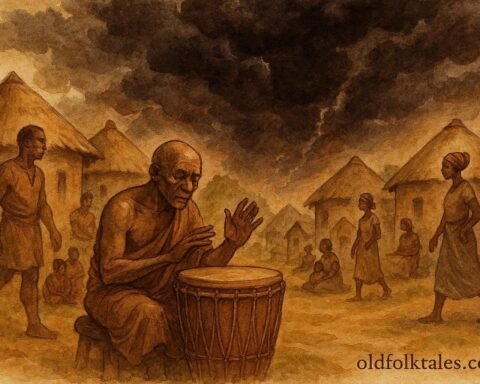
The sultan’s greatest treasure was not gold from distant lands or precious stones from far-off mountains, but a wondrous drum carved from the sacred cedar trees of the desert and covered with the finest camel hide, tanned to perfection under the scorching Libyan sun. This magical instrument possessed powers that surpassed all earthly wealth, when beaten with the proper rhythm, it would instantly conjure magnificent feasts that could satisfy the hunger of entire tribes.
Tables would materialize as if summoned by djinn, laden with the most delicious foods of the desert lands: steaming couscous fragrant with saffron and cinnamon, sweet dates that glistened like amber jewels, tender roasted lamb seasoned with desert herbs, golden honey cakes that melted on the tongue, plump olives pressed from ancient groves, and cool camel’s milk that refreshed even the most weary desert traveler.
Also read: The Sultan and Three Sisters
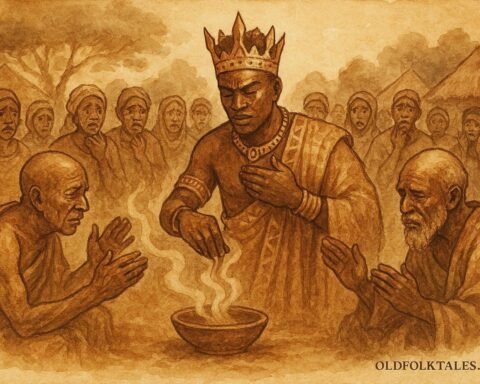
Whenever hostile tribes declared war against Tripoli, Sultan Yusuf would employ his magical solution to conflict. Instead of rallying his warriors and sharpening their scimitars, he would invite the would-be invaders to his great courtyard. As the confused tribal warriors stood ready for battle beneath the blazing desert sun, the sultan would beat his drum, and warfare would transform into celebration. The enemies found themselves seated at magnificent tables, their bellies full and their hearts content, their anger dissolving like morning mist in the desert heat.
This extraordinary approach to diplomacy kept the entire region peaceful and prosperous. Sultan Yusuf was blessed with great wealth, vast groves of date palms that provided shade and sustenance, herds of camels that were the envy of all the desert peoples, great storehouses filled with golden wheat from the fertile coastal regions, and many wives and children who filled his palace with joy and laughter.
Every season, the sultan would host grand celebrations that drew not only his human subjects but also the creatures of the desert. In those blessed days, gazelles with their graceful movements, majestic lions with their golden manes, swift ostriches with their powerful legs, and clever jackals with their knowing eyes would come to feast alongside humans, for harmony reigned between man and beast in Sultan Yusuf’s kingdom.
Though all envied the sultan’s magical drum and longed to possess its power, none dared attempt to take it from such a wise and beloved ruler. However, the drum carried within it a terrible curse that the sultan guarded as carefully as he did the instrument itself: if the owner ever stepped across a broken palm branch lying in his path or stumbled over driftwood scattered by desert storms, the magic would turn malevolent. Instead of providing nourishment, fierce desert spirits with burning whips would materialize to beat the drum’s owner and all who dared to feast with him.
One scorching afternoon, when the sun blazed like a furnace in the cloudless sky, Fatima, one of the sultan’s cherished wives, made her way to the palm-fringed oasis to bathe her young daughter. The child suffered from painful sores that covered her delicate skin, and the cool, healing waters of the oasis offered the only relief from her torment.
High above in the swaying fronds of a towering date palm, Abu Dabbus the tortoise worked industriously, his weathered hands carefully cutting down the ripest dates for his modest meal. As he labored in the desert heat, one perfect date slipped from his grasp and tumbled through the air, landing directly before the sick child with a soft thud on the sandy ground.
The little girl’s eyes brightened at the sight of this unexpected treasure, and she began to cry for it with the persistence that only a suffering child can muster. Fatima, seeing no harm in the fallen fruit and desperate to comfort her ailing daughter, picked up the date and placed it gently in the child’s eager hands.
Abu Dabbus, who had been watching from his lofty perch, climbed down the rough palm trunk with deliberate movements, his ancient eyes gleaming with sudden opportunity. The tortoise had long harbored secret dreams of possessing the sultan’s magical drum, and now fortune had placed the perfect scheme within his reach.
“Where is my date, woman?” he demanded, his voice carrying the righteous indignation of the wronged. “You have stolen from me, taking food from the mouth of a poor desert dweller!”
Fatima, though startled by his accusation, maintained her composure with royal dignity. “I thought the date had simply fallen from the tree,” she explained calmly. “I meant no theft. If you believe I have wronged you, let us go before my husband the sultan, who is both just and generous.”
True to her word, Fatima brought Abu Dabbus before Sultan Yusuf in the cool shadows of the palace courtyard, where fountains played softly and the desert heat was held at bay by thick walls and flowing silk curtains. She explained the situation with grace and honesty, leaving nothing hidden from her husband’s wise judgment.
Sultan Yusuf, ever fair and generous in his dealings, offered the tortoise numerous forms of compensation for his claimed loss. He presented glittering coins that caught the desert light like captured stars, fine camels with coats that shone like silk, and bolts of precious cloth woven by the most skilled artisans of Tripoli. Each generous offer the cunning tortoise rejected with theatrical dismay, shaking his ancient head sorrowfully.
“What will satisfy you, Abu Dabbus?” asked the puzzled sultan, his patience wearing thin under the desert sun. “Name anything your heart desires, and it shall be yours.”
The tortoise’s eyes gleamed with triumph as he pointed one gnarled finger directly at the magical drum. “That instrument is the only compensation that will heal the wound you have caused to my poor spirit,” he declared with false humility.
To end this troublesome dispute and restore peace to his household, Sultan Yusuf reluctantly agreed. “Very well, take the drum,” he said with resignation. But in his frustration with the tortoise’s unreasonable demands, he deliberately chose not to reveal the terrible curse that could transform blessing into punishment.
Abu Dabbus could barely contain his elation as he carefully carried his prize through the winding streets of Tripoli to his humble dwelling near the city’s edge. “My beloved family,” he announced to his wife and children, his voice trembling with excitement, “we have risen from poverty to wealth beyond our wildest dreams! Never again shall we know hunger or want, for this magical drum will provide all the food and drink our hearts could desire!”
His family erupted in joyful celebration, and the tortoise immediately set about demonstrating their new fortune. He beat the drum with the same careful rhythm he had observed the sultan use, and instantly their modest home filled with a feast more magnificent than anything they had ever imagined. For several blissful days, they lived like desert royalty, their bellies full and their spirits soaring with newfound prosperity.
Intoxicated by his sudden wealth and the respect it brought him, Abu Dabbus decided to display his riches to the entire kingdom. He sent invitations throughout the land, calling all people and creatures to witness a grand feast at his humble dwelling. Most recipients laughed at such presumption from one they knew as a poor tortoise barely able to feed his own family, but Sultan Yusuf, understanding the true power of the drum, came to observe what would unfold.
When Abu Dabbus beat the drum before his few gathered guests, the feast appeared as magnificent as any royal banquet. Word spread like wildfire across the desert of the tortoise’s miraculous hospitality, and suddenly everyone regarded him as one of the wealthiest beings in all of Libya. Abu Dabbus reveled in his newfound status, but prosperity without wisdom breeds destruction.
The tortoise grew lazy and boastful, spending his days drinking fermented camel’s milk wine and bragging about his magical powers instead of exercising the caution such responsibility demanded. One evening, after consuming too much of the intoxicating drink at a distant oasis, he staggered home through the desert darkness, his vision blurred and his steps unsteady.
In his drunken stupor, Abu Dabbus failed to notice a fallen palm branch lying across his sandy path. Without thinking, he stepped directly over the cursed obstacle, unknowingly breaking the sacred condition that protected him from the drum’s terrible wrath.
Initially, nothing seemed different. The tortoise reached his home and collapsed into deep sleep, unaware that he had sealed his family’s doom. But when morning came and hunger awakened his household, the devastating truth would be revealed in the most brutal way possible.
When Abu Dabbus beat the drum expecting their usual morning feast, fierce desert spirits materialized instead, hundreds of supernatural beings with eyes like burning coals and whips that cracked like thunder. Without mercy, they began lashing the tortoise and his family until their screams echoed across the morning desert.
After the spirits vanished, leaving the family bruised and bewildered, Abu Dabbus lay consumed with rage and wounded pride. “This is most unjust!” he raged to the unforgiving desert sky. “When I invited all to feast, only a few came, yet they enjoyed the finest delicacies! Now when I seek to feed my own family, I receive only punishment! If I must suffer, then all shall share my fate!”
Driven by spite and the desire for revenge, the tortoise immediately sent new invitations throughout Libya, promising an even grander celebration. This time, learning from their previous oversight, people came in vast numbers, entire tribes, families with their sick and elderly, even the desert beasts drawn by tales of the tortoise’s legendary hospitality.
But Abu Dabbus had prepared for treachery. Before his guests arrived, he sent his wife and children far away to safety among distant relatives, knowing full well the horror he was about to unleash. When everyone had gathered in his courtyard, everyone except the wise Sultan Yusuf and his family, who had sent polite excuses, the tortoise beat the drum with malicious satisfaction.
The desert spirits appeared instantly, their supernatural fury unleashed upon the innocent crowd like a sandstorm of vengeance. Abu Dabbus quickly concealed himself behind a large water jar, watching in grim satisfaction as his guests received the same brutal punishment he had endured. The spirits’ whips fell like desert lightning, and screams of pain filled the air for what seemed like hours.
Only the mighty lion managed to escape the supernatural assault. His keen instincts recognized danger the moment the spirits materialized, and with one tremendous leap, he bounded clear over the courtyard walls and disappeared into the vast desert, his golden form vanishing like a mirage.
When Abu Dabbus felt satisfied with the suffering he had witnessed, he emerged from his hiding place and allowed his battered guests to flee into the desert night. The people’s anger burned hotter than the desert sun at noon, and they confronted the tortoise with such fury that he feared for his very life.
Recognizing that his position had become utterly untenable and that his revenge had brought him only greater enemies, Abu Dabbus made the difficult decision to return the cursed drum to Sultan Yusuf the very next morning.
Standing before the sultan with the drum clutched in his trembling hands, the tortoise spoke with carefully chosen words. “Your Majesty, I find myself deeply dissatisfied with this instrument and wish to exchange it for something more suitable to my humble station. I would be most grateful to accept camels, dates, cloth, or anything else of equivalent value.”
Sultan Yusuf refused this proposal firmly, but moved by some small measure of pity for the tortoise’s obvious distress, he offered an alternative gift that might yet save Abu Dabbus from complete ruin. “I shall give you a magical fig tree,” the sultan announced, “that will provide sustenance for you and your family. Each day it will drop fresh bread and sweet camel’s milk upon the desert floor, but you must observe one sacred condition: gather food only once per day, and never return for more.”
Abu Dabbus accepted this generous offer with profound gratitude, seeing it as his salvation from the disaster he had created. He brought his wife and children to the miraculous tree, and together they gathered enough bread and milk to satisfy their entire family for the day. That evening, they feasted modestly but happily, believing their troubles were finally behind them.
However, among Abu Dabbus’s children lived one particularly greedy son whose curious nature and insatiable appetite would prove to be the family’s final undoing. Unable to stop wondering about the source of their renewed prosperity, the boy devised a clever plan to discover his father’s secret.
The cunning child filled a small pouch with fine desert sand and secretly attached it to his father’s robes, creating a tiny hole so the sand would leave a trail across the dunes. The next morning, he followed this sandy path from a safe distance, taking great care to remain hidden behind rocks and scrub brush until he witnessed his father gathering food from the magical fig tree.
Armed with this knowledge, the greedy son waited until the following day. After Abu Dabbus had collected the family’s daily portion of bread and milk, the boy gathered his brothers and led them secretly to the tree. Together, they collected much more food than their family could ever consume, breaking the sacred condition and destroying the protective magic that sustained them.
At dawn, when the tortoise arrived for his daily gathering, he found only a dense thicket of thorny acacia trees where the generous fig tree had stood. His heart sank like a stone dropped into a deep well as he realized the devastating truth, someone had violated the sacred rule and gathered food twice in the same day.
With heavy steps that seemed to echo his crushing disappointment, Abu Dabbus returned home and called his entire family together. Though they all denied any knowledge of wrongdoing, their father’s wise eyes saw through their desperate deceptions.
Standing before the thorny thicket that had replaced their source of life, Abu Dabbus spoke with the finality of desert judgment. “My dear wife and children,” he said, his voice breaking with sorrow deeper than any oasis, “I have done everything within my power to provide for you and secure our future. But your actions have broken the sacred trust that sustained us. From this day forward, you must make your home beneath these thorny acacia trees and find what meager sustenance you can from their sparse offerings.”
And so it came to pass that Abu Dabbus and his family took up residence beneath the prickly desert shrubs, where their descendants remain to this day. This is why, if you venture into the Libyan desert and look carefully among the thorny acacia groves, you will always find tortoises making their homes in the sparse shade, for they have nowhere else in the vast desert to call home.
The Moral of the Story
This Libyan tale teaches us that greed, deception, and the abuse of magical gifts inevitably lead to loss and suffering. Sultan Yusuf’s story demonstrates that generosity and peaceful solutions are more powerful than force or violence, while Abu Dabbus’s downfall shows how envy and dishonesty ultimately destroy the very blessings we seek to obtain. The story warns that magical powers come with sacred responsibilities, and those who violate these trusts will find themselves in worse circumstances than before. Most importantly, it reminds us that the selfish actions of one family member can bring consequences that affect the entire family for generations.
Knowledge Check
Q1: Who is Sultan Yusuf in this Libyan folktale from Tripoli? A: Sultan Yusuf is a wise and peaceful ruler of ancient Tripoli who possessed a magical drum carved from desert cedar and covered with camel hide. He used this drum to avoid wars by creating magnificent feasts for his enemies, keeping his desert kingdom peaceful and prosperous.
Q2: What special powers does the magic drum possess in this Libyan desert tale? A: The magical drum instantly creates elaborate feasts with traditional Libyan foods like couscous, dates, roasted lamb, honey cakes, olives, and camel’s milk when beaten properly. However, if the owner steps over a fallen palm branch or driftwood, desert spirits with whips appear to beat everyone present.
Q3: How does Abu Dabbus the tortoise obtain the sultan’s drum in this North African legend? A: Abu Dabbus tricks Sultan Yusuf by creating a dispute over a fallen date that the sultan’s wife Fatima gave to her sick child. When offered various compensations like money, camels, and cloth, the tortoise refuses everything except the magical drum, which the sultan gives him without revealing its dangerous curse.
Q4: What role does the magical fig tree play in this Libyan folklore? A: The fig tree represents a second chance and the importance of moderation. Sultan Yusuf gives it to Abu Dabbus as a replacement for the drum, providing daily bread and milk but requiring restraint, gathering food only once per day. When this condition is broken by the tortoise’s greedy son, the tree transforms into thorny acacia.
Q5: What cultural elements from Libya and the Sahara Desert are featured in this folktale? A: The story includes traditional Libyan/North African foods (couscous, dates, lamb, camel’s milk), desert animals (gazelles, lions, ostriches, jackals), Tripoli as the setting, desert landscapes with oases and date palms, and the cultural importance of hospitality and tribal peace-making in Bedouin society.
Q6: How does the desert setting influence the moral lessons of this Libyan myth? A: The harsh desert environment emphasizes themes of survival, the importance of water and food sources, and the consequences of breaking sacred trusts in a land where resources are scarce. The transformation from a life-giving fig tree to thorny acacia represents how abundance can become hardship when we abuse the gifts we’re given in the unforgiving desert.