In the time before death became permanent, in the days when the world was still young and malleable, there existed an evil entity known as Jok. This dark force was cunning and malevolent, operating under the cover of darkness when the village was most vulnerable. Night after night, when the cooking fires had died down to embers and families lay sleeping on their mats, Jok would creep silently into the village like a shadow moving against shadows.
The people of the village lived in constant dread of these nocturnal visits. When Jok came, he would carry away someone from the community, a mother, a father, a child, an elder, and those he took never returned. They would be dead, lost forever to the world of the living. There was no pattern to his taking, no way to predict who would be next. The randomness of it made the terror even worse. Families would wake at dawn to discover that someone they loved had vanished in the night, claimed by Jok’s dark power.
As the losses mounted, the grief and fear in the village transformed into something else: anger. A fierce, burning anger that united the people in their determination. How long would they continue to live like this, losing their loved ones one by one to this evil force? How many more would have to die before something was done?
Don’t stop yet! See our complete East African folktales collection
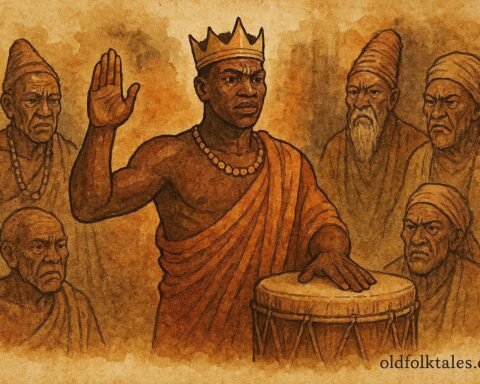
The village elders called a meeting. Everyone came, men, women, young warriors, experienced hunters, the old and the young. They gathered in the center of the village under the wide sky, their faces grave with purpose. The discussion was heated and passionate. People spoke of their losses, of their fear, of their children who cried at night, terrified that Jok would come for them. But through all the emotion, one clear consensus emerged: something had to be done to stop Jok from killing people. They could not continue living this way.
Many suggestions were offered. Some proposed building protective barriers around the village. Others suggested keeping watch all night with fires burning. But these were temporary measures, defensive gestures that would not solve the fundamental problem. Finally, someone spoke the truth that everyone had been thinking but hesitating to say aloud: the only way to truly stop Jok from killing people was to kill Jok himself.
The assembly fell silent at these words. To kill Jok, the very embodiment of death and evil seemed almost impossible. Who among them had the courage, the skill, the strength to face such a creature? The task would require not just physical prowess but tremendous bravery, for whoever confronted Jok would be facing death itself.
Into this heavy silence, two men stepped forward. They were both known in the village as brave warriors, men who had proven themselves in hunts and in defending the community. But they were also notably different from one another. One of these volunteers was right handed, as most people were, favoring his right side in all tasks from eating to fighting. The other man was left handed, a rarer trait that marked him as different, but no less capable. Both men declared themselves ready to face Jok and end his reign of terror over their village.
The community accepted their offer with gratitude and trepidation. These two would represent all of them, would stand between the village and the evil that had plagued them for so long. Each man was given a spear, not ordinary spears, but weapons crafted specifically for this crucial mission. The shafts were long and strong, made from the straightest wood. The blades were huge and sharp, meticulously honed until they could pierce anything. These were killing weapons, designed for a deadly purpose.
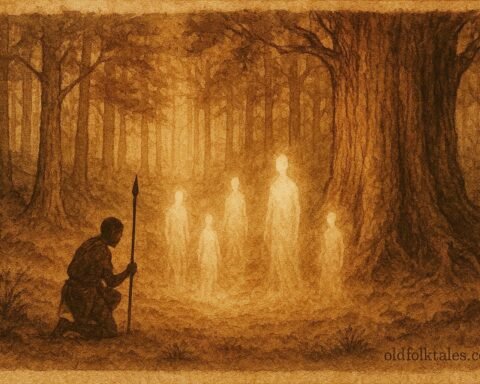
As the sun began its descent toward the horizon, the two men left the village and made their way to a nearby open grassland. This was the route that Jok used on his nightly missions, the path he traveled when coming to the village to claim his victims. The grassland was exposed, offering clear sight lines in all directions. Here, the men would wait for Jok to appear.
They positioned themselves carefully, checking their spears, testing their grip, preparing mentally for what was to come. The air grew cooler as darkness approached. The first stars appeared in the deepening sky. And then, as the light faded further, they saw him.
Jok appeared in the distance, moving across the grassland toward the village. His form was distinctive and unsettling, he swayed from side to side as he walked, an odd, serpentine motion that was his characteristic habit. Back and forth, back and forth, like a predator stalking toward its prey. The sight of him stirred both fear and determination in the hearts of the two men.
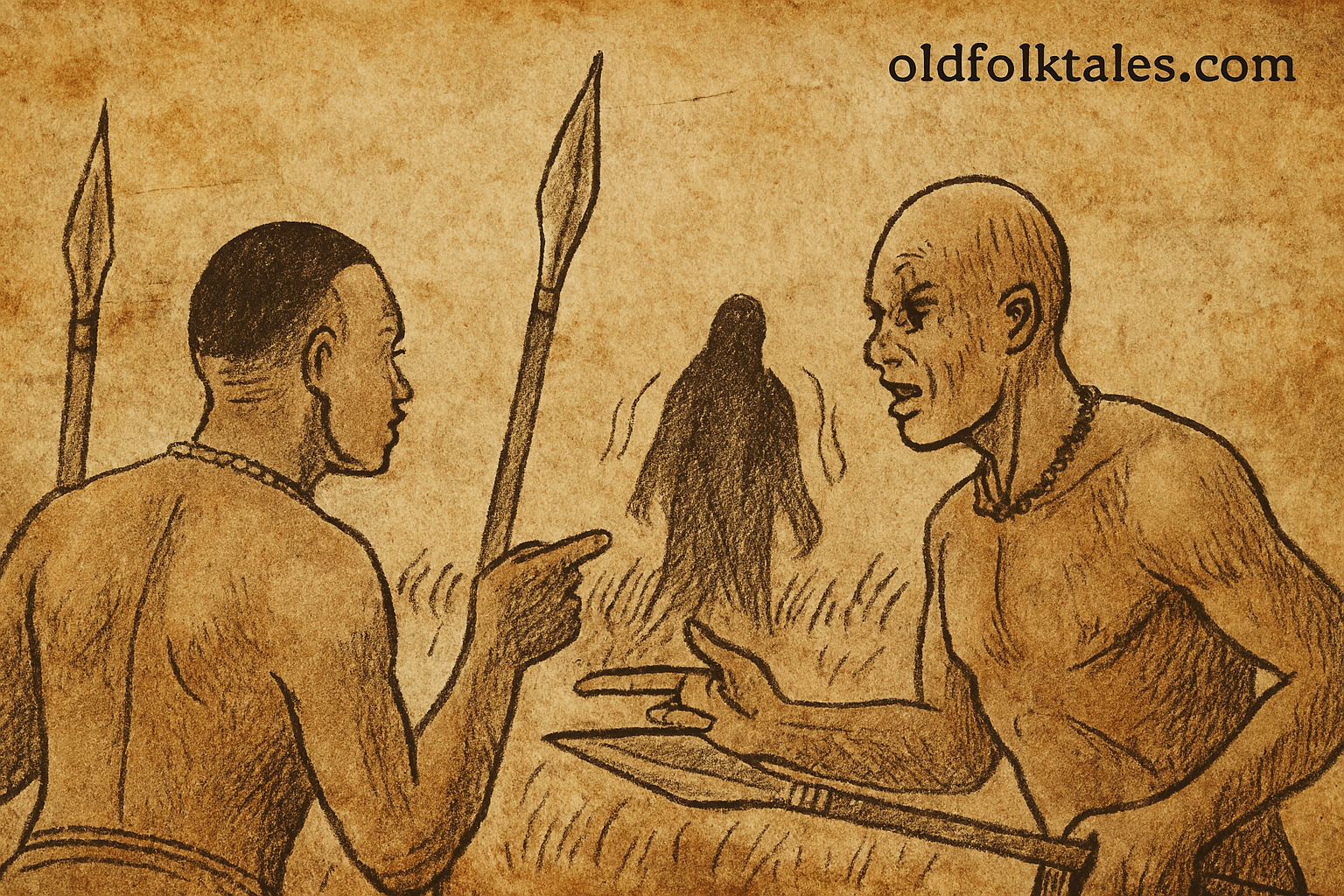
This was the moment they had prepared for. This was their chance to save their people. But suddenly, instead of acting with unified purpose, the two men began to argue.
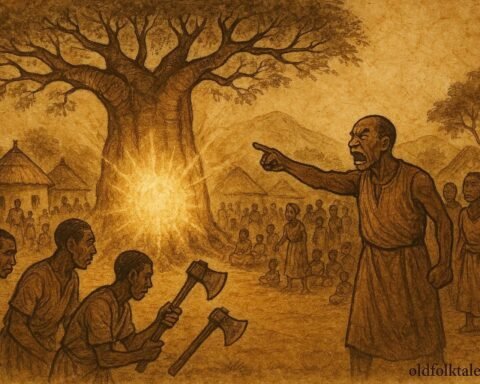
The right-handed warrior gripped his spear firmly and declared that he should be the one to throw at Jok. He was ready, his aim was true, and he wanted to deliver the killing blow. But his left-handed companion immediately refused this plan. No, he insisted, he should be the one to kill Jok. He had volunteered for this mission just as the other had, and he deserved the honor and responsibility of ending the evil one’s life.
Back and forth they argued, their voices rising in the darkness. Who had the better position? Who had thrown more accurately in the past? Who deserved the glory of this kill? As they disputed, precious moments slipped away. Jok continued his swaying approach, drawing nearer to the village with each passing second.
The disagreement stretched on, becoming increasingly heated. Neither man wanted to yield to the other. Pride, honor, and the desire for recognition clouded their judgment. They had come here with a single purpose, but now that purpose was being undermined by their inability to work together.
Finally, after what seemed like an eternity of argument, the right-handed man relented. Perhaps he grew tired of the dispute, or perhaps he recognized that they were running out of time. Whatever his reasoning, he agreed to let the left-handed man take the throw. He stepped back, yielding the position.
The left-handed warrior stepped forward, hefting his spear with its long shaft and huge, sharp blade. He took aim at Jok’s swaying form in the darkness. This was his moment. He drew back his arm, focused all his strength and skill, and hurled the spear with all the force he could muster.
The spear flew through the air, a dark streak against the night sky. But the throw, perhaps affected by the pressure of the moment, perhaps compromised by the time lost to arguing, perhaps simply unlucky, the throw missed its mark. The blade passed harmlessly by Jok, embedding itself in the ground beyond.
Jok, realizing he was under attack, immediately fled. His swaying form moved with sudden speed, disappearing into the darkness, escaping the trap that had been set for him. The chance was gone. The opportunity to end death itself had been lost.
The two men stood in the grassland, their mission failed, knowing they would have to return to the village with devastating news. They had been given one chance to save their people from Jok’s predations, and they had squandered it through discord and pride.
And that is why people have been dying ever since that night. Because two men could not agree on who should act, because they let argument and ego interfere with their shared purpose, death escaped and has remained in the world to this day. Jok still comes for people, and those he takes never return. All because of one missed throw, one moment of discord when unity was needed most.
The Moral Lesson
This Dinka folktale teaches a profound lesson about the destructive power of pride, discord, and the failure to cooperate when unity is essential. The two warriors had the same goal and the means to achieve it, but their inability to set aside personal glory for the common good resulted in catastrophic failure. The story reminds us that when facing great challenges, human divisions, whether based on ego, competition for recognition, or petty disputes, can doom even the most important missions. Death’s permanence in our world, according to this tale, stems not from the strength of evil but from human weakness and disunity. It is a cautionary tale about how opportunities, once lost due to discord, cannot be reclaimed.
Knowledge Check
Q1. Who is Jok in this Dinka folktale and what did he do to the village?
Jok is the Evil One, a malevolent entity who would come at night while people slept and carry away villagers, who would then be dead and never return. He represents death itself in this origin story, terrorizing the community through his unpredictable nighttime raids that claimed lives without warning.
Q2. Why did the village decide that Jok himself had to be killed?
After losing many people to Jok’s nocturnal visits, the villagers became angry and held a meeting to find a solution. They concluded that the only effective way to stop Jok from killing people was not to defend against him but to eliminate the threat permanently by killing Jok himself, thus hoping to end death’s reign over their community.
Q3. What was significant about the two volunteers who offered to kill Jok?
The two brave men who volunteered were distinguished by their handedness, one was right handed and the other was left handed. This detail emphasizes their differences and individuality, which later becomes significant when their inability to cooperate despite having the same goal leads to the mission’s failure.
Q4. Where did the two warriors wait for Jok and what weapons did they carry?
The warriors positioned themselves in a nearby open grassland, which Jok regularly crossed on his nightly missions to the village. Each man carried a spear with a long shaft and a huge, sharp blade, weapons specifically designed for this crucial task of confronting and killing the embodiment of death.
Q5. What caused the warriors’ mission to fail?
Instead of acting with unity and purpose when Jok appeared, the two men began arguing about who should throw the spear at Jok. Their lengthy disagreement over who deserved the honor of the kill wasted precious time. When the left handed man finally threw his spear, he missed, allowing Jok to flee and escape permanently.
Q6. What does this Dinka origin story explain about death in the world?
This folktale serves as an origin myth explaining why death is permanent and continues to claim human lives. It teaches that death persists in the world not because it is invincible, but because humanity had one chance to eliminate it and failed due to discord and pride. The story attributes death’s ongoing presence to human weakness rather than the strength of evil.
Source: Dinka folktale, South Sudan (from the collection retold and translated from Dinka by Atem Yaak Atem)