In the rugged valleys of the Atlas Mountains, where snow touched the peaks in winter and sun scorched the rocks in summer, there lived an Amazigh princess whose beauty was spoken of in villages near and far. Yet it was not her beauty alone that made her beloved. She was known for her kindness, her sense of justice, and the way she walked among her people not as a ruler above them but as a sister and a daughter of the land.
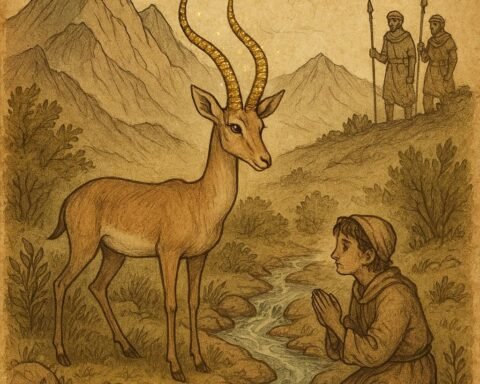
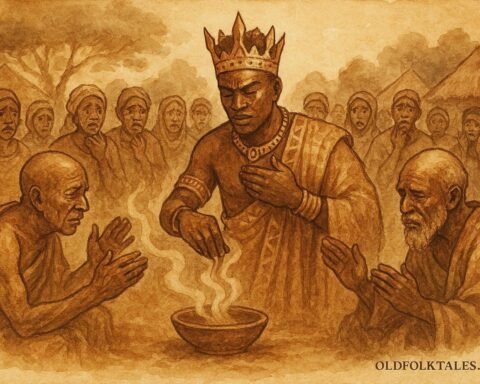
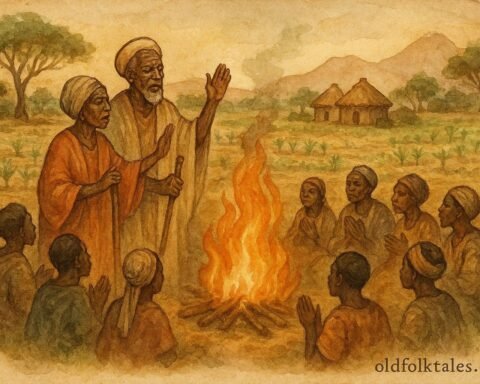
One year a terrible drought struck the mountains. The rains did not come, the rivers dried to dust, and the animals weakened as grass disappeared. Children cried at night from thirst, and the elders prayed to the skies. The people went to the princess, hoping she might find a way to save them. Though her heart was heavy, she listened patiently and promised, “I will not rest until water flows again for you, my people.”
Want to dive deeper? Read more North African folktales today
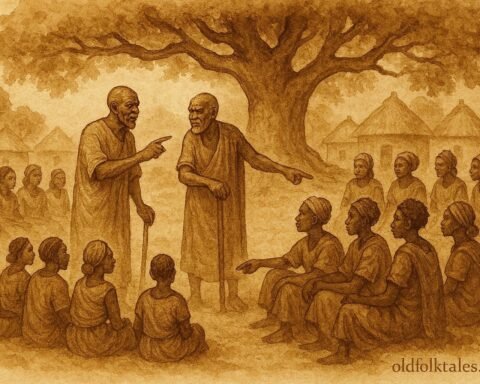
The princess went to the wisest elder of the village, who told her of an ancient tale. Far beneath the mountain, hidden by time and guarded by spirits, there was said to be a spring of clear water that never ran dry. But the path to this spring was dangerous, and only one who carried a pure heart and the courage of sacrifice could reach it. Many had tried, but none had returned.
The princess made her decision at once. “If the spring is hidden, then I will seek it. If sacrifice is required, then let it be mine. For what is a ruler without her people?” The villagers wept, begging her not to risk her life, but she stood firm. With only a staff in her hand and a small lamp for light, she set out toward the mountain cave that was said to hold the path.
Inside the cave, the air grew cold and heavy. Shadows danced against the walls as the princess walked deeper, whispering prayers in the Amazigh tongue. The path was steep, filled with jagged stones and sudden drops. Strange voices echoed around her, the whispers of spirits who guarded the spring. “Turn back, child of men,” they hissed. “This place is not for you.”
But the princess walked on, her heart steady. She remembered the thirsty faces of her people, the cries of children, the prayers of the elders, and she pressed forward. The spirits grew angrier. Rocks shifted, the ground trembled, and dark shapes moved in the corners of the cave. Yet with every step, her courage burned brighter.
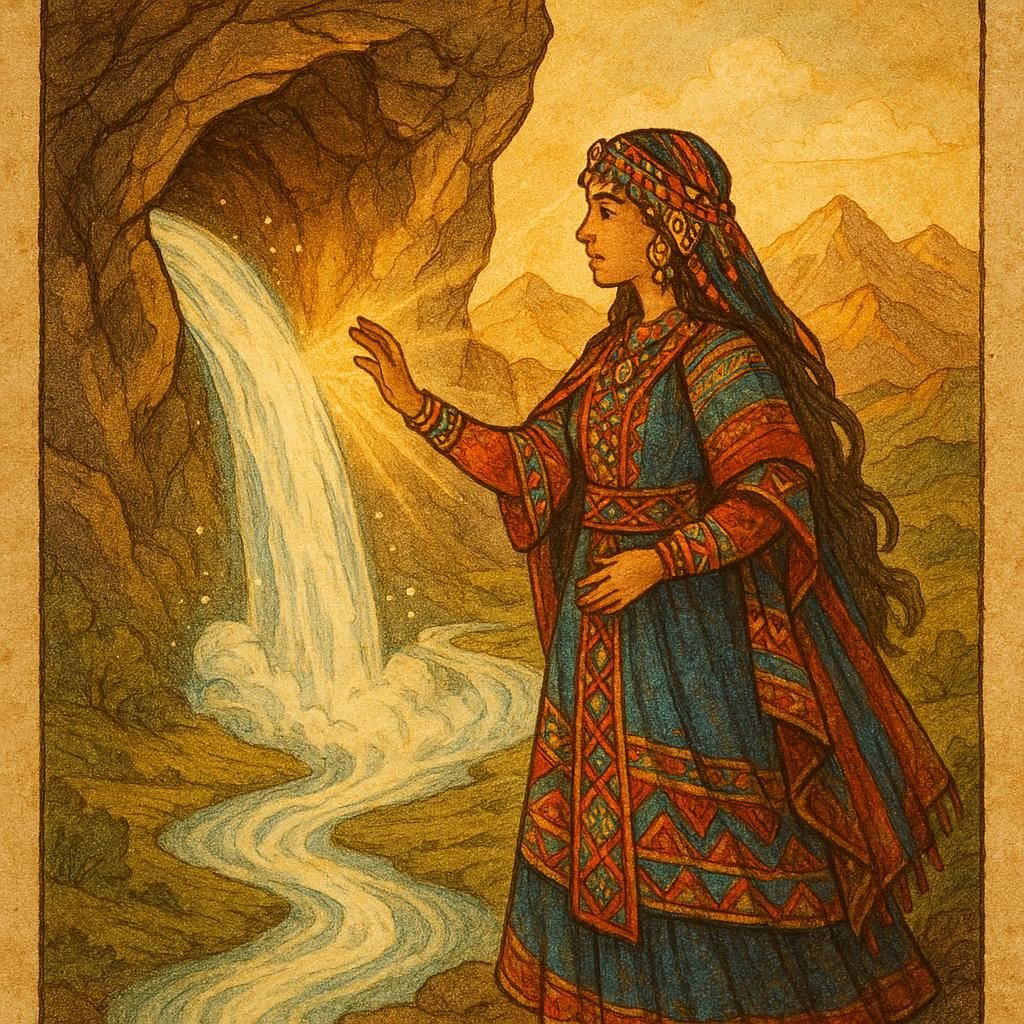
Finally, she came to a great door carved from stone. Upon it were written words in an old Amazigh script: “To take the gift of life, life must be given.” The princess understood at once. The spring could be opened, but only through sacrifice. Tears filled her eyes as she thought of the world above, but she did not hesitate. She knelt and whispered, “Let my life be the price if it means my people shall live.”
As soon as she spoke, the stone door trembled and opened. Behind it, a spring burst forth, shining like liquid silver, pouring through the cave and rushing out into the valley below. The water spread quickly, filling the riverbeds, feeding the soil, and reviving the land.
The people outside saw the miracle unfold. They danced with joy, drank deeply, and gave thanks to the princess who had saved them. But when they searched for her, she was nowhere to be found. Her staff was left at the cave’s entrance, and her lamp flickered one last time before going out. The villagers realized then that she had given her life so they might live.
From that day forward, the spring never ran dry. The people called it “The Princess’s Gift”, and they told her story to every child so that no one would forget the sacrifice that had saved the land. The Amazigh say that when the wind moves softly through the valley at night, it is the voice of the princess, still watching over her people, reminding them to live with courage, kindness, and love.
Moral of the Story: True leadership is not measured by power or wealth but by the willingness to sacrifice for others. The Amazigh Princess teaches us that kindness and courage can bring life even in the harshest of times.
Knowledge Check
What caused the people in the Amazigh Princess story to suffer?
They suffered because a drought dried the rivers, killed crops, and left the people and animals without water.Why did the villagers go to the Amazigh Princess for help?
They trusted her wisdom and kindness, believing she could find a way to save them from the drought.What was hidden beneath the mountain according to the elder’s tale?
A magical spring of water guarded by spirits, said to never run dry.How did the Amazigh Princess respond to the warning of the spirits?
She ignored their threats and walked on with courage, remembering her people’s suffering.What was written on the stone door at the end of the cave?
It said, “To take the gift of life, life must be given.”What happened after the princess made her sacrifice?
The hidden spring burst forth, bringing water and life back to the land, while the princess disappeared forever.
Source: Amazigh (Berber) folktale from the Atlas Mountains, Morocco. Recorded in Edward Westermarck, Ritual and Belief in Morocco (1926).