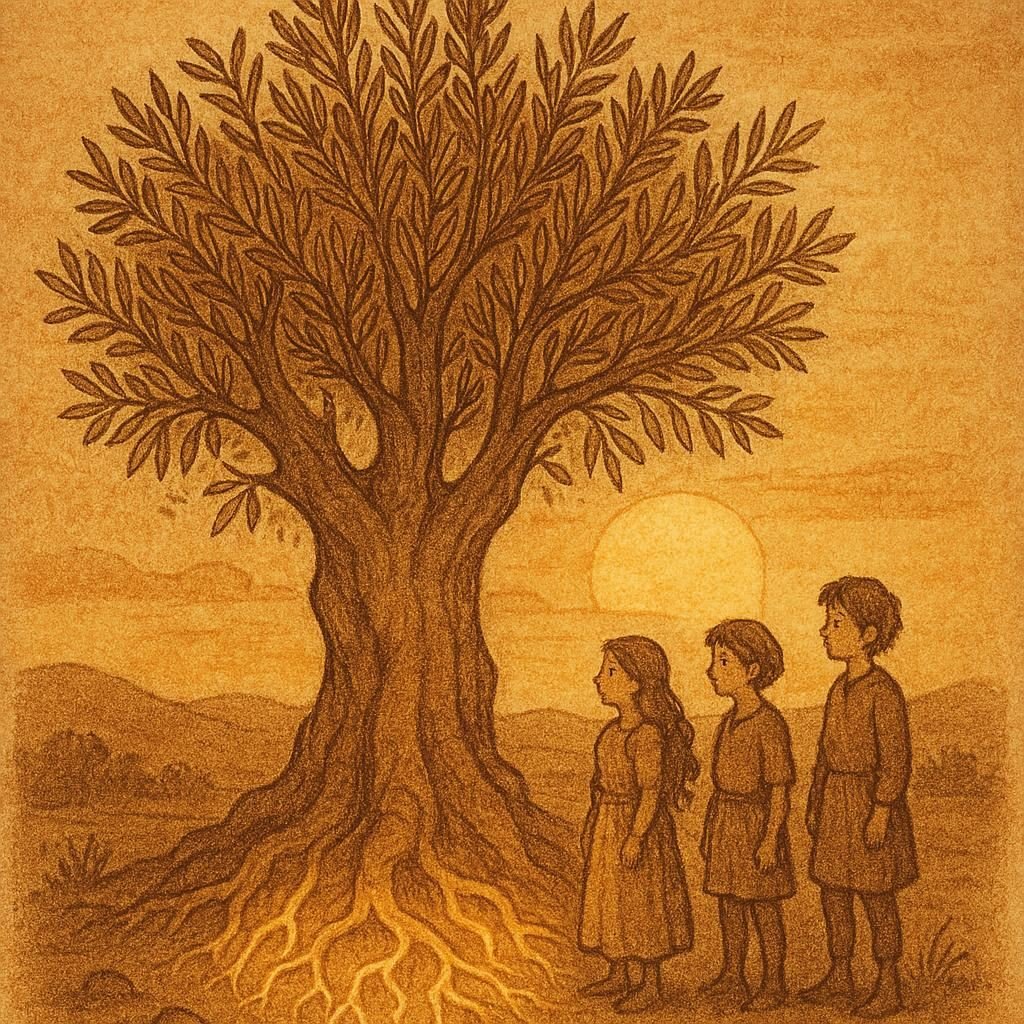
In the warm golden hills of Monastir where the sea breeze carried the scent of salt and olives there stood a great olive tree older than any living soul. Its trunk was so wide that two men could barely circle it with their arms and its bark twisted like the lines on an old man’s hands. The villagers said the tree had seen generations rise and fall, storms and wars, births and weddings. It was called Zaytouna al Ajdad, meaning The Ancestors’ Olive Tree.
Long ago, a man named Si Mahmoud had planted that tree. He was known across Monastir as a wise and kind man who never turned away a hungry traveller. When he died, his family buried him near the tree, believing his spirit would protect it. Since then, every new branch that sprouted was seen as a blessing and every olive that grew was said to carry the wisdom of the past.
Years passed and the world changed. Cars replaced camels, houses grew taller, but the tree still stood, silent, strong and generous. Under its shade lived Si Mahmoud’s descendants, Youssef, Karim and their younger sister Amina. They had grown up climbing its branches, listening to their father’s stories about how the olive tree’s roots reached deep enough to touch their ancestor’s spirit.
Want to dive deeper? Read more North African folktales today
Their father often said, “This tree feeds us because we belong to it. Remember, my children, the olive tree watches. Its heart beats with ours.”
When their father died, his words faded with time. The three siblings inherited the land together, but as the years went by, peace among them began to crumble.
Youssef was the eldest, quiet, strong and proud. He spent most of his life tending the grove, watering the trees and pressing oil in the small mill. Karim, the second brother, was clever and ambitious. He brought new tools and tried modern methods, always saying, “We must move with the times.” Amina, the youngest, was gentle and kind, always trying to keep her brothers close. She still sat under the old olive tree every evening, whispering prayers for their family.
At first, the brothers worked side by side. But greed is like a small seed that grows when not pulled out. Youssef began to feel that since he had stayed and worked, the land belonged more to him. Karim in turn believed that his improvements had made the grove more valuable. Amina tried to remind them of their father’s words, but their tempers had already taken root.
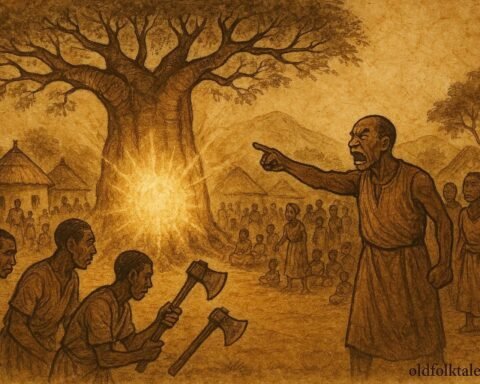
One day during harvest, the argument became fierce. The brothers shouted under the tree as Amina cried and begged them to stop. Youssef slammed his hoe into the soil near the old tree’s roots and shouted, “If this tree causes us trouble, let it fall.”
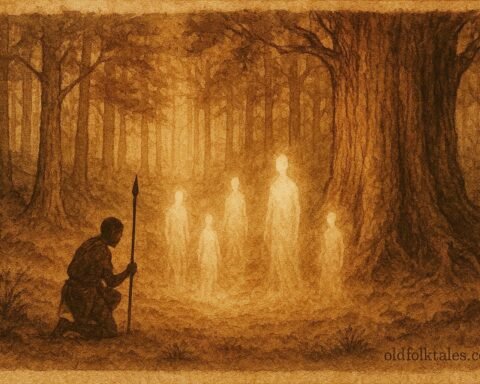
At that moment a strange wind rose from the ground. The air grew cold though the sun was blazing. The branches trembled and the leaves shimmered with silver light. A soft voice came from deep within the earth, calm but sorrowful.
“Why do my children fight over what was meant to unite them?”
The three froze. The earth rumbled again and the olive tree’s trunk began to glow faintly. From its roots came the same voice, clearer this time, old and filled with patience.
“I am Mahmoud, your ancestor. My body feeds these roots, and my spirit guards this tree. For generations I have watched over you. Yet now my children fight for what is already theirs.”
Amina fell to her knees trembling. “Grandfather Mahmoud,” she whispered, “we did not mean to hurt you.”
The voice sighed through the rustling leaves. “The olive tree gives without asking, yet you take without gratitude. You forget that all roots grow from one trunk. You cannot divide what was planted as one.”
Karim dropped his tool and said, “Forgive us, Ancestor. We lost our way.”
The tree’s branches swayed as if nodding. “To be forgiven, you must remember that peace grows like the olive, slowly but strong. You must water it with humility and harvest it with love. Work together again, or the roots will wither and the blessing will fade.”
Then the wind grew still. The tree’s glow faded, and only the soft hum of bees returned to the grove. The brothers stood in silence.
Amina touched the trunk, her eyes filled with tears. “Do you feel that?” she asked softly. “It’s warm. He is still here.”
The next morning, Youssef and Karim went to the grove together. They said nothing for a long while, only listening to the leaves rustling in the morning breeze. Finally, Youssef spoke. “Brother, we were foolish.”
Karim nodded. “Our greed blinded us.”
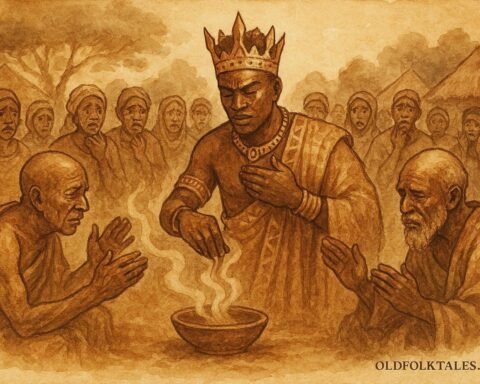
From that day forward, they worked side by side again. They shared the harvest and rebuilt the family press. Amina kept the peace, and each year they poured the first drops of golden oil at the base of the old tree, saying, “To our ancestor, whose roots still feed us.”
Seasons came and went. The olive tree bloomed more richly than before, and its branches spread farther across the hill. Villagers from nearby towns began to visit, calling it The Tree That Speaks. Some came seeking blessings, others came simply to sit beneath its shade. The family grew known not for their wealth but for their harmony.
As Youssef grew old, he would tell his grandchildren, “Never raise your hand in anger beneath this tree. It listens.” Karim, who had once been full of pride, became the storyteller of the family. He often said, “The olive gives fruit only when its branches work together. Remember that.”
Even after the brothers passed away, their descendants continued to care for the grove. To this day, old farmers in Monastir say that at dusk, when the wind is soft and the light turns gold, you can hear the tree whisper. Some swear it calls their names. Others say it hums like a voice in prayer. But all agree that it reminds them of a simple truth, a family that forgives stays strong, just as a tree stands firm when its roots are one.
Moral Lesson:
The Olive Tree’s Secret teaches that the roots of a family, like the roots of a tree, cannot grow in pride and anger. Only through unity, forgiveness and gratitude can blessings endure. Our ancestors live through the harmony we keep and the love we share.
Knowledge Check
Where does The Olive Tree’s Secret take place?
It takes place in the olive growing hills of Monastir, Tunisia.Who were the main characters in the story?
The main characters were Youssef, Karim and their sister Amina, descendants of Si Mahmoud.Why did the brothers begin to fight?
They argued over who should own their late father’s olive grove, allowing greed and pride to divide them.What happened when Youssef struck the olive tree?
The spirit of their ancestor Si Mahmoud spoke through the roots, warning them to stop fighting and seek peace.How did the siblings make peace after the spirit spoke?
They asked for forgiveness, shared the work again and offered the first olive oil to honour their ancestor each year.What is the main lesson of this Tunisian folktale?
It teaches that family unity and respect for one’s roots are the true sources of lasting blessing and harmony.
Source: Folk legend from Monastir, Tunisia. Cited in Paroles d’Oliviers: Contes du Maghreb by Nadia Ferjani (1978).