There came a time in the life of the kingdom when everything appeared strong on the surface, yet something unseen held it all together. The land was fertile, the cattle were many, and the people lived under the authority of a king whose power was not only political but sacred.
In that kingdom, kingship was not an ordinary position. The ruler was believed to stand between the people and the unseen world. His actions were guided by laws that went beyond human understanding, laws that had been established by the ancestors and preserved through generations.
Among these laws were sacred taboos, rules that could not be broken without consequence. They were not written, yet everyone knew them. The king himself was bound by them more than anyone else. His strength, his authority, and the stability of the kingdom depended on his obedience.
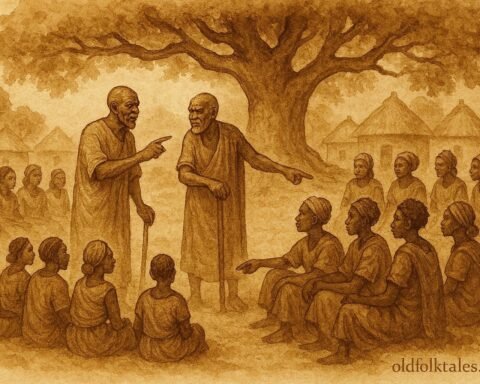
The elders often said, “The king does not belong only to himself. He belongs to the people, to the land, and to the ancestors.”
For many years, the king ruled wisely. He followed the customs as he had been taught, observing the rituals that maintained harmony between the kingdom and the spiritual world.
Want more? Read more West African folktales now
Before important decisions, he consulted the elders. During sacred times, he withdrew from public life to perform rituals of renewal. He respected the boundaries that had been set for him, understanding that his role required discipline and restraint.
Because of this, the kingdom prospered.
But as time passed, something began to change within him.
The king grew confident in his power. He saw the wealth of his land, the loyalty of his people, and the strength of his authority, and he began to believe that these things came from himself alone.
The rituals that once held deep meaning began to feel like obligations rather than necessities. The taboos that had guided his actions began to seem restrictive.
One evening, after a gathering in which his achievements were praised, the king spoke quietly to himself.
“Why must I continue to follow rules that no one fully understands?” he wondered. “If I am king, should I not decide my own path?”
Not long after, the moment of testing came.
There was a sacred law that forbade the king from performing a certain act during a particular time of the year. This taboo had been observed by all rulers before him. It was said that breaking it would disturb the balance between the kingdom and the unseen forces that protected it.
The elders reminded him as the time approached.
“This is not a law to be taken lightly,” they said. “It has preserved the kingdom for generations.”
The king listened, but his heart was no longer aligned with their words.
When the forbidden time came, the king chose to act against the taboo.
At first, nothing seemed to happen. The kingdom continued as before, and the king felt justified in his decision.
“You see,” he said to himself, “there is no harm in this. The old fears were only stories.”
But the change did not come immediately.
It began quietly, almost unnoticed.
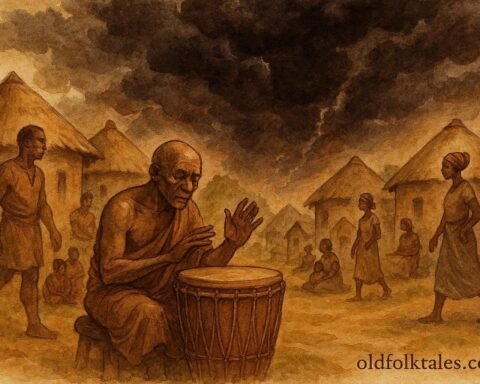
The rains came later than expected. The winds carried an unusual stillness. The animals behaved in ways that unsettled those who observed them.
Then the crops began to fail.
Fields that had always produced abundance yielded less. The soil seemed to lose its strength. The people grew anxious, though they could not yet explain why.
Soon after, unrest spread through the kingdom.
Disputes became more frequent. Neighbors who had once lived in harmony began to argue. Trust weakened, and suspicion took its place.
Even within the royal court, tension grew. Advisors disagreed, and decisions that had once been clear became difficult to make.
The king watched these changes with growing concern.
Then illness came.
It spread among the people, affecting both young and old. The healers worked tirelessly, but their remedies seemed less effective than before.
The kingdom, once a place of stability and strength, began to feel fragile.
At last, the elders came before the king.
They did not accuse him directly, but their words were heavy with meaning.
“Something has disturbed the balance,” they said. “When the order between the seen and unseen is broken, the effects are felt by all.”
The king understood.
He remembered the moment when he had broken the taboo. He recalled the warnings he had been given and the confidence with which he had ignored them.
Now, the consequences stood before him.
For the first time, the king felt the full weight of his responsibility.
He realized that his actions had not been his alone. As king, what he did affected the entire kingdom. His role was not one of freedom, but of duty.
With humility, he turned to the elders.
“What must be done?” he asked.
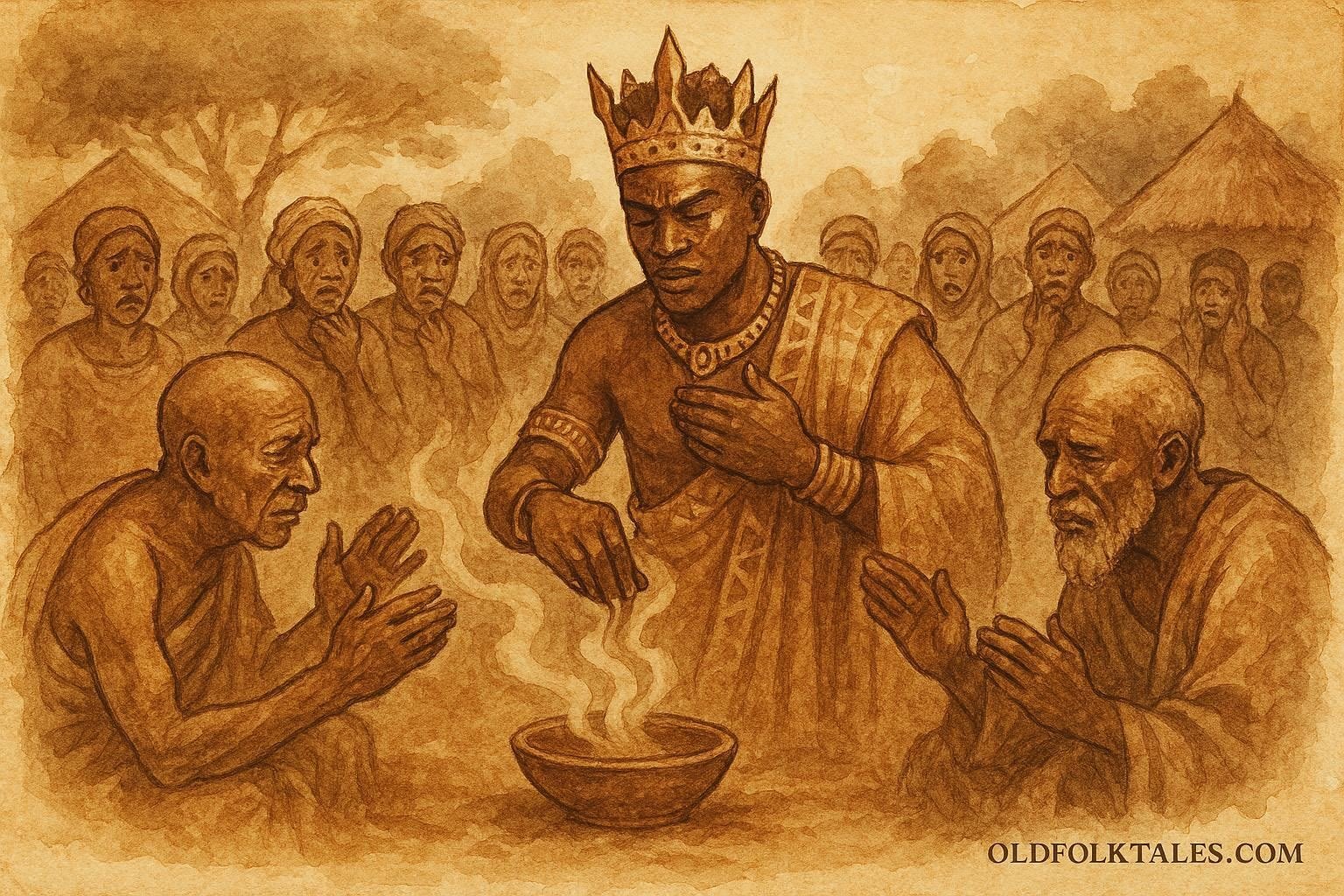
The elders instructed him to restore what had been broken.
The rituals that had been neglected would need to be performed again, not as routine, but with true understanding and respect. The king would need to acknowledge his mistake and seek reconciliation with the forces he had disturbed.
Preparations were made.
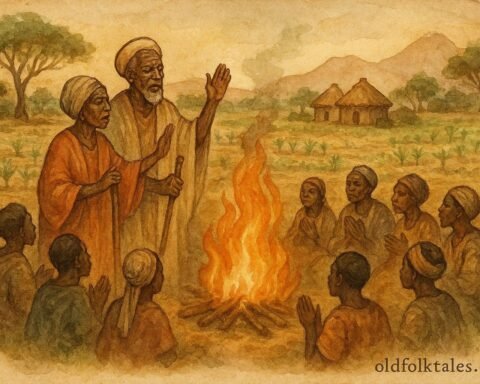
The people gathered, aware that something important was taking place. The rituals were carried out with great care, guided by the elders who preserved the knowledge of the ancestors.
The king took part fully, setting aside his pride and accepting his role within the larger order of things.
The process was not immediate.
For a time, the kingdom remained in its troubled state, as though waiting to see if the restoration was genuine. But the people remained committed. They followed the traditions once more, not out of fear, but out of understanding.
Slowly, the signs of disorder began to fade.
The rains returned. The crops improved. The illness began to pass. Peace gradually settled over the kingdom once again.
The king was changed.
He no longer saw the taboos as limitations, but as protections. He understood that the power he held was not his alone, but part of a greater system that required balance and respect.
From that time onward, he ruled with renewed humility, honoring the traditions that had been entrusted to him.
The story of the broken taboo was told throughout the kingdom and beyond. It served as a reminder that even those in positions of great power are bound by laws greater than themselves.
The people learned that tradition is not a burden, but a safeguard, and that when it is broken, the consequences extend far beyond the individual.
Don’t stop yet! See our complete East African folktales collection
Moral Lesson
Power must be guided by respect for tradition and sacred law. When important boundaries are broken, the balance of the entire community is affected.
Knowledge Check
- What is a royal taboo in the story?
A sacred law that the king must obey to maintain balance in the kingdom. - Why did the king break the taboo?
He believed the traditions were unnecessary and restrictive. - What happened after the taboo was broken?
The kingdom experienced drought, illness, and conflict. - Who helped identify the cause of the problem?
The elders of the community. - How was balance restored?
Through rituals, humility, and returning to tradition. - What lesson does the story teach?
That leadership requires respect for tradition and responsibility for one’s actions.
Source
Central African oral tradition, Burundi. Recorded by Luc de Heusch in The Drunken King (1982).