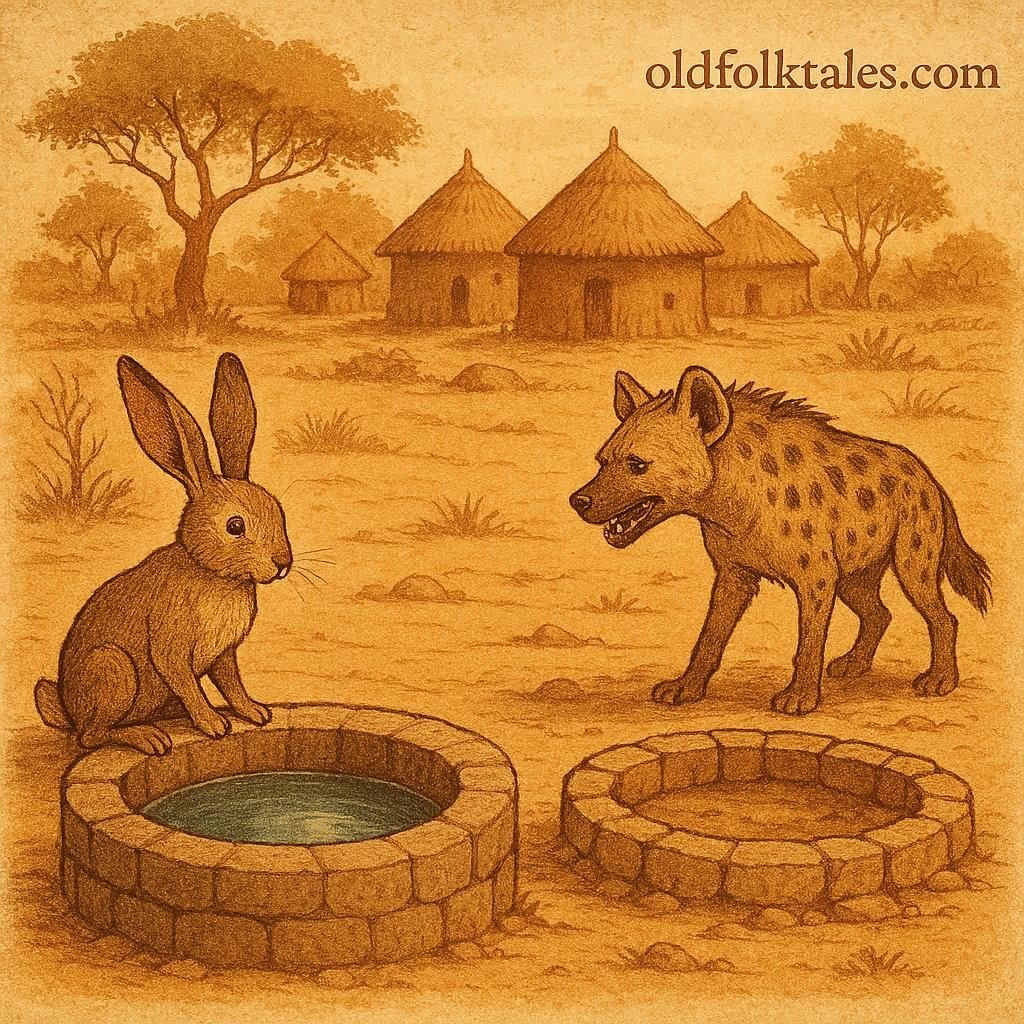
In a sunlit Wolof village along the banks of a winding river in Senegal, the villagers were preparing for the dry season. Children played under the shade of palm trees, and the elders discussed how to store water and protect their crops. Among the animals living near the village were Hare and Hyena, creatures well-known for their very different habits. Hare was clever, patient, and hardworking, while Hyena was lazy, hasty, and always looking for shortcuts.
One year, as the rains lessened and the dry season approached, Hare decided to dig a well. He chose a strong spot near the river, where the soil was firm but manageable. With steady paws and careful effort, he dug deep into the earth. He paused often, measuring the depth and checking the walls for stability. Sweat dotted his brow, but Hare did not hurry. After hours of patient work, the well reached a cool underground stream. The water glistened invitingly in the sunlight, promising relief for the long dry months ahead.
Hyena, seeing Hare laboring, thought herself clever for taking a shortcut. She scratched at the surface of the ground near her patch of earth, barely making a shallow hole. “Why should I dig deep when I can get water quickly?” she muttered. Her hole barely reached the moisture beneath the surface, and soon it became clear that her effort was insufficient. She wiped her paws and strutted around, thinking she had done enough.
When the dry season came, water became scarce. Hare approached his well and drew a bucket of cool, clear water. He drank happily and stored some for future use. His crops thrived, and the villagers who came to his home admired his foresight and hard work.
Hyena, meanwhile, approached her shallow hole and found it empty. No water flowed from the ground, and her patch of land began to dry and crack under the scorching sun. Hungry and thirsty, she trudged toward Hare, hoping he would share his well. “Hare, please give me some water,” she pleaded, desperation in her voice.
Hare shook his head gently. “Hyena, I worked carefully and dug deep to ensure water for the dry season. You took the easy way and neglected the effort. Now you must face the results of your choices.”
Hyena lowered her head, ashamed and parched. She realized too late that shortcuts and laziness only led to hardship. Hare’s example reminded all the animals in the village that diligence, patience, and careful effort are rewarded, while carelessness and haste lead to loss.
As the sun set over the dry landscape, painting the sky in golden and orange hues, Hare drew water from his well and tended to his crops. Hyena slunk back to her empty patch of land, reflecting on the lesson she had learned. The village returned to its peaceful rhythm, carrying with it the story of the clever hare and the deep well.
Moral Lesson:
The story of The Clever Hare and the Deep Well teaches that diligence, patience, and careful work lead to lasting rewards. Taking shortcuts or neglecting responsibilities often results in loss and hardship. True foresight comes from effort and thoughtful planning.
Knowledge Check
What kind of well did Hare dig?
Hare dug a deep well with careful effort, reaching a cool underground stream that provided water throughout the dry season.Why did Hyena’s well fail?
Hyena only scratched the surface, creating a shallow hole that could not hold water, leaving her thirsty and her crops dry.What lesson did Hare teach Hyena?
Hare taught that careful, diligent effort and foresight bring lasting benefits, while laziness and shortcuts lead to failure.How did the villagers react to Hare’s well?
They admired Hare’s planning and hard work, noting how his well ensured water and thriving crops during the dry season.What did Hare do with the water from his well?
Hare drew cool water for himself and his crops, storing it wisely for the dry season.What is the main moral of the story?
The main moral is that patience, diligence, and careful planning bring lasting rewards, while neglect and shortcuts lead to hardship.Cultural Origin: Wolof, Senegal
Source: Wolof folktale, recorded by René Guillot, Contes d’Afrique, 1933, p. 67